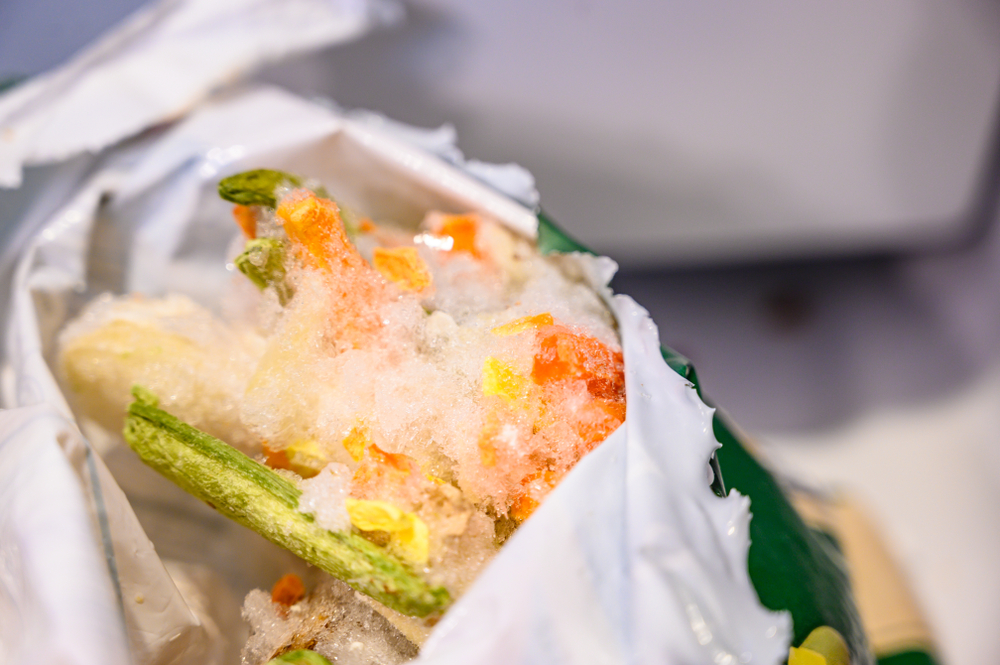

There is a moment, usually late on a Sunday evening, when you pull something out of the freezer with genuine enthusiasm, those chicken thighs you marinated last month, or the big batch of soup you made when you were feeling organized and optimistic about your future self, and you stop. Something is wrong. The bag is coated in a layer of white crystals, and the meat underneath looks a little gray, a little defeated, a little like it has been through something. You stand there holding it over the sink, trying to decide whether you’re about to make dinner or throw away dinner, and whether those two options are actually the same tonight.
The ice crystal question is one that most people answer based on instinct and a vague sense of dread, and instinct, in this case, tends to be wrong. Most people assume the crystals mean the food has gone bad, and in that assumption they toss perfectly edible food into the trash and order something instead. The actual answer is more interesting than that, and more forgiving, though it does come with some important distinctions worth knowing.
What you are looking at when you see ice crystals on frozen food is almost always a quality issue, not a safety one. The two things are related, but they are not the same. Understanding the difference changes how you handle every bag of frozen vegetables, every batch of meal-prepped chicken, and every tub of ice cream you’ve ever rescued from the back of the freezer.
What Ice Crystals Actually Are
When food freezes, the water inside it turns into ice. That part is obvious. What’s less obvious is that the speed of that freezing process matters enormously to the outcome. The USDA Food Safety and Inspection Service recommends freezing food as fast as possible to maintain quality, because rapid freezing prevents undesirable large ice crystals from forming throughout the product. The molecules simply don’t have time to arrange themselves into the characteristic six-sided snowflake structure. Slow freezing, on the other hand, gives those molecules all the time they need, and the result is larger, rougher, more disruptive crystals that you can actually see and feel.
The crystals themselves are just frozen water. They’re not a sign of contamination, and they don’t cause foodborne illness. Freezing to 0°F inactivates any microbes, including bacteria, yeasts, and molds, present in food. A bag of chicken coated in ice crystals that has been continuously frozen at the right temperature is not going to make you sick simply because of the crystals.
What the crystals do signal is something happening to the texture and flavor of the food. When moisture migrates out of the food and crystallizes on the surface, the food underneath becomes drier. When large crystals form inside cell walls, in meat, vegetables, or fruit, they can rupture those cells. After thawing, the result is a mushier, tougher, or more watery texture than you’d get from properly stored food. The taste doesn’t improve either.
Frost vs. Freezer Burn: Not the Same Thing
This is where it gets worth slowing down, because a lot of people use “ice crystals” and “freezer burn” interchangeably, and they are actually describing two different things that can happen independently of each other.
According to Sanjay Gummalla, a senior scientific affairs official at the American Frozen Food Institute, “Freezer burn can be equated with moisture loss from the product (quality issue and safe to eat) while frost could be equated with moisture accumulation on the product (temperature fluctuation in the freezer and should also be safe to eat).” Frost, which is what most people are looking at when they see a snowy coating on their food, can often be brushed off. Freezer burn cannot; it’s a physical change to the food itself, a drying and discoloration that has already happened below the surface.
If you see discolored patches under the ice crystals or elsewhere on the food, that’s freezer burn. The crystals alone, without underlying discoloration, are more likely to be surface frost. Knowing which one you’re dealing with tells you a lot about how badly the food has been affected.
The Three Main Culprits
There are three conditions that tend to cause ice crystals on frozen food, and you probably have at least one of them going on in your freezer right now.
Poor packaging is the biggest one. Proper packaging helps maintain quality and prevent freezer burn. While it is safe to freeze meat or poultry directly in its original store packaging, that type of wrap is permeable to air and quality may diminish over time. The packaging that gets chicken from the store to your house is not designed for long-term freezer storage. Removing as much air as possible from packaging before freezing is one of the most effective steps you can take. As Iowa State University Extension puts it plainly: air is the enemy of frozen food, and vacuum sealers do the best job of eliminating it.
Fluctuating temperatures are the second culprit. Every time you open the freezer door, warm air rushes in and the temperature inside rises slightly before it recovers. That partial thaw-and-refreeze cycle is what causes moisture to migrate, surface frost to develop, and over time, freezer burn to set in on foods that were otherwise fine. Foods stored nearest the door, or at the top of a chest freezer, are the first to feel it, which is why those spots are best reserved for things you’ll use within a week or two.
Long storage time is the third factor, and it works together with the other two to accelerate the problem. Food that is properly handled and stored in the freezer at 0°F will remain safe, and while freezing does not kill most bacteria, it does stop bacteria from growing. Though the FDA confirms that food will be safe indefinitely at 0°F, quality will decrease the longer the food is in the freezer. Tenderness, flavor, aroma, juiciness, and color can all be affected. Any one of those three factors, bad packaging, temperature swings, or time, can start the process on its own without the other two needing to be present.
What It Means for Different Foods
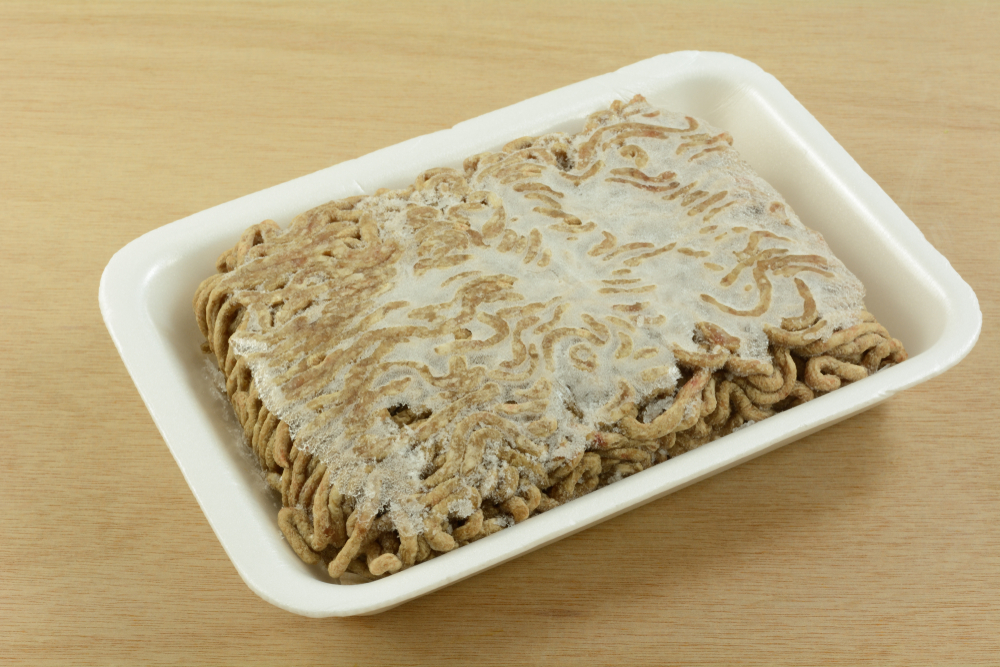
High-water-content foods are the most vulnerable. Meats, fish, fruits, vegetables, and dairy all have significant water in their cell structure, and that water is what migrates and forms crystals. Most freezer-burned food will develop discoloration alongside ice crystals. Meats often take on a gray-brown color and may look tough or leathery, while fruits and vegetables appear dry and shriveled. Starchy foods like baked goods tend to develop a rougher texture, and ice cream’s milky consistency becomes coated with a layer of coarse, grainy ice.
Ice cream gets its own honorable mention here because it’s in a category of its own. When ice cream melts even slightly, the water may separate out of the creamy matrix and refreeze as grainy bits of ice. That icy layer on top of the carton is not just surface frost; it’s a sign the ice cream has partially melted and reset, and the smooth texture it started with is gone. The ice cream is safe to eat, but the consistency is not coming back, which for many people is almost the point of ice cream.
For meat headed into a stew or a braise, a reasonable amount of freezer burn matters much less than it would for a piece you’re pan-searing. You can cut freezer-burned portions away either before or after cooking the food, though heavily freezer-burned foods may have to be discarded for quality reasons. Soups, casseroles, and slow-cooked dishes compensate for dryness in ways that a dinner plate does not.
Is It Actually Safe to Eat?
For food that has been continuously frozen and shows ice crystals without significant discoloration, the answer from the relevant food authorities is clear. Freezer burn does not mean food is unsafe. It is a food-quality issue, not a food safety issue, appearing as grayish-brown leathery spots on frozen food that occur when food is not securely wrapped in airtight packaging.
One thing many people don’t know: ice crystals don’t strip food of its nutritional value. The FDA notes that freezing does not reduce nutrients, and there is little change in a food’s protein value during freezing. The chicken at the bottom of your freezer that has been there since February may taste a little flat and feel a little dry after cooking, but it’s still delivering the protein it always did.
The one scenario where you do need to pause and think is if you’re uncertain whether the food has been continuously frozen. If there’s any chance it fully thawed at some point, during a power outage, a freezer door left open overnight, or a move, ice crystals alone can’t tell you it’s safe. What you’d want to look for in that situation is discoloration, an off smell after thawing, or a slimy texture. When in doubt, the safer call is to throw it out.
If you’re the kind of person who loses track of what’s in the freezer and how long it’s been there, the 20 foods with the longest shelf life are worth knowing. They’re the things you can stock without the same time pressure.
How to Prevent Ice Crystals From Forming
The good news is that most of the causes are preventable with a few consistent habits.
Wrap things properly before they go in. Steam, like air, is detrimental to frozen foods because it turns to ice crystals. Individual blanched vegetables, fruits, meat pieces, and baked goods are best cooled and then flash frozen on baking trays before packaging. Store packaging on meat products should be over-wrapped in freezer paper, heavy-duty foil, or plastic wrap, or placed in freezer bags prior to freezing for long-term storage. Vacuum sealers are genuinely useful here; they remove the air that causes ice crystal formation more effectively than squeezing a bag shut.
Keep your freezer at a steady 0°F. A thermometer inside the freezer is a small investment that tells you whether your appliance is actually maintaining temperature or quietly fluctuating. Foods stored nearest to the door experience the most temperature variability, so that’s where short-term items go, not the chicken you intend to keep for three months.
Don’t overfill the freezer, but don’t leave it too empty either. Air needs to circulate freely, and a freezer that is packed too tightly can develop uneven cold spots. Let food cool completely before it goes in; putting warm food in the freezer before it has cooled will cause steam and condensation to form on the food, which becomes freezer burn in waiting.
Label everything. A date written on a bag is the only thing standing between you and a freezer archaeology project six months from now. Use the oldest things first, and try to rotate through what you have rather than always adding to the pile.
What to Do With What You’ve Already Got
Opening the freezer to find a situation does not automatically mean the food is trash. Here’s a practical way to think through it.
If you see a light coating of frost or small ice crystals with no discoloration underneath, the food is almost certainly fine. Cook it the way you normally would, and for foods like vegetables or ground meat in a sauce-based dish, you likely won’t notice any difference at all. Brush off the frost if it’s heavy, and proceed.
If you see discolored patches, gray-brown spots on meat, shriveled and dull-looking vegetables, or heavy crystallization throughout, that’s proper freezer burn. The food is still safe to eat if it has been continuously frozen, but the quality has degraded. Cut away the worst-affected areas before or after cooking, use it in something that can compensate for dryness, and adjust your expectations accordingly. A heavily burned chicken breast is not going to be a great weeknight dinner on its own. In a slow-cooker stew with plenty of liquid and aromatics, it may be perfectly fine.
If you genuinely don’t know the food’s history, if you’re unsure whether it thawed and refroze at some point, then the smell test after thawing, plus a check for texture, gives you better information than the ice crystals alone. If something smells wrong once it’s thawed, trust that. Ice crystals don’t mask spoilage; they just mean the food lost some moisture along the way. Spoilage is a different situation entirely, and your nose is usually the first to know.
The Freezer Was Always a Holding Pattern
The freezer was never meant to be a permanent solution, and the ice crystals are really just its way of reminding you of that. They’re not a verdict on whether the food is dangerous; they’re a record of what happened to it, whether the bag got jostled open, whether the door got left ajar a little too long, whether that chicken sat in there for four months instead of the one you planned.
Most of the time, the answer is to cook the food and move on. The dryness that comes with moderate ice crystal formation is real, but it’s manageable in the right dish, and the food is doing what frozen food does when it gets old or improperly stored. It loses some of its best qualities without becoming unsafe. That distinction matters, especially when you’re standing over the sink at 7 p.m. trying to figure out if you’re about to waste thirty dollars of groceries. More often than not, you’re not. Trim the obvious damage, use it in something forgiving, and make a note to wrap things better next time. The note is the part most of us skip, and the freezer keeps its records regardless.
AI Disclaimer: This article was created with the assistance of AI tools and reviewed by a human editor.