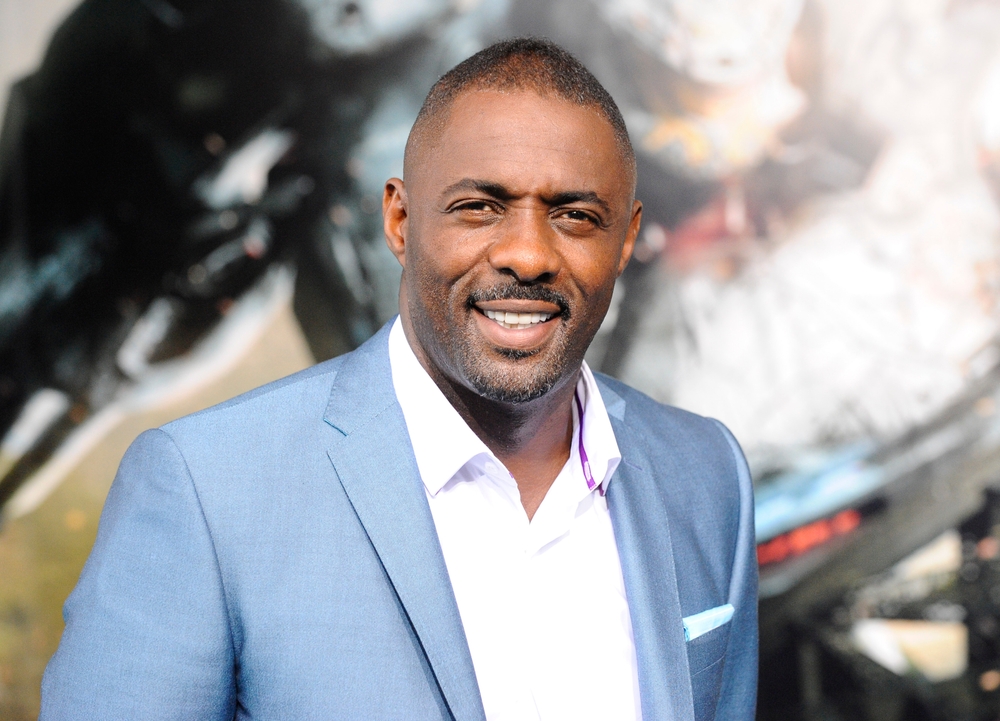

Idrissa Akuna Elba was born into a working-class London family whose parents had emigrated from Sierra Leone and Ghana, grew up in Hackney and East Ham, dropped out of college, and spent his early adulthood fitting tyres and working night shifts at Ford Dagenham to pay the bills between auditions. It is one of the more unlikely starting points for a career that has since spanned HBO’s most celebrated drama series, the Marvel Cinematic Universe, a Golden Globe, six Emmy nominations, and a global box office tally that runs into the billions. On June 2, 2026, that trajectory reached a moment that even the most ambitious 18-year-old in Canning Town could not have scripted: King Charles III tapped a sword on Idris Elba’s shoulders at Windsor Castle, and the world met Sir Idris Elba.
The Rundown
A knighthood for screen work alone would have been notable. This one is something more specific: it is a recognition of everything that happened alongside the acting – a decades-long commitment to young people that began, with remarkable symmetry, at the very institution whose founder has now bestowed the honor. The story of how Idris Elba came to be knighted is, at its core, a story about a £1,500 grant and what one young man chose to do with it, both when he received it and in the 35 years that followed.
Elba kept his public response characteristically spare. “We are thankful. The work continues,” he wrote on Instagram Stories, over a photograph of himself holding hands with his wife Sabrina on the castle grounds, tagging the Elba Hope Foundation, the charity the couple co-founded in 2022. For a man whose career has involved no shortage of dramatic speeches and commanding monologues, six words may have been the most pointed statement he could have made.
The Ceremony: Windsor Castle, June 2, 2026
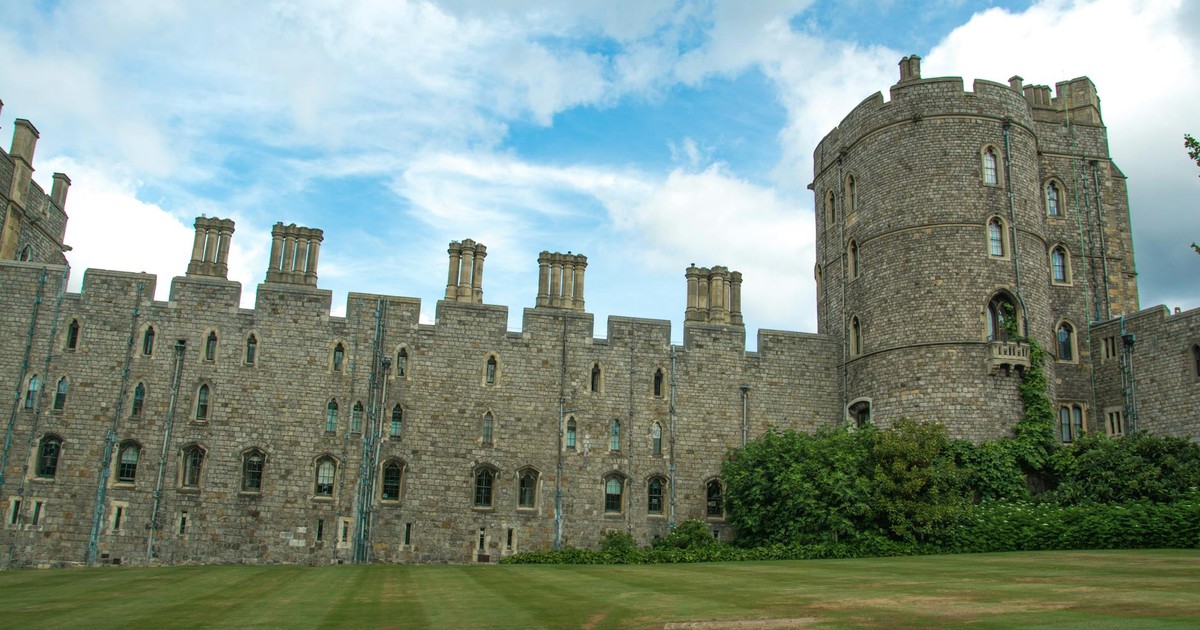
Elba received the honor during an investiture ceremony at Windsor Castle on June 2, recognized as an actor, activist, and musician for his services to young people. People published photographs from the ceremony showing King Charles tapping a sword on Elba’s shoulders as he knelt before the monarch. Elba walked from the ceremony alongside his wife, Sabrina Dhowre Elba, having been made a Knight Bachelor by King Charles III.
The honor was first announced as part of King Charles’ 2026 New Year’s Honours list. Speaking to People in January at the Hijack season 2 screening, Elba said the recognition had not fully sunk in yet. “I haven’t really spoken about it, but I will say that it’s a real honor to be recognized for the work,” he said. “Especially trying to make as much noise for young people and the things that some of them are going through. So it feels like an honor.”
The ceremony honored 68 individuals in total. Olympic ice skating legends Jayne Torvill and Christopher Dean formally received their damehood and knighthood respectively, and actress and comedian Meera Syal was made a Dame for her services to literature, drama, and charity.
Elba was made a knight in King Charles III’s New Year’s Honours list in recognition of his work to reduce knife crime and poverty and promote education. He was appointed Officer of the Order of the British Empire (OBE) by Queen Elizabeth II at the 2016 New Year’s Honours for his services to drama, and was knighted by King Charles III at the 2026 New Year’s Honours for his services to young people. In the decade between those two honors, his public advocacy – rather than his screen work alone – became the defining basis of his standing with the British establishment.
The Full Circle: From a £1,500 Grant to a Sword on the Shoulder
Elba briefly attended Barking and Dagenham College, leaving school in 1988 and winning a place in the National Youth Music Theatre after a £1,500 Prince’s Trust grant. The support helped him attend the National Youth Music Theatre, a step he has credited with helping launch his career in the arts. Without that grant, the trajectory to Stringer Bell, to DCI John Luther, to the Marvel Cinematic Universe, to Windsor Castle, would not exist in any recognizable form.
The King’s Trust, formerly known as the Prince’s Trust, is a charity established by King Charles 50 years ago that provides grants and support to young people. Elba is a Goodwill Ambassador for The King’s Trust, which has helped over one million young people since King Charles founded it in 1976. The role of Goodwill Ambassador is not a ceremonial title; Elba has used it as a platform to actively steer the organization’s public profile toward the specific causes – knife crime, youth unemployment, creative opportunity – that he has championed throughout his public life.
The King’s Trust and the Elba Hope Foundation have also worked together on Creative Futures, a program for young people interested in creative careers. That partnership is a direct institutional expression of what the knighthood recognizes: not just that Elba benefited from a royal charity as a teenager, but that he has invested decades of effort in building the next version of the same pipeline for someone else’s teenager.
Many observers have described the knighthood as a “full-circle moment” for Elba, who once benefited from the charity founded by Charles and now works to create similar opportunities for others. The phrase has appeared so consistently across coverage of the investiture that it has become the unofficial summary of the occasion – and, as unofficial summaries go, it is hard to dispute.
The Elba Hope Foundation: Youth Advocacy at Scale

The knighthood citation focuses on services to young people, and the principal vehicle for that service in recent years has been the Elba Hope Foundation. Elba received the honor for his services to young people, including his work with the Elba Hope Foundation, which he founded in 2022 to support youth development and empowerment.
The organization is committed to educational and employment opportunities for young people and supports projects in the areas of social justice, sustainable development, and poverty reduction. According to the foundation, the couple have helped raise over $1.75 billion to fight rural poverty, $2 million for a COVID-19 Rural Poor Stimulus Fund, and $6 million in debt relief for Somalia.
Elba tagged the Elba Hope Foundation in his post-investiture Instagram message – the charity he and Sabrina co-founded in 2022 to support diaspora communities. The decision to direct attention immediately back to the foundation on the day of the knighthood was consistent with how he has publicly framed the honor throughout: as a recognition of collective work, not personal achievement.
When his upcoming honor was announced at the end of 2025, Elba explained in a statement that he accepts the award on behalf of the many young people who propel his Elba Hope Foundation forward. “I hope we can do more to draw attention to the importance of sustained, practical support for young people and to the responsibility we all share to help them find an alternative to violence,” Elba said.
Knife Crime Advocacy: The “Don’t Stop Your Future” Campaign
Beyond the foundation’s broader development mandate, Elba has maintained a sustained, visible, and politically engaged campaign against knife crime in the United Kingdom – one of the central threads the 2026 knighthood formally acknowledges.
On January 8, 2024, as Parliament resumed, Elba launched the “Don’t Stop Your Future” campaign, demanding urgent government action to address the pervasive issue of serious youth violence in the UK. To launch the campaign, piles of neatly folded clothes were laid in rows across London’s Parliament Square to represent those who have died from knife crime, including an outfit donated by the family of a murdered teenager worn at the time of his death.
He called on the government to invest in youth services, citing a 74% cut in funding since 2010-11 and the correlation between youth service cuts and increased youth violence, and called for the formation of a Coalition to End Knife Crime, a cross-party, cross-governmental working group including grassroots organizations, sporting bodies, young people, and technology companies.
As part of the initiative, Elba released a track titled “Knives Down” to raise awareness and give a voice to those affected by knife crime. The video featured a debate in the House of Commons, highlighting the stories of victims and worst-affected communities. The track called on Parliament to urgently ban zombie knives and machetes, addressing the supply chains that bring them to UK streets.
The campaign produced tangible legislative results. A ban on zombie knives and zombie-style machetes was expedited following the intervention, coming into effect in September 2024. The government also confirmed the introduction of “Young Futures Programs,” described as a “sure start for teenagers” by the Home Secretary, investing in support for young people deemed most at risk of serious violence. The Coalition to Tackle Knife Crime was launched by the Prime Minister in September 2024.
Elba emphasized the importance of action over mere discussion, advocating for a wide range of perspectives – including those of parents, youth workers, and law enforcement – to address the issue. The summit aimed to unite various community groups, tech companies, sports organizations, and public services in an effort to halve knife crime over the next decade.
A Netflix Documentary and a 50-Year Anniversary
The partnership between Elba and King Charles extends beyond investiture ceremonies and charity ambassadorship into active creative collaboration. A major Netflix documentary, “The King, His Trust and Me,” that the two are reportedly working on will commemorate The King’s Trust’s 50th anniversary and examine how the organization has changed lives for generations. Expected to premiere in late 2026, the documentary will feature both King Charles and Sir Idris reflecting on the organization’s impact.
Elba announced he was teaming up with Charles to create a documentary celebrating the charity’s 50th anniversary, slated to head to Netflix in the fall. The project is unusual in any number of ways: a reigning monarch appearing on a streaming platform alongside a Hollywood actor who once received the monarch’s own charity grant is not a conventional documentary premise. But it is, arguably, an effective one – the 50-year arc of The King’s Trust, told through the lens of someone whose life it directly shaped, is a more compelling narrative than any institutional retrospective.
The documentary also ensures that the knighthood will have a practical public-facing extension well beyond the ceremony itself, directing attention to The King’s Trust at a moment when the organization is actively seeking to raise its profile as it marks five decades of operation.
The Career Behind the Honor: From The Wire to Windsor
Sir Idrissa Akuna Elba is an English actor, DJ, and rapper who has received a Golden Globe Award as well as nominations for three BAFTA Awards and six Emmy Awards. His films have grossed over $9.8 billion at the global box office, making him one of the top 20 highest-grossing actors.
He rose to prominence playing Stringer Bell in the HBO series The Wire (2002 – 2004), and DCI John Luther in the BBC One series Luther (2010 – 2019), the latter of which earned him the Golden Globe Award for Best Actor in a Miniseries or Television Film, as well as four nominations for the Primetime Emmy Award for Outstanding Lead Actor in a Limited Series or Movie.
He was named in the Time 100 list of the Most Influential People in the World in 2016. In 2025, Elba was named as the UK’s ninth-most influential Black person in the 2026 Powerlist.
In 2025, Elba acted in several films, including Kathryn Bigelow’s A House of Dynamite, a political thriller in which he played the President of the United States. He also played Man-At-Arms in Masters of the Universe (2026), continuing a run of high-profile franchise and blockbuster commitments alongside his advocacy work.
His career is not exclusively on screen, either. He performs as a DJ under the moniker DJ Big Driis or Idris, and is a co-owner of the Formula E team, Kiro Race Co. The range of the man – from Baltimore drug lord to Heimdall in the MCU to DJ to anti-knife crime campaigner to Netflix documentary co-creator with the King of England – is, even by the standards of a crowded entertainment industry, genuinely unusual.
Torvill, Dean, and a Ceremonially Significant Day
The June 2 investiture at Windsor Castle was not solely defined by the Idris Elba knighted moment, though he drew the majority of international attention. The ceremony was notable for the formal investiture of two other major British cultural figures.
Legendary ice skaters Jayne Torvill and Christopher Dean were honored for their services to ice skating and voluntary service. The pair from Nottingham famously won gold for Great Britain with their performance of Boléro at the 1984 Winter Olympics. The pair stepped onto the ice for the final time in July, having skated together for more than 50 years and given back to the figure skating community in Great Britain.
Sir Christopher Dean joked after the ceremony that he is enjoying retirement and would “recommend it,” adding that King Charles had a little laugh when told. Dame Jayne found out about her damehood around three days before her dance partner, realizing he had not yet received a letter when she phoned him to celebrate. It transpired that the notification had been sent to the wrong address due to an incorrect postcode.
The ice dance duo were among 68 people to receive awards from the King on Tuesday, alongside Luther star Sir Idris Elba and comedian and actress Dame Meera Syal. Dame Meera Syal received her honor for services to literature, drama, and charity – a recognition of a similarly multi-decade career that has moved between performance, writing, and public advocacy.
The King’s Trust: Five Decades of Impact
Any comprehensive account of why Idris Elba was knighted requires understanding the organization that sits at the center of both his personal history and his ongoing public work.
The King’s Trust, a UK youth charity founded by King Charles in 1976, appointed Elba as their anti-crime ambassador in April 2009. That appointment came 21 years after Elba received the grant that put him in the National Youth Music Theatre – a gap that illustrates both how long the relationship between the two has been developing and how deliberately Elba has constructed it, one public commitment at a time.
The King’s Trust has helped over one million young people since King Charles founded it in 1976. The charity’s model – direct financial grants, enterprise support, and access to employment training for young people who would otherwise have no pathway – is precisely the model that gave Elba his own first foothold, and it is the model he has spent the better part of three decades amplifying through his public platform.
Elba currently represents the charity as a Goodwill Ambassador. The ambassadorship is operationally significant: Elba’s name, his public profile, and his stated willingness to use his platform explicitly for youth advocacy gives The King’s Trust a credibility and reach with younger audiences that institutional fundraising alone cannot generate.
What the Sword on the Shoulder Actually Means
The knighting of Idris Elba by King Charles III on June 2, 2026, is an event with multiple layers of significance that extend well beyond a celebrity receiving a royal honor.
The most important layer is the institutional one. The charity founded by Charles when he was Prince of Wales helped Elba reach drama training as a teenager. Decades later, King Charles knighted him for his own work with young people. The symmetry is genuine, not manufactured for press releases – the £1,500 Prince’s Trust grant and the sword at Windsor Castle are separated by 38 years and a career of extraordinary scope, but they are part of the same story.
The second layer is political and social. The knighthood does not simply honor Elba’s screen work. It explicitly recognizes his campaign against knife crime, his advocacy for youth funding, and his sustained institutional effort through the Elba Hope Foundation and The King’s Trust ambassadorship. The official citation named him as an activist, actor, and musician honored “for his exceptional contributions to entertainment and tireless efforts in youth empowerment and social justice.” That is not boilerplate – it is a specific acknowledgment of specific work across a sustained period.
The third layer is prospective. The forthcoming Netflix documentary, the continued work of the Elba Hope Foundation, and the ongoing Creative Futures program suggest that the knighthood is not a capstone but a platform. Elba’s own statement that “the work continues” is the clearest signal that the investiture at Windsor Castle was, for him, a moment of accountability rather than arrival. The man who received a grant at 18 has spent his adult life trying to ensure that the next 18-year-old in Hackney or East Ham has access to the same door. Some of that work is measurable – legislation passed, grants dispersed, a documentary greenlit. Some of it won’t be measurable for another decade, when the teenager who found a pathway into the arts because of a program Elba helped fund is old enough to look back and name the door that opened.
AI Disclaimer: This article was created with the assistance of AI tools and reviewed by a human editor.