

Most people assume the question of whether Jesus of Nazareth existed as a real historical person is either a matter of faith or a matter of unsettled debate. Neither assumption holds up particularly well. Among professional historians and scholars of antiquity, the question has been effectively settled for decades. What keeps shifting is the quality and granularity of the evidence behind that consensus, and in 2025 and 2026, that evidence got significantly sharper.
A book published by Oxford University Press in May 2025 set academic circles buzzing in a way that rarely happens with ancient history. The author, Dr. Thomas C. Schmidt of Fairfield University, made a case that the oldest non-Christian written account of Jesus was not only genuine, but that the man who wrote it had personal connections to people who were present at Jesus’s trial. It is the kind of claim that either changes the conversation or invites serious scrutiny, and it has done both.
For anyone who grew up treating the historical reality of Jesus as either obvious or unknowable, the actual state of the scholarship is more interesting than either camp tends to acknowledge. The evidence is not definitive in the way a birth certificate is definitive. But it is abundant, converging, and in certain respects, remarkably specific.
The Josephus Problem, Finally Addressed
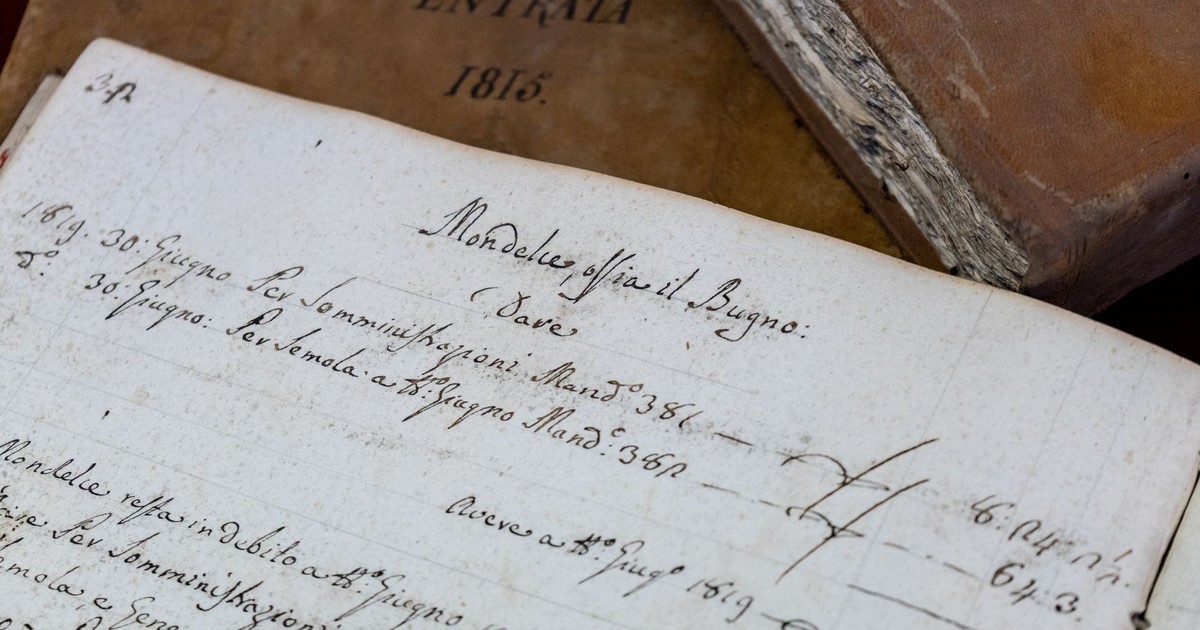
The most discussed piece of Jesus historical evidence outside the Bible has always been a short passage in Flavius Josephus, a first-century Jewish historian writing in Rome in the early 90s CE. The passage, known to scholars as the Testimonium Flavianum (TF), describes a “wise man” who did surprising deeds, attracted a large following, and was crucified under Pontius Pilate.
The problem historians have wrestled with for generations is that the passage, as it survives in manuscripts, contains phrases that sound conspicuously Christian, leading to longstanding suspicion that early Christian scribes may have edited it, added to it, or even fabricated it wholesale. This debate has made the TF simultaneously the most-cited and most-contested piece of ancient evidence for Jesus’s existence, a paragraph that gets referenced constantly while everyone quietly argues about whether it counts.
Writing in 93/94 CE, Josephus composed an account of Jesus known as the Testimonium Flavianum. Despite this being the oldest description of Jesus by a non-Christian, scholars had long doubted its authenticity due to the alleged pro-Christian claims it contains. Schmidt’s 2025 Oxford University Press book, however, argues for authenticating Josephus’s authorship of the TF, and makes the further claim that Josephus was directly familiar with those who put Jesus on trial.
One of the book’s central arguments is that ancient Christians read the TF quite differently from modern scholars, treating it as mundane or even vaguely negative, rather than as the clearly pro-Christian text most modern readers assume it to be. This suggests the TF was written by a non-Christian. The book then deploys stylometric analysis – computational examination of writing patterns – to show that the TF closely matches Josephus’s style, leading to Schmidt’s conclusion that the passage is genuinely authored by Josephus.
Schmidt’s case that Josephus personally knew people present at Jesus’s trial, who then became his informants for the TF, is creating an impact well beyond academic circles. If valid, that claim would transform the TF from something Josephus may have partly written in the 90s CE into the earliest eyewitness-adjacent evidence for Jesus and his followers.
Not everyone is persuaded. Schmidt argues not only that Josephus wrote about Jesus, but that the passage we have is substantially what Josephus originally wrote, which is a distinctive position among scholars, who typically argue that the text was at least significantly changed and added to, with a minority arguing for it being a wholesale later insertion. The debate is active, detailed, and ongoing – which is precisely how ancient historical scholarship is supposed to work.
What Tacitus Adds to the Picture

Josephus is not the only non-Christian ancient writer to mention Jesus. In his final work, Annals, written around 116 CE, Roman historian and senator Tacitus referred to Jesus, his execution by Pontius Pilate, and the existence of early Christians in Rome. The context of the passage is the Great Fire of Rome that destroyed much of the city during the reign of Emperor Nero in 64 CE.
The scholarly consensus holds that Tacitus’s reference to the execution of Jesus by Pontius Pilate is both authentic and of historical value as an independent Roman source. What makes it notable is that Tacitus was neither a friend to Christians nor particularly interested in being accurate about their founder’s identity. He described Christianity as a “pernicious superstition,” which is not the framing of a man with any motivation to lend the movement credibility. A hostile witness noticing that you exist is, in historical terms, a fairly useful kind of witness.
The passage also does something archaeologically interesting: it names Pilate in a way that was later confirmed by physical evidence. The discovery of an inscription mentioning Pontius Pilate, alongside the existence of synagogues from the era, coincides with biblical accounts and provides historical context to the life of Jesus, according to the Jerusalem Post. Pilate’s historicity had never really been in doubt given his mentions by ancient writers including Josephus, Tacitus, and Philo, but archaeological evidence was unearthed at Caesarea Maritima in 1961. Excavations near the amphitheater revealed a limestone block inscribed with a dedication to Tiberius Caesar from “Pontius Pilate, Prefect of Judea,” confirming that Pilate was indeed the Prefect governing as the gospel writers described.
The Graffiti That Wasn’t Supposed to Help
One of the stranger pieces of supporting evidence is a piece of graffiti scratched onto a wall in Palatine Hill, Rome, sometime in the second century CE. It depicts a man worshiping a figure with a donkey’s head hanging from a cross, and the inscription reads “Alexamenos worships his God.” It was meant as mockery. The image is now known as the Alexamenos Graffito, and it is among the most cited pieces of archaeological evidence for early Christian belief in a crucified figure.
The mockery itself is the point. You do not draw a cartoon making fun of someone’s executed leader unless that leader is commonly understood to have existed and to have died in exactly the way described. Satire, unlike theology, has no reason to fabricate its subject. The Alexamenos Graffito is not proof in any legal sense. But it is a Roman Everyman in the second century treating the crucifixion of Jesus as an established, publicly known fact, worth making fun of.
The Archaeological World of Jesus

There is no definitive physical or archaeological evidence of the existence of Jesus himself. “There’s nothing conclusive, nor would I expect there to be,” says Lawrence Mykytiuk, emeritus professor of library science at Purdue University. “Peasants don’t normally leave an archaeological trail.”
That quote matters. People who argue that the lack of a direct physical artifact disproves Jesus’s existence are applying a standard that virtually no ancient figure of comparable social standing could meet. Carpenters from Galilee in the first century did not typically appear on coins, inscriptions, or administrative records. The absence of a direct artifact is not surprising; it is exactly what the historical record would predict for someone of Jesus’s social position.
Bart Ehrman, a religious studies professor at the University of North Carolina and author of Did Jesus Exist? The Historical Argument for Jesus of Nazareth, makes the same point directly: “The reality is that we don’t have archaeological records for virtually anyone who lived in Jesus’ time and place. The lack of evidence does not mean a person at the time didn’t exist.”
What archaeologists have recovered is the world Jesus inhabited. While some had disputed the existence of ancient Nazareth, his biblical childhood hometown, archaeologists have unearthed a rock-hewn courtyard house along with tombs and a cistern. They have also found physical evidence of Roman crucifixions, consistent with the method of execution described in the New Testament.
The Pauline Letters and the Problem of Timing
Before any of this archaeological or Roman-era material, there is a documentary record that predates it by decades. The seven Pauline epistles considered by scholarly consensus to be genuine were written in a span of a decade starting in the late 40s CE, approximately 20 to 30 years after the generally accepted time period of Jesus’s death, and are the earliest surviving texts that include any information about Jesus.
Twenty to thirty years is not a long gap in terms of oral and written tradition in the ancient world. These letters were circulating while people who had known Jesus firsthand were still alive. They do not read like mythology being constructed at a safe remove from events. They read like correspondence between people who are arguing, in real time, about the implications of a real person’s life and death.
With at least 14 sources by believers and nonbelievers within a century of the crucifixion, there is more evidence available for Jesus than for most other notable people from first-century Galilee. That is not a claim about the miracles attributed to him, or the theology built around him, both of which remain entirely matters of faith and interpretation. It is a narrower claim about whether he existed at all, and on that narrower question, the historical record is considerably more consistent than popular debate tends to suggest.
Where Scholars Actually Stand

Contemporary scholars of antiquity broadly agree that Jesus existed, and biblical scholars and classical historians view theories of his nonexistence as effectively refuted. Even Robert M. Price, an atheist scholar who denies Jesus’s existence, acknowledges that his perspective runs against the majority view. Classicist and historian Michael Grant stated that “no serious scholar has ventured to postulate the non-historicity of Jesus, or at any rate very few have, and they have not succeeded in disposing of the much stronger, indeed very abundant, evidence to the contrary.”
The honest description of the scholarly situation is this: the historicity of Jesus is not a live controversy among professional historians. It is a live controversy on the internet, where the standards of evidence are different and the incentives favor certainty in every direction. In academic circles, the debates are about details: what precisely Josephus wrote, what Tacitus’s sources were, how much of the gospel accounts can be cross-checked against independent records, and whether Schmidt’s 2025 stylometric analysis changes what we know about the TF.
Thomas Schmidt’s 2025 Oxford University Press study is a new examination of the famous Testimonium Flavianum passage in Josephus’s Antiquities (18.63-64), and it is creating serious academic engagement. The peer-reviewed response from classical scholar Steve Mason, published in a 2026 issue of a major journal, probed the book’s assumptions, gaps, and interpretations, evaluating it rigorously against Josephus’s life and historical writing. Detailed, critical engagement of this kind is precisely what the historical study of Jesus looks like when it is functioning well.
Read More: Toddler Finds $4 Million Gold Pendant Buried for 500 Years
What This Doesn’t Settle
None of this is a theological argument. The question of whether Jesus of Nazareth was a real person living in first-century Judea is categorically separate from the question of what he was, or whether any of the events described in the gospels happened as described, or what any of it means for faith or practice. Historians can establish that someone existed; they cannot, by definition, adjudicate claims about the divine.
Among scholars of the New Testament, there is little disagreement that Jesus actually lived. Lawrence Mykytiuk notes there was no debate about the issue in ancient times either. “Jewish rabbis who did not like Jesus or his followers accused him of being a magician and leading people astray,” he observes, “but they never said he didn’t exist.” The conclusion most historians draw is that the absence of ancient denial is itself a form of evidence.
What is clear from an honest read of the full record – not in a tidy resolution, but as a genuine historical observation – is that the people most determined to collapse this question into a simple yes or no, on either end, tend to want it settled for reasons that have little to do with ancient history. The believer wants the history to confirm the faith. The skeptic wants the history to undermine it. The actual historical record, accumulated across Roman administrative inscriptions, antagonistic Roman historians, a Jewish scholar writing in the 90s CE, and a piece of mocking graffiti on a Roman wall, does something more interesting than either: it treats Jesus as a real person who lived, was executed, and sparked a movement whose followers were numerous enough to become political inconveniences within a generation. Everything beyond that is the argument that has never really stopped.
AI Disclaimer: This article was created with the assistance of AI tools and reviewed by a human editor.