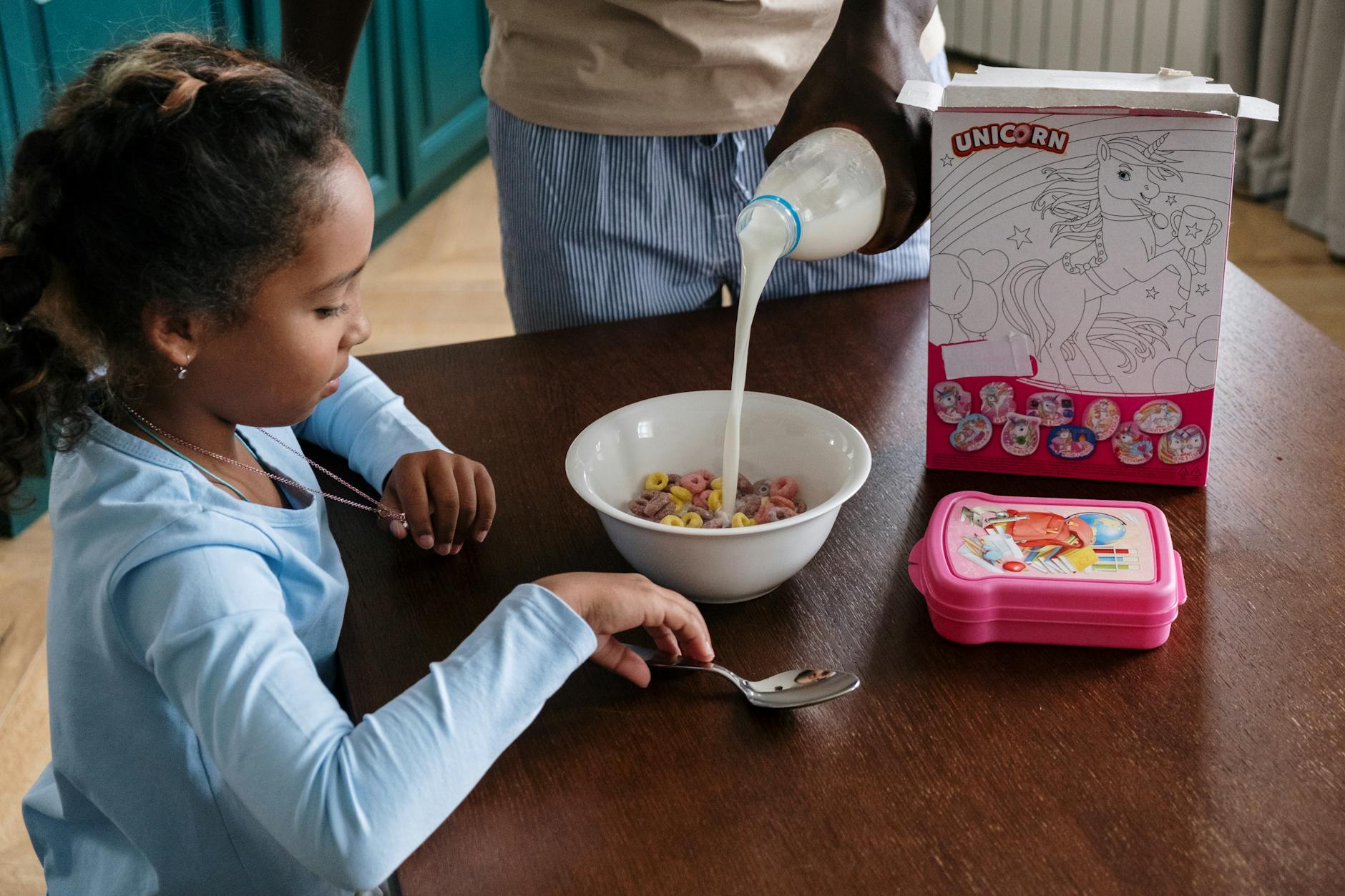

Cereal box toys were a childhood staple, the kind of thing that made a weekday morning briefly feel like an event. The box was a two-part proposition: there was the cereal, fine, whatever, and then there was the thing at the bottom. A small plastic object of approximately zero monetary value and maximum importance. The “free prize inside” banner was, for an entire generation of kids, the most reliable promise in the grocery store. Kellogg’s cereal nostalgia is not a recent invention. It’s been sitting in the back of every millennial’s memory for decades, right alongside the Saturday morning cartoons and the specific sound of pouring milk over Rice Krispies.
The banner disappeared somewhere in the 2000s, and it went so gradually that most people didn’t register the loss until it was complete. What replaced it was a QR code, and then eventually nothing at all. The cereal aisle got sensible. Efficient. The kind of place you moved through quickly on the way to something else. Kellogg’s, apparently, has had enough of that.
Toys Are Back in the Box
According to ABC News, WK Kellogg Co. announced it’s including toys with some of its breakfast cereals for the first time in more than a decade. The occasion is a partnership with Disney and Pixar ahead of the June release of Toy Story 5, and the timing is not accidental. Special edition cereal boxes became available nationwide April 26, inviting families to rediscover, as the campaign frames it, the joy of surprise toys and hands-on play.
According to Fast Company, customers nationwide can find the Toy Story 5-inspired cereals across Kellogg’s many brands, including Froot Loops, Frosted Flakes, Corn Pops, Apple Jacks, Frosted Mini-Wheats, Rice Krispies, Corn Flakes, and Cocoa Loops. That is a significant portion of the cereal aisle suddenly requiring your full attention. The limited-edition boxes feature special branding with a Toy Story character and a banner indicating a toy is inside. The banner. Back. If you grew up in the 1980s or 1990s, you know exactly what that means, and your pulse just did something involuntary.
What’s Actually in the Box
Each box contains classic toys and promotional items celebrating Toy Story 5, including toys, spoons, trading cards, and movie ticket promotions. The spoons deserve their own sentence, because they are genuinely the right call. According to the WK Kellogg Co. newsroom, each spoon is inspired by characters from Toy Story 5: a green Buzz, an orange Woody, or a red Jessie. A character-shaped spoon is precisely the kind of object that is technically useless and also the only spoon a six-year-old will accept for the next four months. Parents will understand.
The collaboration with Toy Story 5 is not a random licensing grab. With screens everywhere, parents are looking for ways to recreate playful moments, and Toy Story 5 explores the same tension directly: Woody, Buzz Lightyear, Jessie, and the gang grapple with a world where digital play dominates. Specifically, Woody (Tom Hanks), Buzz Lightyear (Tim Allen), and Jessie (Joan Cusack) find their jobs challenged when they come face-to-face with Lilypad (Greta Lee), a brand-new tablet device. A tablet named Lilypad who threatens the relevance of physical toys, in a movie launching a promotion that puts physical toys back in cereal boxes. That is either deeply thematic or the most self-aware marketing move in breakfast food history. Possibly both.
Laura Newman, VP of Brand Marketing at WK Kellogg Co., put it plainly: “Bringing toys back inside the box reintroduces that sense of discovery through a simple, screen-free moment of play that parents can now share with their own kids.”
How the Toys Disappeared in the First Place
The history of cereal box prizes is longer and stranger than most people realize. According to Mental Floss, in the 1930s, General Mills began enticing kids with paper airplanes and trading cards packed inside cereal boxes, and in the 1940s, Army buttons could be dug out of Pep cereal. By the 1950s, Kellogg’s was inserting tiny submarines and scuba-diving frogmen. There was a period in American breakfast history when a child could find operational baking-soda-powered submarines in their Corn Flakes. We have been trending downward ever since.
The golden era, roughly the 1950s through the 1990s, gave kids everything from Star Trek badges and Superman pins to lightsaber spoons and mascot license plates. No single announcement ended it. The most significant industry change was the Children’s Food and Beverage Advertising Initiative, a voluntary pledge announced in 2005 that curbed advertising of less-nutritious food to kids. Since a toy buried in a box of sugary cereal is, by definition, advertising that cereal to a child, the math became uncomfortable. Safety concerns compounded the problem: Kellogg was criticized in 2004 for including Spider-Man watches with mercury batteries in its cereal boxes, and in 1988, the company had already recalled “cool flute” and “binoculars” toys after the U.S. Consumer Product Safety Commission deemed them a choking hazard. Environmental pressure followed. The plastic waste argument closed the coffin on what the baking-soda submarine had opened.
So the toys went away, the back panels got quieter, and kids started looking at their phones at the breakfast table instead. Which, setting aside the irony that this is exactly the dynamic Toy Story 5 intends to dramatize, is the kind of cultural shift that happens so gradually nobody registers the loss until it’s already complete.
A Claw Machine, Naturally
If you happen to be in Los Angeles, Kellogg’s made the comeback physical in the most satisfying possible way. To celebrate Toy Story 5 coming to theaters June 19, Kellogg’s brought a giant, interactive Toy Story claw machine to The Grove on May 24. The claw machine is, of course, the defining object of the entire Toy Story universe: the aliens in the original film treat it as a site of religious significance. Deploying one as a live activation for a cereal campaign is the kind of detail that works on multiple levels at once.
Lylle Breier, Executive Vice President of Partnerships, Promotions, Synergy & Events at The Walt Disney Studios, captured the thread connecting all of it: “At the heart of Toy Story 5 is the idea that toys inspire creativity, friendship and play.” The cereal-box toy is a small, plastic, impractical object. It has always been a small, plastic, impractical object. That has never been the point.
What This Is Really About
The millennial parents who are going to be buying these cereal boxes are not buying them primarily for their children. Or rather, they are, genuinely, buying them for their children, and they are also doing something else at the same time. They are revisiting the specific pleasure of a morning that had no agenda, where the most pressing question was whether this box would have the toy they hadn’t gotten yet, and the day had not yet become the day. That physical memory does not dissolve just because you now have a mortgage and a school drop-off schedule.
The kelloggs cereal nostalgia that has erupted around this campaign is not really about plastic spoons. It’s about the idea that breakfast was allowed to be surprising, that ordinary mornings could contain small discoveries, that a cardboard box from the grocery store could, improbably, be worth getting excited about. None of that is guaranteed to transfer to your child just because you hand them a Woody spoon. Kids are different now; their bar for wonder has been recalibrated by technology in ways that are genuinely hard to measure. Maybe they’ll dig for the toy. Maybe they’ll scroll past it.
The Harder Project
The parents buying these boxes are not trying to recreate their childhood for their children. They’re trying to share it. That is a different project entirely, and a harder one, and a real one. Recreating means replacing: handing a kid a plastic spoon and expecting them to feel what you felt at eight years old, in a kitchen that no longer exists, before a school day that is nothing like theirs. Sharing means something less tidy: here is a thing I loved, here is the box it came in, and maybe something passes between you that doesn’t have a name.
The cereal aisle is an odd place for that to happen. The cereal aisle has always been an odd place for things to happen. A promotion that lasts a few months before the Toy Story 5 release does not fix anything that changed about mornings or childhood or the way kids interact with the world. But it does put a toy in the box again, and for a generation that remembers exactly what that banner meant.
AI Disclaimer: This article was created with the assistance of AI tools and reviewed by a human editor.