

The story of the so-called Ketamine Queen has quickly become one of the most talked-about legal cases tied to the tragic death of Matthew Perry. What began as a shocking loss in October 2023 has since unfolded into something far more complex, exposing a troubling intersection of addiction, privilege, and alleged medical misconduct.
At the center of it all is Jasveen Sangha, the woman prosecutors say played a key role in supplying ketamine that ultimately contributed to Perry’s death. Now sentenced to 15 years in prison, her case raises uncomfortable questions about how easily vulnerable individuals in Hollywood can be exploited, even by those who are supposed to help them.
This is not just a story about one man’s struggle. It is about a system that may have failed him and others like him. It is about addiction, access, and the blurred ethical lines that can emerge when money and fame collide.
Matthew Perry’s Life of Two Realities
When Friends premiered in 1994, Matthew Perry quickly became a household name. His portrayal of Chandler Bing brought humor, sarcasm, and heart to millions of viewers worldwide. The show’s success was explosive, turning its cast into global celebrities and earning them record-breaking salaries by the early 2000s.
Yet even as audiences laughed along with Chandler’s jokes, Perry was quietly battling something far more serious. His struggle with addiction began before the height of his fame, but the pressures of Hollywood only intensified it.
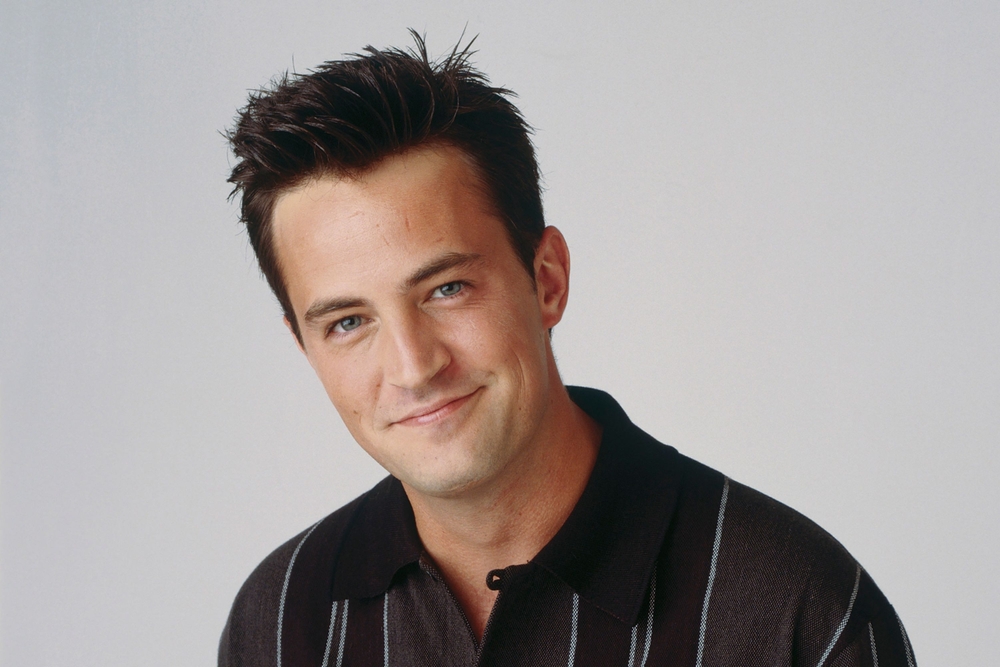
In the late 1990s, he became dependent on prescription drugs, including opioids like Vicodin. Over time, his substance use escalated, leading to multiple stints in rehab. At one point, he later admitted he had little memory of filming entire seasons of Friends.
That contrast defined much of his life. On-screen, he was confident and quick-witted. Off-screen, he was navigating a cycle of recovery and relapse. Still, he continued to work, showing up for filming and maintaining his public persona, even as his private struggles deepened.
As the years went on, Perry became more open about his addiction. He spoke candidly in interviews and later in his memoir about the toll it had taken on his body and mind. He survived several close calls, including a life-threatening pancreatitis diagnosis linked to alcohol abuse.
Despite everything, he never stopped trying to get better. He advocated for recovery, supported others facing addiction, and even turned his own home into a sober living facility for a period of time. But addiction is rarely linear; it adapts, and sometimes returns in unexpected ways.
In the months leading up to his death, Matthew Perry was reportedly undergoing ketamine infusion therapy. This treatment has gained traction in recent years as an alternative for people dealing with depression and other mental health conditions that don’t respond to traditional medication.
When administered in a controlled medical setting, ketamine can be effective. It works on different brain pathways than standard antidepressants and often produces rapid results. However, it also carries risks, particularly when used outside of strict medical supervision.

According to details that later emerged, Perry’s use of ketamine may have extended beyond structured clinical sessions. The safety of ketamine therapy depends heavily on controlled dosing, professional oversight, and careful monitoring. Without those safeguards, the margin for error becomes dangerously thin.
On October 28, 2023, everything came to a halt. Perry was found unresponsive at his home in Los Angeles. Emergency responders arrived, but he was pronounced dead at the scene. The news sent shockwaves through fans and the entertainment industry alike.
As investigators worked to determine what happened, ketamine quickly became a central focus. But what initially appeared to be a tragic overdose soon evolved into something far more complicated. Questions began to surface about how Perry obtained the drug, and whether others played a role in supplying it.
Where Medicine, Money, and Exploitation Collide
As the investigation unfolded, authorities began piecing together what appeared to be a network of individuals connected to the distribution of ketamine. This wasn’t limited to street-level dealing. Instead, it pointed to a more complex system involving suppliers, intermediaries, and, in some cases, medical professionals.
That detail is particularly unsettling. In theory, doctors are meant to provide care, guidance, and protection. But when boundaries are crossed, the relationship between patient and provider can quickly become exploitative.
Reports tied to the case suggest that access to ketamine was not difficult for someone like Perry. His wealth and status may have made it easier to obtain substances outside traditional medical channels. This reflects a broader issue within certain parts of Hollywood, where demand and access often intersect in ways that bypass safeguards.
At the center of this network is Jasveen Sangha, widely referred to as the Ketamine Queen. Prosecutors described her as a key figure in supplying ketamine illegally, often at inflated prices. Her role, according to authorities, was not incidental. It was part of a broader operation that capitalized on high-demand clients.

The nickname itself reflects how prosecutors framed her position. This was not someone on the margins. She was portrayed as deeply embedded in the distribution chain, with the ability to source and sell controlled substances to individuals willing to pay a premium.
This is where the story becomes bigger than one individual. It highlights a pattern that has long been whispered about in Hollywood, where vulnerable individuals struggling with addiction can become targets for those looking to profit.
The TMZ video tied to this case leans into that angle, suggesting that some addicts in Hollywood are not just battling their own demons. They are also navigating environments where access to substances is not only easy but sometimes encouraged by those who stand to gain financially.
In that context, the line between care and exploitation becomes dangerously thin. A person seeking treatment can quickly find themselves surrounded by individuals who see opportunity instead of risk. This does not remove personal responsibility. Addiction is complex, and individuals still make choices. But it does add more to the story, one that forces a closer look at the systems and people involved.
The Case Against Jasveen Sangha
As the investigation deepened, authorities began to zero in on Jasveen Sangha. According to court filings and reports tied to the case, Sangha was not simply a casual participant. Instead, she was described as a central supplier in a network that allegedly distributed ketamine to high-paying clients in Los Angeles.
Prosecutors argued that Sangha operated within a system that blurred the line between underground dealing and semi-legitimized access. She allegedly sourced ketamine and sold it at steep markups, sometimes coordinating with intermediaries who helped connect her to clients. These were not random transactions. They appeared targeted, calculated, and driven by demand from individuals who had both the means and the desire to obtain controlled substances outside traditional channels.
Investigators reportedly traced communications, financial exchanges, and delivery patterns that pointed to a structured operation rather than isolated incidents. While not every detail has been publicly disclosed, the case presented a picture of a supply chain that functioned efficiently and, more importantly, discreetly.
This level of organization is part of what made the case so serious in the eyes of prosecutors. It suggested intent, awareness, and a willingness to continue supplying substances despite the known risks. When authorities linked this network to Matthew Perry’s death, the legal stakes escalated dramatically.
Sangha’s defense, however, attempted to challenge aspects of that narrative. Legal teams often argue in such cases that responsibility cannot rest solely on suppliers, particularly when dealing with individuals who actively seek out substances. Still, prosecutors maintained that Sangha’s role went beyond passive involvement. They framed her as someone who knowingly participated in a system that put lives at risk.
Ultimately, the court sided with that interpretation, leading to her 15-year sentence. The outcome sends a strong message about how the justice system is beginning to treat cases involving controlled substances and high-profile deaths.
When Medical Ethics Come Into Question
One of the most troubling elements of this case is the alleged involvement of medical professionals. While not all details have been fully confirmed in public records, reports indicate that certain doctors may have played a role in facilitating access to ketamine beyond what is considered medically appropriate.
In legitimate settings, ketamine therapy follows strict guidelines. Patients are evaluated carefully, doses are controlled, and treatments take place under supervision. These protocols exist for a reason. Ketamine can be beneficial, but it is also powerful and potentially dangerous when misused.
However, cases like this raise concerns about what happens when those safeguards are bypassed. If a patient is able to obtain additional doses outside a clinical setting, the entire structure of safe treatment begins to collapse.
The TMZ coverage highlights a broader concern within Hollywood. It suggests that some individuals struggling with addiction may encounter professionals who are willing to bend the rules, whether due to financial incentives or pressure from high-profile clients.
This does not mean that all doctors behave unethically. In fact, the vast majority follow strict standards. But even a small number of violations can have devastating consequences, especially when dealing with vulnerable patients.
For individuals like Matthew Perry, who had a long history of addiction, trust in medical professionals would have been critical. If that trust was compromised, even partially, it could have played a role in how events unfolded.

Addiction, Access, and the Hollywood Reality
For many celebrities, access to substances is not limited in the same way it is for the average person. Wealth can remove barriers, connections can open doors, and privacy can allow patterns of behavior to go unnoticed for longer periods. This creates a dangerous combination. Someone who is already struggling may find it easier to continue using, even when they are actively trying to recover.
Matthew Perry’s story reflects that tension. He was not unaware of his addiction. In fact, he spent years trying to overcome it. He sought treatment, spoke openly about recovery, and worked to help others facing similar challenges. Yet despite those efforts, he remained in an environment where access to substances was still possible.
In such environments, the line between personal responsibility and external influence becomes blurred. A person may make choices, but those choices are shaped by the options available to them. If access is constant and temptation is reinforced by others, the path to recovery becomes even more complicated.
The Legal Outcome and What It Signals
The 15-year sentence handed down to Jasveen Sangha marks a significant moment in how cases like this are being handled. It reflects a shift toward holding suppliers more accountable, particularly when their actions are linked to fatal outcomes.
In the past, overdose-related cases often focused primarily on the individual who died. Now, there is increasing attention on the networks that supply substances and the role they play in enabling harm. It is part of a broader legal trend that seeks to address the root causes of drug-related deaths. By targeting suppliers, authorities aim to disrupt the systems that make these substances accessible.
However, the effectiveness of this approach remains a topic of debate. Some argue that it is necessary to deter harmful behavior. Others question whether it addresses the deeper issues of addiction and mental health.
In this case, the sentence sends a clear message. It signals that involvement in the distribution of controlled substances, especially in a way that contributes to a death, will be treated as a serious criminal offense. However, it does not fully resolve the broader concerns raised by the case. Questions about medical oversight, ethical boundaries, and systemic vulnerabilities remain.

A Story Bigger Than One Tragedy
Matthew Perry’s death is deeply personal for those who knew him and for the millions who grew up watching him on screen. But the circumstances surrounding it have turned it into something more than a single tragedy. It has become a lens through which larger issues are being examined. Addiction, access, and accountability are all part of that conversation. So too is the role of those who operate in the spaces between legality and exploitation.
The story of the Ketamine Queen is not just about one individual’s actions. It is about a system that allowed those actions to take place. As more details continue to emerge, the case may shape how similar situations are handled in the future. It may influence how authorities investigate supply networks, how medical professionals are monitored, and how society understands the complexities of addiction.
For now, it serves as a reminder that even in environments defined by success and visibility, vulnerability can still exist. And when that vulnerability is met with opportunity rather than protection, the consequences can be devastating.
What This Case Leaves Behind
The sentencing of Jasveen Sangha brings a sense of legal closure to one part of this story. But it does not close the broader conversation. Matthew Perry’s life was marked by both incredible success and ongoing struggle. He brought laughter to millions, yet faced challenges that many people never saw. His openness about addiction helped others feel less alone, even as he continued to fight his own battles.
What happened in his final days highlights a difficult truth. Recovery is not just about personal effort. It is also about the environment, the people involved, and the systems that surround an individual.
This moment should push for more awareness, stronger oversight, and better protection for those navigating recovery. Because while the verdict may be final, the issues it exposes are far from resolved.
A.I. Disclaimer: This article was created with AI assistance and edited by a human for accuracy and clarity.
Read More: This Was Matthew Perry’s Last Time Seen In Public, Plus The Actor’s Eerie Final Post