

Most of what kids call boredom is actually a gap: the moment between the last thing they were doing and the next thing they haven’t thought of yet. Parents tend to treat that gap as a problem requiring immediate intervention, as if an unstimulated child is a failing of household management. Research tells a more interesting story. That gap, the fidgeting and the sighing and the “there’s nothing to doooo,” is the exact moment where some genuinely useful things can happen inside a child’s brain, if you let it.
We live in an era of maximally scheduled childhoods. There is swim class and Spanish immersion and coding camp and the algorithmically optimized app that teaches multiplication through a story about woodland creatures. The logic of all of it is that more input equals more development, and that a child left to her own devices is a child falling behind. But researchers studying boredom, creativity, and child development have been quietly building a case for the opposite: that the moments when children are under-stimulated, when they have to figure out what to do with themselves, are doing developmental work that no structured activity can replicate.
The complaint “I’m bored” can feel like an indictment. Like you haven’t provided enough. Like you are somehow failing the mandate that arrives unannounced the day you become a parent. Before you pull out the craft supplies or queue up another episode of something, consider what the research actually says about what boredom does for children, and what we may be costing them when we rush to fill the silence.
What Boredom Is Actually Doing
University of Tokyo researchers, writing in a 2024 perspective, found that “boredom can drive one to seek fulfilling activities and the acquisition of skills to better enjoy life.” In other words, the absence of structured activity encourages children to explore their surroundings more creatively and develop problem-solving skills that may not emerge as readily in parent-directed settings. The boredom isn’t the destination. It’s the motivational pressure that sends a child looking for one.
Boredom allows the mind to wander, which can lead to new inspiration. This, in turn, may prompt ideas for fulfilling activities, according to a 2024 review. What looks like a child staring at the ceiling is, at a neurological level, a brain searching for its next problem to solve. The difference between that and a child staring at a screen is that the screen provides the answer before the question is even fully formed.
Boredom helps children develop planning strategies, problem-solving skills, flexibility, and organizational skills – key abilities that children whose lives are usually highly structured may lack, according to educational specialist Jodi Musoff at the Child Mind Institute. It’s not the boredom itself that helps children acquire these skills, she explains – it’s what they do with the boredom. “Typically, kids don’t plan their days, but when they work on a project to fill their time, they have to create a plan, organize their materials, and solve problems.”
That’s a meaningful distinction. A child handed an activity already has the plan built in. A child left to her own devices has to generate the plan herself, which is a genuinely different cognitive operation. It’s the difference between following a recipe and figuring out dinner from whatever’s in the refrigerator.
The Executive Function Connection
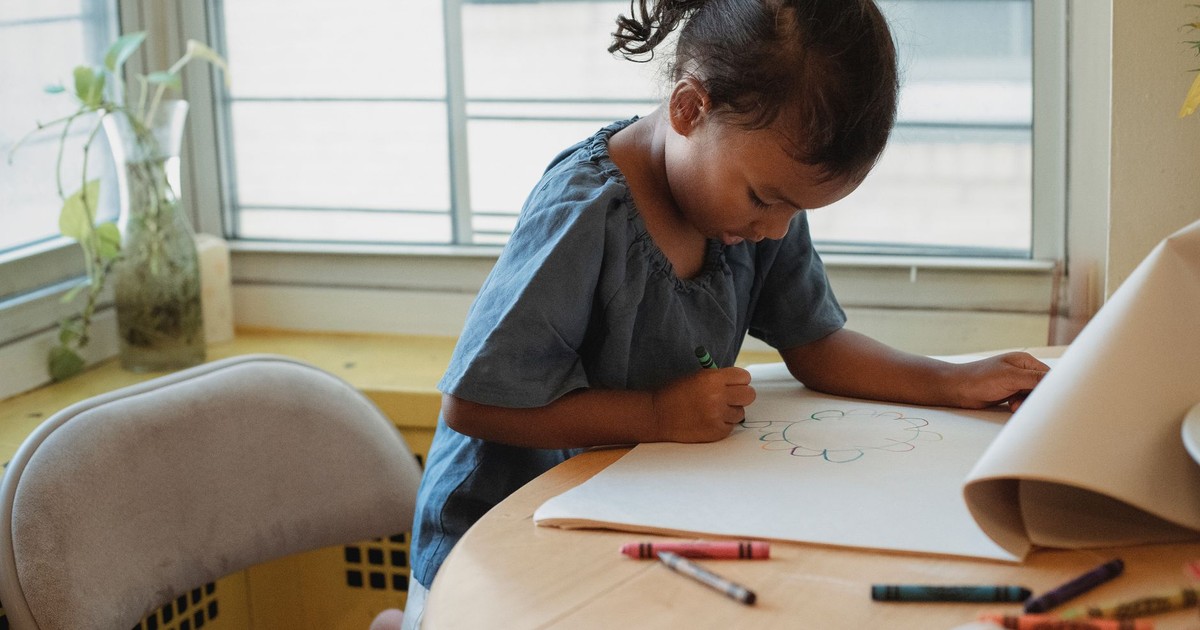
Executive function is one of those terms that sounds dry but describes something deeply practical: the ability to set goals, make plans, regulate your own behavior, and manage competing demands on your attention. It predicts academic outcomes, emotional health, and the capacity to handle the kind of adult frustrations that nobody prepares you for.
Research demonstrates that developmentally appropriate play with parents and peers is a singular opportunity to promote the social-emotional, cognitive, language, and self-regulation skills that build executive function and a prosocial brain. The American Academy of Pediatrics, in a clinical report reaffirmed in January 2025, advocates for protecting children’s unstructured playtime because of its numerous benefits, including the development of foundational motor skills that may have lifelong benefits for the prevention of obesity, hypertension, and type 2 diabetes.
The key word in all of this is “self-directed.” There’s a meaningful difference between the executive function a child uses when following adult instructions and the executive function required when no one is telling them what to do next. When the structure is gone and the decision-making falls to them, children practice something that structured schedules, by their very nature, cannot offer.
The Screen Shortcut and What It Costs

Here is where things get uncomfortable. The fastest and most common solution to “I’m bored” is a phone, a tablet, or a TV remote. It works immediately and completely, in the same way that going to sleep works for a headache. The boredom stops. But something else stops too.
Research published in Frontiers in Child and Adolescent Psychiatry in 2024 found that parents of children with greater temperament-based anger tend to use digital devices to regulate their child’s emotions – but this strategy hinders the development of self-regulatory skills, leading to poorer effortful control. The child learns that an unpleasant feeling has an external fix. She never learns to generate her own.
Children may miss chances to learn self-regulation skills if both parents and children rely on screens to reduce negative emotions like irritability, frustration, boredom, or stress. By using screens instead of learning resilience skills from their parents, children may develop avoidant forms of coping, rather than healthier “approach coping” methods. Approach coping is what it sounds like: facing the discomfort, finding a way through it. It’s what a bored child does when she finally stops complaining and builds something out of sofa cushions. Avoidant coping is what she does when she gets the screen instead.
None of this is an argument against screens or a verdict on any particular parenting decision. It’s an observation about what’s lost when boredom is treated as an emergency rather than a passing state. A five-year-old handed a tablet the moment she expresses frustration isn’t learning that frustration is survivable. And it is. It’s incredibly survivable.
Boredom as the Beginning of Something
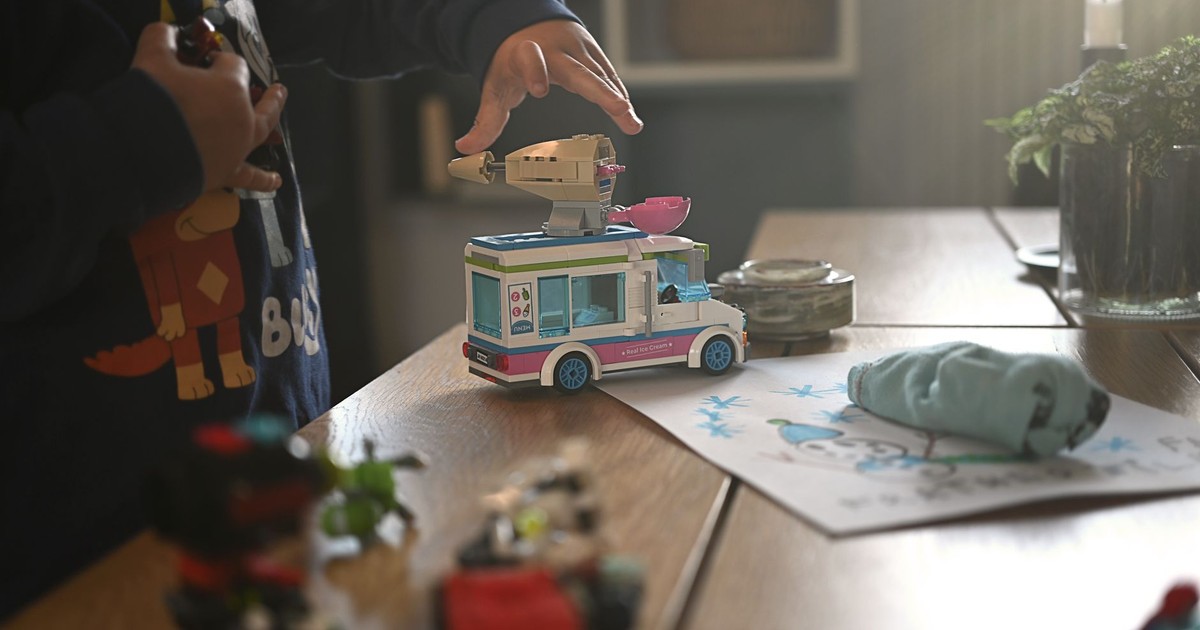
Some of the most consistent research findings in child development center on what children do when they’re left to entertain themselves and don’t have an obvious answer. When children are tasked with coming up with their own entertainment, they venture into uncharted creative territory. The classic empty cardboard box becomes a spaceship, a race car, or a fortress in the hands of a bored child with a vivid imagination.
The cardboard box situation is not a metaphor. It’s a real-world demonstration of what happens when novelty isn’t provided. The child’s brain doesn’t stop working because the inputs have been removed. It starts generating its own. And that generative capacity – the ability to look at an empty afternoon and make something of it – is one worth protecting.
Learning to sit with the discomfort of boredom without immediately seeking external solutions strengthens a child’s emotional stamina. With time, children become more confident in their ability to self-soothe, find joy in small moments, and approach problems with a solution-focused mindset.
That arc, discomfort to self-generated engagement, is a small version of something that will repeat itself across a lifetime. The child who learns to move through boredom on her own is rehearsing for the adult who can tolerate ambiguity, manage an unstructured afternoon, and find meaning in quiet stretches of time without outsourcing the problem to something external. Research consistently suggests children are far more resourceful than we give them credit for, when we don’t preemptively rescue them from the inconvenience of having to figure it out.
Read More: Mom is slammed for putting her kids in a box to get some alone time
What This Changes (and What It Doesn’t)

The research on kids boredom benefits doesn’t mean abandoning your children to howl at the walls from August until September. Boredom that tips into genuine distress, isolation, or something that goes on for days without any self-generated resolution is a different conversation. Children differ in their susceptibility to boredom and how well they cope with it. Some kids have an easier time sitting in the discomfort and finding their way out of it. Others need a bit more scaffolding before they can get there.
The shift is smaller than it sounds. It’s not refusing to engage with your children. It’s pausing before you solve the problem for them, long enough to let them take a shot at it first. It’s leaving some gaps in the schedule, not because structured activities are bad, but because unstructured time is doing something structured activities cannot. Children who learn to view boredom as an opportunity will try new activities, develop better frustration tolerance, learn how to take initiative and entertain themselves, acquire planning strategies and problem-solving skills, build perseverance, increase confidence, and get to know themselves better.
There is also a benefit for you. Letting go of the obligation to keep children entertained could help parents feel less stressed. Approximately 41 percent of parents in the U.S. said they “are so stressed they cannot function,” and 48 percent reported that “most days their stress is completely overwhelming,” according to a 2024 report from the U.S. surgeon general. Releasing yourself from the job of constant entertainment director isn’t neglect. It’s one of those things that turns out to be better for everyone in the equation.
The Gift You Don’t Have to Do Anything For
The hardest part of allowing children to be bored is tolerating the performance of their boredom. The sighing. The orbiting. The announcements delivered at volume directly into your ear that there is absolutely nothing to do in this entire house. The patience required is real, and it is not nothing.
But what’s on the other side of that tolerance is a child learning to generate her own answers. Not because you provided them, and not because a screen provided them, but because she ran out of easier options and discovered she was capable of making something out of nothing. That discovery doesn’t come from a schedule or an app or a weekend of planned activities. It comes from the gap, the uncomfortable in-between where nothing is happening yet, and the moment stretches long enough that her brain starts working on the problem itself.
The archive of what she builds in those moments, the games invented, the characters created, the elaborate systems of rules only she and her sibling understand, is not nothing. It is the beginning of knowing how to occupy herself in a world that will not always provide the next activity on cue. And that is a skill she’ll use for the rest of her life.
AI Disclaimer: This article was created with the assistance of AI tools and reviewed by a human editor.