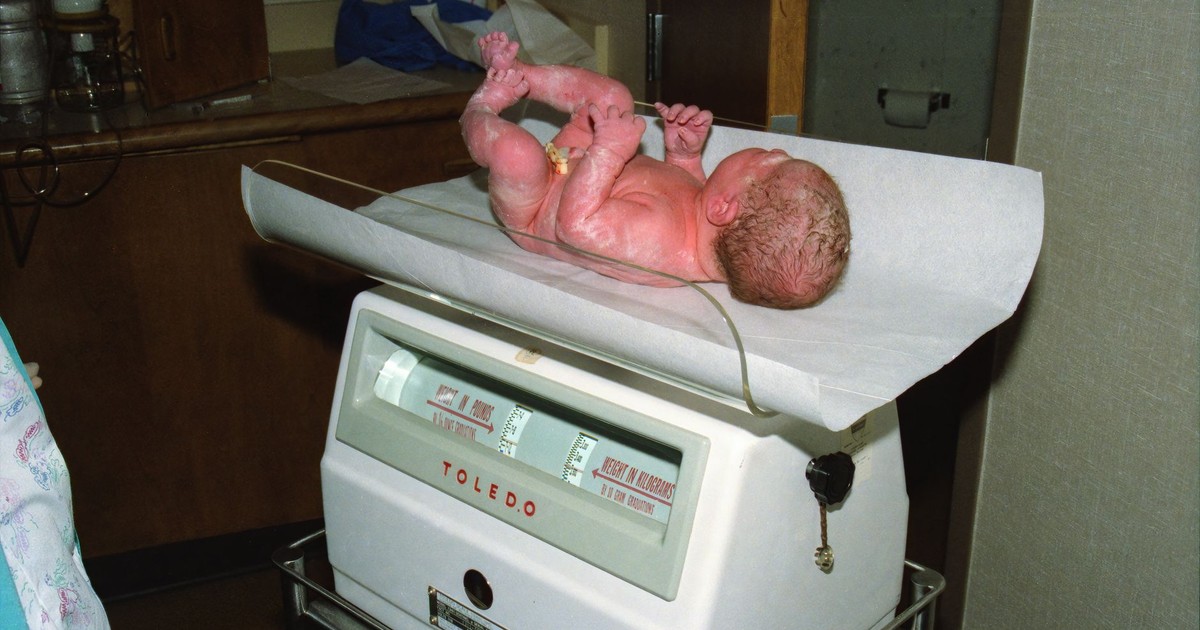

Nurses in a maternity ward have seen a lot. They’ve seen twins born holding hands. They’ve seen babies who came so fast there was no time for an epidural. They’ve seen enough to be unflappable at nearly everything the delivery room produces. So when a baby arrives and the whole unit stops to stare, that’s worth paying attention to.
Daniella Hines, 40, delivered her son Annan on September 3, 2025, at BayCare’s St. Joseph’s Hospital-South in Riverview, Florida, she later told TODAY, and by the time he was weighed and measured, he was 13 pounds, 15 ounces and 22 and three-quarter inches long. One ounce shy of 14 pounds. The hospital’s media relations department confirmed he is believed to be the largest baby ever delivered there. And staff said he was “the talk of the maternity ward.” Hines put it more succinctly. “He came out of me?”
The number on the scale is only part of why the story stuck. Hines had already delivered a large baby. Her older son, Andre Jr., had arrived at 12 pounds, 11 ounces. She had been told to expect a big baby this time around, too. And still, when Annan arrived, even she couldn’t quite believe what she was looking at. “Whose baby is this?” she said, laughing. The couple, who had not expected to be quite this surprised, also found themselves marveling: “We didn’t expect such a big blessing.”
The Hines Family Is Built for This (and Still Wasn’t Ready)

Daniella Hines stands six feet tall. Her husband, Andre Sr., is six feet, two inches. Their bodies are not exactly built on the standard template, and neither, it turns out, are their children. Hines has said she believes genetics played a role in Annan’s size, and she’s probably right. Genetic factors are among the influences on birth weight and the risk of macrosomia. The medical term for a baby born significantly larger than average, alongside gestational duration, pre-pregnancy BMI. Gestational weight gain. Two tall parents with one already-large child is not a coincidence; it’s a data point. If you’re curious about which physical traits parents pass on to their children, body size is very much on the list.
What’s striking is that the family knew going in that Annan would likely be large. The prediction, based on ultrasound measurements during pregnancy, had given them fair warning. And yet “large” and “nearly 14 pounds” are two entirely different categories of information. Hines described the pressure she felt during the C-section delivery as unlike anything she’d experienced the first time around. Even though she’d already brought a 12-pound-11-ounce human into the world via the same route. Some experiences, apparently, do not become routine no matter how many times you’ve been through something adjacent to them.
By eight days old, Annan had already outgrown standard newborn clothing and diapers. He arrived ready for a size category that most babies don’t reach for weeks.
Read More: 10 Physical Traits Mom Passes To The Baby (And 4 From Dad)
What “Big Baby” Actually Means Medically

The clinical term for what Annan represents is fetal macrosomia, and it has a specific threshold. Fetal macrosomia means a newborn is larger than average, also called “large for gestational age,” and certain factors can increase the risk, including diabetes and obesity. The standard threshold used in most clinical settings is a birth weight above 8 pounds, 13 ounces. Annan cleared that bar by more than five pounds.
The average newborn in the United States weighs around 7 pounds. Annan, at nearly twice that, was closer in size to a typical three-month-old. When the hospital posted photos of him on Facebook and called him a “big miracle,” they were not being hyperbolic. His birth weight was the kind of number that makes medical professionals pause mid-chart.
Hines was diagnosed with gestational diabetes during her pregnancy. She was clear about one thing on the subject: her glucose levels were closely managed throughout. Gestational diabetes is a recognized risk factor for macrosomia, with factors such as pre-pregnancy BMI, gestational weight gain. Parity also contributing to a baby’s size. How well glucose is controlled during pregnancy can influence outcomes. Hines monitored hers carefully, which. Alongside her genetics and history of delivering a large first child, helps explain the full picture of Annan’s size.
Why Second (and Third) Babies Sometimes Run Larger

There is a specific dynamic at play when a mother has already delivered a large baby and then delivers an even larger one. It is not random. A 2025 study published in Frontiers in Endocrinology, drawing on a cohort of 3,131 women who had experienced two consecutive singleton births. Found that previous gestational diabetes is linked to a higher risk of delivering a large-for-gestational-age or macrosomic baby in a subsequent pregnancy. André Jr.’s birth weight of 12 pounds, 11 ounces, extraordinary as it was, did not make Annan’s size an anomaly to be explained. It made it, in retrospect, almost predictable.
This is not to say the family should have been fully braced. Knowing a baby will be large and knowing a baby will weigh 13 pounds. 15 ounces are separated by the kind of gap that can only be crossed in the delivery room.
A Hospital Record, Not a World Record
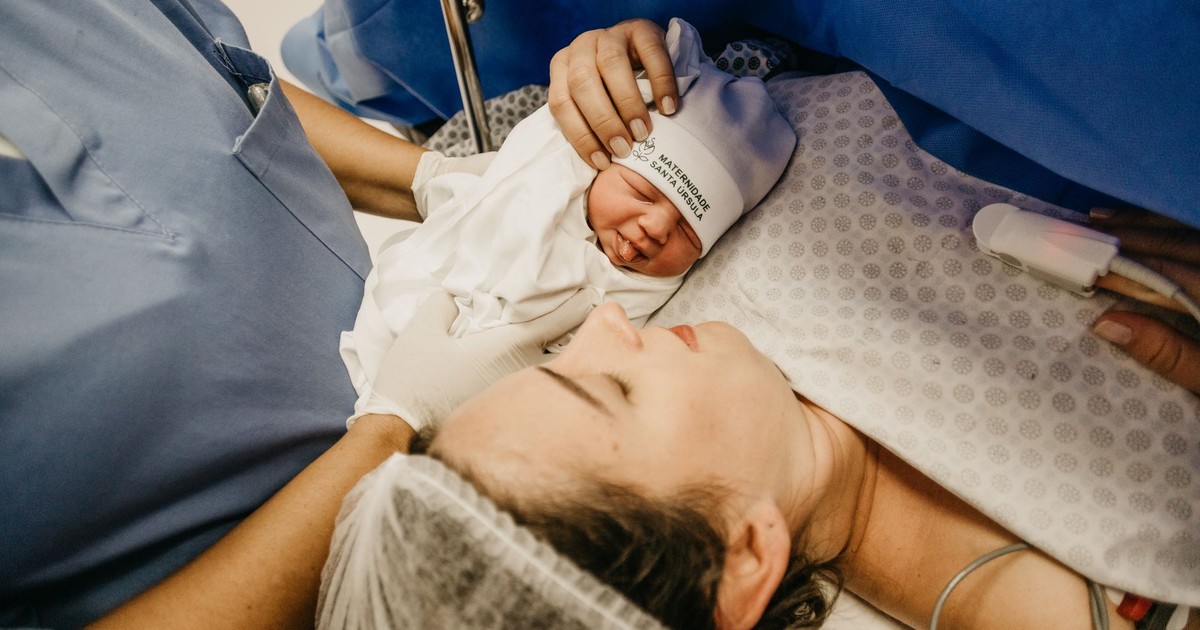
The framing around Annan’s birth has used the word “record” liberally, and it’s worth being precise about what that means. For St. Joseph’s Hospital-South, he is believed to be the largest baby ever born there in its 10-year history. That is a genuine institutional milestone. But it is not a national record, and it is not close to a global one.
The Guinness World Record for the heaviest baby to survive infancy belongs to a boy weighing 22 pounds, 8 ounces, born in Aversa, Italy, in 1955. More recently, in 2023, a woman in Brazil delivered a baby boy weighing 16 pounds, still more than two pounds heavier than Annan. Those larger births do not take anything away from what Hines went through. She delivered a nearly 14-pound baby after a pregnancy in which she managed gestational diabetes carefully. Her son arrived healthy and alert, and he seemed unbothered by the commotion he caused.
The hospital’s Facebook post called Annan “believed to be among the biggest babies, if not the biggest baby” born there. The hedged phrasing is accurate. What is not hedged is what happened in the room when he was born. Staff came from other parts of the floor just to see him. “It’s not every day you see an almost 14-pound baby pop out,” Hines said. She was laughing when she said it, which tracks.
What It Takes to Deliver a Baby That Size

A C-section delivery of a 13-pound-15-ounce baby is not the same procedure as a standard cesarean. The pressure and physical sensation during the surgery are categorically different. Hines said as much when describing how this delivery compared to her first. The body has to accommodate something it was not designed to deliver in the standard sense. Which is partly why large-baby births often involve extended surgical or recovery time. Why obstetric teams managing macrosomic pregnancies spend significant energy on planning the delivery logistics.
Diabetes during pregnancy is considered a significant risk factor for macrosomia, whether gestational or preexisting. Elevated glucose signals can lead to the fetus developing more body fat and an overall larger size. Newborns with macrosomia due to maternal diabetes also tend to have larger shoulders. In a well-managed pregnancy like Hines’s, the mechanisms are more complex, with height and genetics carrying at least as much explanatory weight.
Annan himself, in the first week after his birth, was described as a “chill baby” who only fussed when hungry. A child who arrived like a headline and then immediately went calm. His mother was not surprised by his temperament, only by his size, which, given that this was her second time delivering a child north of 12 pounds. Says something about how thoroughly Annan exceeded even adjusted expectations.
Where Things Stand Now
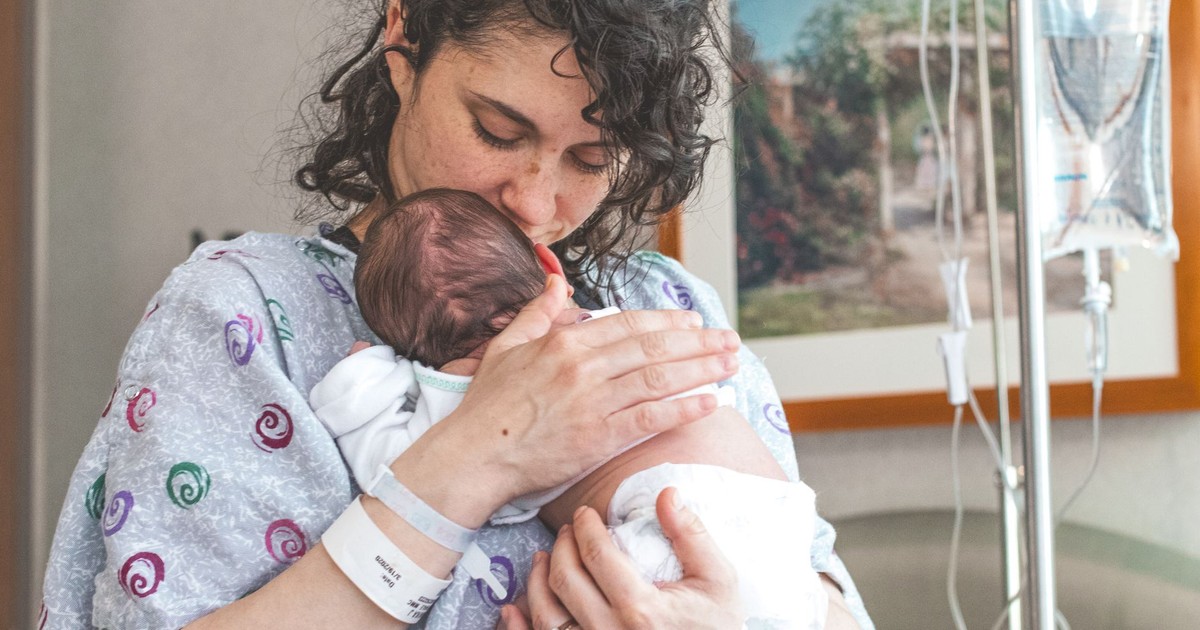
The piece of the story that tends to get lost in the coverage is the practical aftermath. At eight days old, Annan had already graduated out of newborn sizing. He was wearing clothes made for infants months older. In a body that entered the world already more substantial than most babies achieve in their first trimester outside the womb. His parents, both tall, both apparently practiced at receiving large-baby news, were still caught off guard enough to need a moment.
Hines is 40, and this was her second large-baby birth. She managed a gestational diabetes diagnosis throughout the pregnancy with strict glucose control. Delivered via C-section. Walked out of that hospital with a child who was immediately recognized as the largest the facility had ever seen. The humor she brought to it. “He came out of me?” and the observation that he was “like a little celebrity” on the maternity floor. Is the kind of response that only comes from someone who has genuinely absorbed the absurdity of a situation without being flattened by it.
Some births go exactly as expected. Some births produce a baby who causes a small gathering of medical professionals on a Wednesday afternoon in Riverview, Florida. Annan Hines was the second kind. His mother described it as “a big blessing.” Given the circumstances. That is both the most accurate and the most measured thing anyone could say about nearly 14 pounds of baby arriving ahead of schedule into a room that was not quite ready for him. Probably couldn’t have been.
Editor’s note: Hospital staff said Annan is believed to be the largest baby ever delivered at St. Joseph’s Hospital-South. That is a hospital record, not a world record. Larger births have been documented, including a 16-pound baby in Brazil in 2023 and the Guinness record of 22 pounds, 8 ounces, set in Aversa, Italy, in 1955.
Disclaimer: The author is not a licensed medical professional. The information provided is for general informational and educational purposes only and is based on research from publicly available, reputable sources. It is not intended to constitute, and should not be relied upon as, medical advice, diagnosis, or treatment. Always consult a licensed physician or other qualified healthcare provider regarding any medical condition, symptoms, or medications. Do not disregard, avoid, or delay seeking professional medical advice or treatment because of information contained herein.
AI Disclaimer: This article was created with the assistance of AI tools and reviewed by a human editor.