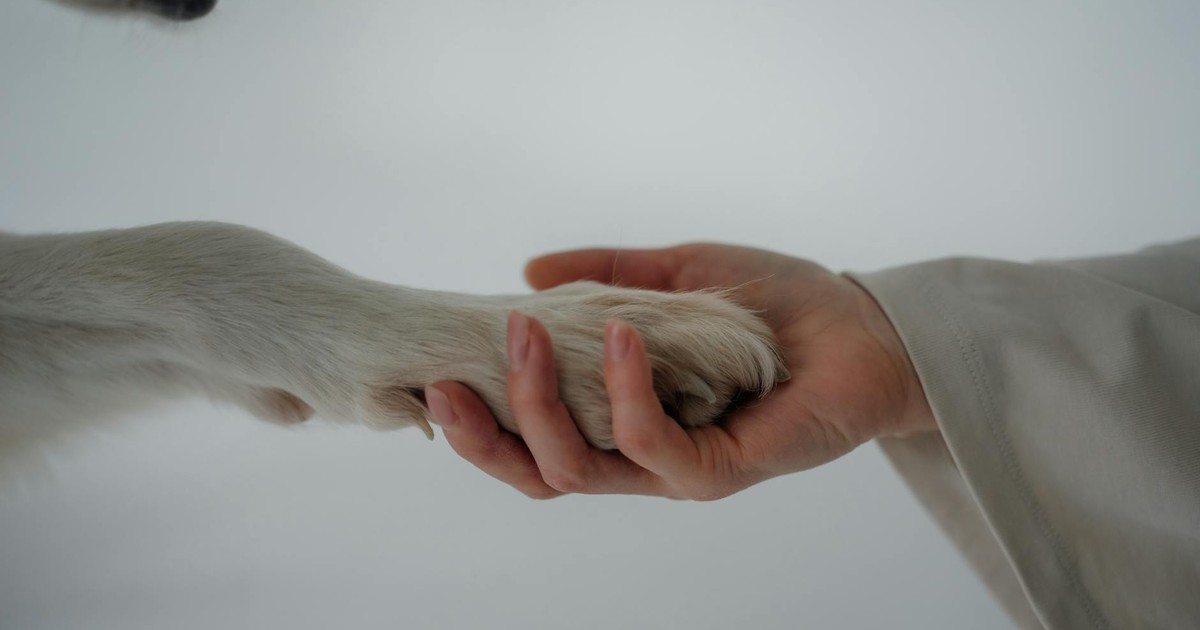

There is something about a movie that puts a human and an animal in the same frame and asks you to care about both of them equally. No complicated backstory, no unreliable narrator, no ambiguous ending to unpack over brunch. Just a person and a creature, doing their best in each other’s company, and somehow turning that simple premise into something that cracks you open. It works every time, and nobody is entirely sure why.
Part of it is probably the purity of the dynamic. Animals don’t hold grudges about things you said three Thanksgivings ago. They don’t ghost you, they don’t require a difficult conversation, and they will not bring up the ex you dated in 2018. The friendship between a human and an animal in film operates on a frequency that cuts right past your defenses, and filmmakers have known this since the earliest days of cinema. The movies about friendship between humans and animals have given us some of the most quietly devastating, joyful, and yes, ugly-cry-inducing stories ever put on screen.
The 15 films below are the ones that have stuck around, the ones people rewatch on sick days or recommend when a friend texts at midnight asking for something good to watch. They are not all cheerful. A few of them will wreck you. But every single one earns the emotion it asks for.
1. Hachi: A Dog’s Tale (2009)
Hachi: A Dog’s Tale is a 2009 American drama and a remake of a 1987 Japanese film, Hachikō Monogatari. The setup is almost disarmingly simple: a professor named Parker Wilson finds a dog lost at a railway station and temporarily takes it home, and the dog grows close to him and becomes his loyal companion. What follows is one of the most affecting portraits of devotion ever committed to film.
The movie is based on the real Japanese Akita dog Hachikō, who was born in Japan in 1923. After the death of his owner in 1925, Hachikō returned to the Shibuya train station the next day, and every day after that, for the next nine years until he died in March 1935. The American adaptation moves the story to Rhode Island, with Richard Gere in the lead, and loses none of the original’s emotional weight. A bronze statue of Hachikō stands in front of the Shibuya train station in his honor, in the spot where he waited.
This is the film people list when asked which movie made them cry hardest. It has an IMDB rating of 8.1 out of 10, which for a quiet story about a dog and a train platform is remarkable. If you have never seen it, set aside tissues and an evening when you don’t have anywhere to be afterward.
2. Old Yeller (1957)
Few movies about animal-human friendships are quite as impactful or devastating as Old Yeller, with its simple story about the friendship between a boy and his dog. Released by Disney in 1957, it is set in post-Civil War Texas and follows the Coates family after they take in a large yellow stray dog who wanders onto their property and promptly ingratiates himself with everyone – most crucially, with the eldest son, Travis.
The ending has earned the film its enduring reputation, and it is arguably one of the saddest moments in the history of Disney. Old Yeller has become a true cultural touchstone, particularly for Baby Boomers, and even the most hard-hearted viewer can’t help but shed a tear. What the film gets right that so many successors fumble is the specificity of the boy-dog bond. This is not a movie about having a pet. It is a movie about a particular dog, belonging to a particular boy, during a particular and irreplaceable stretch of childhood.
Generations of parents have watched this with their kids and then had to explain the ending through their own tears. That is the real inheritance the film leaves behind. It has been doing that for nearly seventy years.
3. Lassie Come Home (1943)
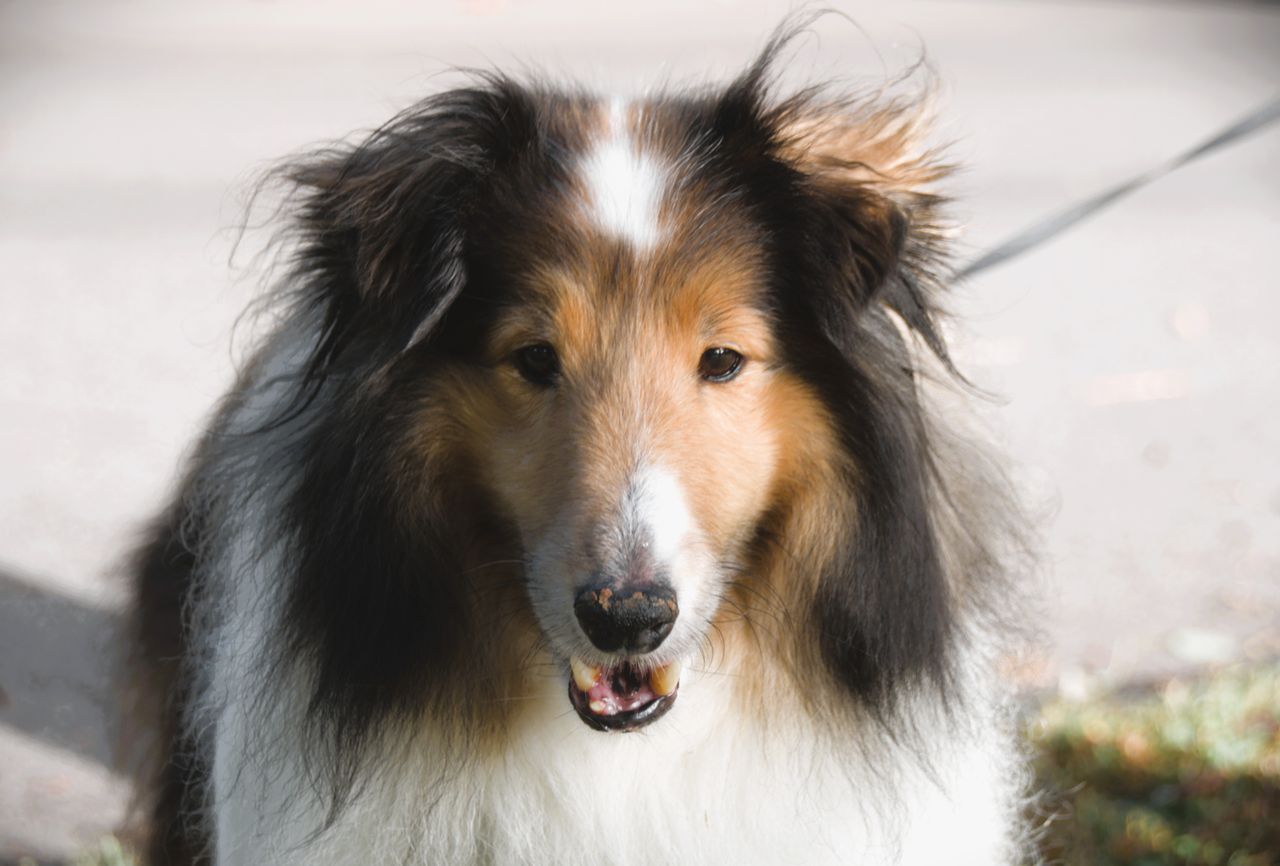
For many viewers, Lassie was the first dog they ever wanted to adopt. In this 1943 classic set in Britain during the Depression, an 11-year-old Elizabeth Taylor is paired with the lovable collie until the family is forced to sell Lassie to a wealthy duke. Determined to return to her family, Lassie sets off on a dangerous journey home.
The story of a faithful collie originally began as a short story and eventually transformed into a series of films and even a television series. The reason it endured across so many formats is that the central premise is irresistible: an animal who loves her family with such fierce loyalty that no distance, danger, or circumstance can override it. Lassie does not question the journey. She simply goes.
There is a reason this film made Elizabeth Taylor a star while she was still a child. The relationship between the girl and the dog is completely believable, which is harder to achieve than it looks. You do not watch the scene between them and think about acting. You think about the dog. That’s the whole game.
4. National Velvet (1944)
National Velvet is a film that sneaks up on you. The story of a young girl who believes her horse can win a famous national race, it is one of Elizabeth Taylor’s best performances, particularly in the scenes in which she interacts with the horse, Pie. Taylor was twelve years old during filming and still managed to carry the entire emotional weight of a story about ambition, love, and what it costs to believe in something completely.
The film tenderly explores PTSD, grief, and the special connection between humans and animals, while also providing edge-of-your-seat action that helped define the sports genre in film. Ahead of its time, National Velvet is not only a great family film but a seminal sports film too. The bond between Velvet Brown and her horse is the kind that doesn’t require explanation within the story. It simply exists, plain and obvious to everyone around them, even when others can’t see what she sees in the animal.
This is also a movie about what it means to have a dream that nobody around you fully understands. The horse is the vehicle for that dream, in every sense of the word. The friendship between them is the belief made visible.
5. The Black Stallion (1979)
Based on the novel by Walter Farley, The Black Stallion focuses on the friendship between young Alec and an Arabian stallion known simply as The Black. After escaping from an island, they later enter a race against several noted racehorses. The film is directed by Carroll Ballard and is one of those movies that looks so beautiful you’d watch it without sound and still come away moved.
What makes The Black Stallion extraordinary among movies about friendship between humans and animals is its patience. The central section of the film, in which the boy and the stallion are stranded alone on a deserted island, contains almost no dialogue. The friendship between them is built entirely in images: the horse crashing through waves, the boy sleeping against his flank, two creatures learning to trust each other in the absence of any other option. The film manages to be both quite thrilling and deeply touching, particularly in the scenes in which young Alec and the horse bond. It won a special Academy Award for its achievement in filmmaking and remains one of the most visually stunning family films ever made.
6. Free Willy (1993)
Free Willy arrived in 1993 and immediately became the defining movie of its era for a generation of children who were not allowed to watch anything too scary. A twelve-year-old boy named Jesse forms an unlikely bond with a captive orca named Willy at a local water park, and the film builds steadily toward the question of whether Jesse can help Willy reach the ocean before the park’s owners do something unthinkable.
The friendship between Jesse and Willy works because neither character is given an easy life. Jesse is a troubled kid in the foster system; Willy is a wild animal in an enclosure that cannot contain him. Their bond is built on the recognition that neither of them belongs where they’ve been placed, and that recognition is more honest than most adult friendships depicted on film. The movie launched a sequel, a television series, and a real-world campaign to free the orca who played Willy, a wild-caught whale named Keiko. The film’s cultural footprint lasted far longer than anyone expected from what looked, on paper, like a modest family picture.
7. Babe (1995)
Babe is a 1995 drama about an orphan piglet taken in by a farmer. The young pig grows up with a border collie and her puppies, and the way humans treat animals is a central theme. The film adapts Dick King-Smith‘s novel The Sheep-Pig and somehow manages to be simultaneously a comedy, a philosophical inquiry into kindness, and an unexpectedly moving study of what it means to find your place in a world that wasn’t designed with you in mind.
The film had such an impact on star James Cromwell, who played the farmer, that he went vegan and became an outspoken advocate for animal rights. That is the measure of a film that does its job properly. When the actor playing the human is changed by the experience of shooting it, you know the story is landing somewhere real. The relationship between the farmer Hoggett and the pig Babe is communicated almost entirely through silence and glance. Hoggett says very little. Babe understands everything. It is the quietest love story in the movie, and somehow the most complete.
8. My Neighbor Totoro (1988)
Hayao Miyazaki‘s My Neighbor Totoro operates on rules of its own. Two sisters, Satsuki and Mei, move to the Japanese countryside while their mother recovers in hospital, and they encounter a giant, wordless forest spirit named Totoro who becomes a protective presence in their lives. The friendship between the children and Totoro is not explained, not questioned, and not resolved in any conventional sense. It simply is.
What the film understands about children and animals, or in this case, ancient nature spirits who function as animals, is that the bond does not need a shared language. Mei, the younger sister, finds Totoro by following her instincts into a hollow tree. She falls asleep on his belly in the rain. No negotiation, no introduction. That’s the whole friendship, established in about four minutes. Miyazaki’s film has been in continuous circulation since 1988 and has been used in Japanese hospitals and schools for its calming effect on children facing fear and uncertainty. For all its gentle fantasy, it is one of the most emotionally accurate films ever made about what it feels like to be small in a world that is very large.
9. The Fox and the Hound (1981)
Few Disney films are as heartbreaking as The Fox and the Hound, with its story of Tod and Copper, whose childhood friendship is torn apart by prejudice. A fox and a hunting hound meet as young animals and become inseparable. The film’s tragedy is structural: the world they were born into will not allow their friendship to survive adulthood. Copper is trained to hunt. Tod is prey. The rules were written before either of them existed.
The film resonates for adult viewers in a way that most animated movies don’t, precisely because it doesn’t offer a clean escape from its own premise. Tod and Copper are not reunited at the end in any satisfying way. Their childhood bond is real and depicted with genuine warmth, but the film is honest about what happens to many friendships when the world reasserts its categories. Released in 1981, it remains one of the more emotionally sophisticated things Disney has ever produced, and it does not get nearly enough credit for that.
10. Flipper (1963)
Flipper is a fun tale of a boy and a dolphin, which proved popular enough to merit a sequel and launch a fondly remembered 1960s television series. Sandy, a young boy who lives in Florida with his family, nurses a dolphin back from injury and names him Flipper. The premise seems simple – boy finds dolphin, dolphin becomes his – but the film tapped into something real about the appeal of cross-species connection at the water’s edge.
What the dolphin gives Sandy that no human character in the film can quite provide is uncomplicated enthusiasm. Flipper arrives without agenda. He performs no transaction. He just comes back. The television series the film spawned ran for two seasons in the 1960s and introduced Flipper to an entire generation of children who would never have access to an ocean. That is one of the things movies about friendship between humans and animals do reliably well: they give landlocked kids a window into worlds they haven’t seen, alongside the assurance that animals, given the chance, will choose you right back.
11. Turner & Hooch (1989)
The buddy cop movie is one of Hollywood’s favorite genres, and in Turner & Hooch it got a spin when one of the buddies is a dog. Tom Hanks is in predictably fine form as Detective Scott Turner, whose odd-couple bond with dog Hooch is key to the film’s humor. The movie has a bit of everything, and the ending is surprisingly more bittersweet than one would expect of a comedy.
Hooch is a French Mastiff, enormous and comprehensively slobbery, and the physical comedy of pairing him with Tom Hanks’ particular brand of exasperated everyman is as effective in 2026 as it was in 1989. What the film quietly builds alongside the laughs is a genuine portrait of reluctant attachment. Turner does not want Hooch. He takes Hooch in because he has no other option and then discovers, gradually and against his will, that the dog has become necessary. That’s the most honest way friendship happens, with animals or anyone else. You don’t choose it. It just accumulates.
12. Marley & Me (2008)
Marley & Me markets itself as a family-friendly comedy drama, but don’t be fooled: it will bring even the hardest hearts to full-blown sobs. The film doesn’t hesitate to explore subjects like miscarriage, postpartum depression, and the slow decay of Marley’s health. Based on journalist John Grogan’s memoir about his family’s chaotic, beloved Labrador Retriever, the movie is as much a portrait of a marriage as it is a portrait of a dog.
What makes Marley & Me hold up is that it doesn’t romanticize the dog. Marley is genuinely impossible. He eats furniture, terrifies the neighbors, fails obedience school spectacularly, and generally operates as a force of nature inside a domestic life that would prefer a little more order. The friendship between Grogan and Marley is built on frustration, exasperation, and the particular love that forms when you’ve decided to keep something that makes your life considerably harder. Dog owners have been recommending this film to each other since its 2008 release. The end never gets easier, no matter how many times you’ve seen it.
13. Paddington 2 (2017)
Paddington 2 is even more heartwarming than the original, with a delightful cast that includes Ben Whishaw returning to voice Paddington, alongside Hugh Bonneville, Brendan Gleeson, and Hugh Grant. For a long time it maintained a perfect 100 percent score on Rotten Tomatoes, which is quite an accomplishment for a film about the friendship between a bear and a human family.
Paddington himself is one of cinema’s most successful characters precisely because his friendship with the Brown family operates entirely without conditions. He doesn’t ask to be understood. He extends goodwill to every person he encounters, and the film trusts that this is its own form of radical act. Rarely does a sequel surpass the original, but Paddington 2 achieves it. The film sees the lovable bear on an adventure across the United Kingdom, one that fully embraces humor and camp alongside edge-of-your-seat action sequences. Hugh Grant’s turn as a villainous, eccentric actor is one of the best performances of his decades-long career. The movie is the rare sequel that makes you love the original more, not less.
14. My Octopus Teacher (2020)
My Octopus Teacher is a documentary, which means it does something none of the other films on this list can claim: the friendship at its center is completely real. A filmmaker forges an unusual friendship with an octopus living in a South African kelp forest, learning as the animal shares the mysteries of her world. Craig Foster, a South African filmmaker, spent a year diving without a wetsuit into a cold Atlantic kelp forest every day to be with one particular octopus. What unfolds is something so improbable that if it had been written as fiction, it would have been rejected as too convenient.
The film won the Academy Award for Best Documentary Feature in 2021 and introduced the concept of a human-octopus friendship to audiences who had not previously considered it possible. At the center of the film is Craig Foster, who strikes up a surprisingly deep and resonant relationship with a common octopus. As Foster becomes increasingly intertwined with the invertebrate’s life, both the filmmaker and the viewer come to rethink their place in the natural world and their bond with the animals with whom they share the planet. As an entry in the movies-about-friendship-between-humans-and-animals canon, it is the most unusual film here, and possibly the most profound.
15. How to Train Your Dragon (2010)
When Hiccup, a young Viking boy, befriends a dragon, their newfound bond upsets everything his community thought they knew about the fire-breathing creatures that were supposed to terrorize their village. How to Train Your Dragon is a DreamWorks animated film that works equally well for children watching it for the first time and for adults who have watched it seventeen times with their kids and still tear up at the flight sequence.
The dragon Hiccup befriends, a Night Fury named Toothless, is the key to the whole film’s success. He is not cute in the way animated animals are usually cute – rounded, chubby, large-eyed. He is sleek and strange and genuinely powerful, and the friendship between him and Hiccup is built entirely on trust, not charm. Hiccup approaches Toothless with a sketchbook, trying to understand him before trying to use him. Toothless approaches Hiccup with his nose. The film launched a beloved franchise that includes two sequels, a television series, and a 2025 live-action adaptation – which itself speaks to how completely the story of a boy and his dragon has lodged itself into the cultural memory of a generation.
What Makes These Stories Last
Every film on this list has survived long past its release year, and they have survived for the same reason: they are not actually about the animal. They are about what the animal reveals in the human. Hachi reveals Parker’s capacity to be loved completely. Babe reveals Farmer Hoggett’s decency. Toothless reveals that Hiccup was right all along, about everything, and that his village’s certainty was just fear wearing a costume.
The animal in these stories cannot betray you, cannot dissemble, cannot pretend. The friendship asks nothing except presence. That is one reason these films hit differently than most, and why people return to them in difficult years, on bad afternoons, or whenever they need a reminder that connection between two living creatures does not require that they be the same kind.
What these fifteen films collectively understand is that we keep telling this particular story because we haven’t stopped needing it. The world gives us plenty of relationships that are conditional, transactional, or exhausting. A story about a person and an animal who simply find each other and decide, without paperwork or negotiation, to stay – that is not a sentimental fantasy. It is something closer to a wish. The friendship is the point. Everything else is just the plot.
AI Disclaimer: This article was created with the assistance of AI tools and reviewed by a human editor.