

Sleep is where your brain consolidates memory, processes emotion, and performs the nightly maintenance that keeps you functional. For most people, bedtime is private, uncomplicated, a reliable end to the day.
For people living with a narcissist, it is none of those things.
The pattern rarely announces itself right away. It creeps in gradually – a late-night conversation that ran long, an argument that seemed to start from nowhere, a sudden and urgent need for reassurance precisely when your eyes were closing. One day you realize you haven’t slept well in months, that you’ve started dreading bedtime, and that you wake up every morning already tired before the day has asked anything of you. The bedroom has become another arena. Narcissist sleeping habits are a specific and underrecognized form of control, and once you see the pattern clearly, it is very hard to unsee.
1. Picking Fights the Moment You Start to Wind Down

When someone reliably starts conflicts at 10 or 11 PM, just as you are finally releasing the tension of the day, they are not doing so because that’s when the important issues occur to them. They are doing it because that’s when you are least equipped to deal with it.
A tired mind is an easier mind to work with. When you’re exhausted, you can’t think clearly, you question yourself, and you’re far less likely to challenge their version of events. A late-night fight puts you at a profound structural disadvantage: your ability to hold a logical argument together, to remember previous conversations accurately, or to walk away without guilt is already compromised before the first accusation comes through.
According to a 2024 study in the Journal of Sleep Disorders & Therapy, the stress of maintaining a grandiose self-image can lead to excessive rumination at night, causing individuals to replay social interactions or plan future ways to assert dominance. Late-night arguments often serve that purpose perfectly. The narcissist gets to revisit a grievance on their timeline, when the emotional deck is stacked in their favor, and when you’re too depleted to do anything but either capitulate or absorb the fallout. You end up spending the night cycling through what was said, reviewing how you could have answered differently, and by morning you’re the one who looks strung out while they’ve already moved on.
2. Demanding Emotional Attention Right at Bedtime
You announce that you’re going to bed, and suddenly they need you. Not urgently, not in a crisis, but in that low-level, persistent way that’s impossible to dismiss without feeling monstrous. They need to talk through something that happened at work. They need reassurance about something you said three days ago. They need to process a feeling that has, conveniently, surfaced at 11:45 PM.
The same 2024 research found that Narcissistic Personality Disorder is characterized by an inflated sense of self-importance, a need for admiration, and a lack of empathy, and that individuals with NPD often experience sleep disturbances – anxiety related to the need for validation may cause insomnia and difficulty falling asleep. That insomnia doesn’t stay contained to them. When their anxiety about validation activates at night, the nearest available source of supply is lying right next to them. You become the 24-hour service desk for a need that can never quite be satisfied.
You know they’re not in a crisis. You know, on some level, that this has happened every night this week. But saying “I’m too tired, this can wait until morning” feels unkind, and they know it feels unkind, and they’ve calibrated the ask accordingly. Not so dramatic that you can point to it as unreasonable. Just needy enough to keep you up for another hour.
3. Controlling the Physical Sleep Environment
The TV stays on at their preferred volume while you’re trying to sleep. The light doesn’t go off when you need it to. They take up three-quarters of the bed without apparent awareness, then act genuinely puzzled if you bring it up. The thermostat is set to their comfort regardless of yours. Their phone sounds off at midnight because they haven’t bothered to set it to silent, and they don’t see why they should have to.
Narcissists exert control over various aspects of their relationships, including sleep patterns. By manipulating sleep dynamics, they reinforce their superiority and disrupt their partner’s well-being, ensuring their own needs are always prioritized even at the expense of their partner’s rest and health.
Someone who genuinely hadn’t noticed will adjust when you raise it. Someone who treats your sleep needs as an affront to their comfort, who sighs heavily, who accuses you of being difficult or controlling, who somehow manages to make your request for basic sleep conditions into evidence of your unreasonableness, is not operating from obliviousness. They’re operating from the assumption that the environment belongs to them and you are a guest in it. Their side of the bed. Their preferred settings. Your discomfort is, at best, irrelevant.
4. Using Silence and Coldness as a Nighttime Weapon
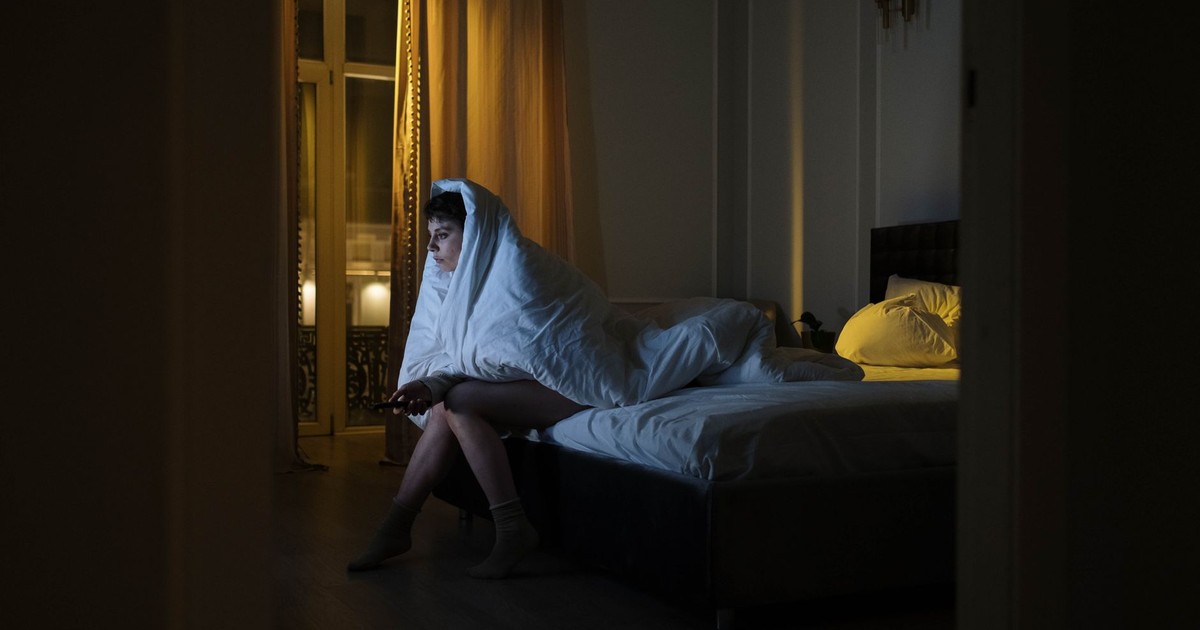
The weaponized silent treatment is most corrosive at bedtime. During the day you can busy yourself, leave the room, run an errand, get some physical distance from the chill. At night you’re horizontal, in the same bed, with nowhere to go and hours of darkness ahead of you. Turning away and creating physical distance during sleep sends a clear message that their comfort is paramount, leaving their partner feeling neglected and anxious, and ensuring that the partner constantly seeks ways to improve the relationship at the cost of their own well-being.
Nothing is explicitly said. No accusation is made. But the message is unmistakable: something is wrong, it is your fault, and you will not find out what it is tonight. You lie there running through every interaction from the day, trying to locate the offense, mentally drafting apologies for things you haven’t confirmed you did. Meanwhile, they sleep soundly. The standoff ends when you cave and apologize having been worn down enough to accept whatever version of events they’re about to offer.
If you’ve found yourself playing along with a narcissist’s victim narrative just to end the standoff and get some sleep, you already know exactly how this works.
5. Chronic Late-Night Screen Use That Prioritizes Their Schedule Over Yours

They’re on their phone at midnight, at 1 AM, at 2 AM. The blue light floods the room. The notifications go off. They’re scrolling for validation, checking social media engagement, texting, or doing whatever endless loop of external approval-seeking they need. And your sleep schedule is simply not a factor in this calculation.
Some researchers suggest that narcissistic individuals may have a higher likelihood of being night owls, preferring to stay up late and sleep in – possibly related to their need for control and desire to operate on their own schedule. Many narcissistic individuals also struggle with impulse control and may engage in late-night social media binges seeking validation and attention.
Your need for rest is less important than their need for stimulation. If you ask them to put the phone away, you become the unreasonable one. You’re policing them. You’re controlling. The conversation that follows may easily become the late-night argument from habit number one, which brings you right back to the beginning of the cycle. Research published in Frontiers in Sleep found that chronic sleep deprivation increases irritability, impairs emotional stability, and diminishes the capacity for empathetic social engagement – which, night after accumulated night, describes precisely what is happening to you while they sleep in the next morning undisturbed.
6. Rewriting the Morning After to Make You Doubt Your Own Memory
This one doesn’t happen during the night, exactly, but it is entirely a product of narcissist sleeping habits and the exhaustion they create. After a night of disrupted sleep, of arguments or cold silences or anxiety-soaked lying-awake, you wake up foggy and destabilized. Your memory of the previous night’s events is slightly blurry. Your emotional baseline is already depleted. You’re not operating at full capacity, and they are counting on exactly that.
A 2025 study in Frontiers in Behavioral Neuroscience found that acute sleep deprivation impairs emotion regulation, while chronic sleep deprivation further increases individual emotional vulnerability. This vulnerability is the gap they step into. The argument from last night? You misremembered it. You took it the wrong way. You always do this. The cold silence? They were just tired – why do you have to make everything into something? The fact that you’re upset proves you’re oversensitive, not that anything happened.
Sleep deprivation impairs memory consolidation and emotional processing. Research confirms that sleep deprivation significantly decreases alertness, alters emotional states, and slows reaction times. You begin to distrust your own recall, not because your recollections are wrong but because you’ve been made to feel unstable enough to second-guess them. The manipulation does not require elaborate planning. It just requires that you be tired enough, often enough, that the ground beneath your own perception never quite feels solid.
What You’re Actually Dealing With
Each of these behaviors, taken alone, sounds like complaining about someone who’s inconsiderate. Taken together, they form a nightly system in which your rest, your emotional stability, and your grasp of reality are consistently undermined — not loudly, not dramatically, but steadily, night after night, until exhaustion becomes your baseline and you stop trusting your own read of what’s happening.
Chronic sleep deprivation can aggravate narcissistic traits, leading to increased irritability, impulsivity, and difficulty maintaining relationships – which means the cycle does not stay still. The more disrupted your sleep becomes, the more reactive you are, the more easily they can point to your behavior as evidence of the problem.
You don’t have to have everything figured out to start paying attention to what your nights actually look like. Some of these patterns go back further than the current argument, further than this year, further than you might want to trace right now. Recognizing them is not the same as knowing what to do with them. But you can hold the recognition clearly, and clearly is a better place to stand than confused and exhausted.
Disclaimer: This information is not intended to be a substitute for professional medical advice, diagnosis, or treatment and is for information only. Always seek the advice of your physician or another qualified health provider with any questions about your medical condition and/or current medication. Do not disregard professional medical advice or delay seeking advice or treatment because of something you have read here.
AI Disclaimer: This article was created with the assistance of AI tools and reviewed by a human editor.