

Peter Falk spent 35 years playing television’s most lovable detective, a rumpled genius who dismantled the alibis of wealthy murderers with nothing more than politeness and persistence. Lieutenant Columbo became so embedded in popular culture that children in remote African villages would run up to Falk shouting the character’s name whenever they spotted him. He won four Emmy Awards for the role and a Golden Globe, and TV Guide ranked him among the 50 Greatest TV Stars of All Time. But behind the raincoat and the cigar, behind the awards and the global adoration, Falk lived a life far more troubled than his iconic character ever suggested. According to Richard Lertzman’s biography “Beyond Columbo,” Falk drank and smoked incessantly, loved boozing with his friends, and was an inveterate womanizer. He was a negligent husband and an absentee father.” His final years were consumed by Alzheimer’s disease and bitter family conflict. With his daughters alleging they were cut off from their dying father.
The man who made millions laugh as the bumbling detective left behind a legacy that included estrangement, infidelity, and courtroom battles over his care. His story is one of extraordinary talent meeting ordinary human failure. Of a performer who could inhabit a beloved character while struggling to be present in his own life.
A Glass Eye and the Long Road to Acting
Falk was born in New York City in 1927 to Jewish parents with Eastern European roots. At 3 years old, he lost his right eye to retinoblastoma, a rare cancer, and wore a glass eye for the rest of his life. That prosthetic gave him his trademark squint and one of his favorite stories. Playing baseball at Ossining High School, Falk was called out at third base when he was certain he was safe. He pulled out his glass eye, handed it to the umpire, and said, “Try this.”
The path to acting was anything but direct. After the armed services rejected him at the end of World War II because of his missing eye, Falk joined the Merchant Marine and worked as a cook. “There they don’t care if you’re blind or not,” he told Cigar Aficionado in 1997. “The only one on a ship who has to see is the captain. And in the case of the Titanic, he couldn’t see very well, either.” A year on the water led back to college, then a master’s degree in public administration from Syracuse, then a job as a management analyst for the Connecticut State Budget Bureau. He even applied to the CIA. But was rejected for belonging to a union that had been investigated for communist leanings. The membership had been a job requirement, and Falk had never been active in it.
Breaking Through Despite the Doubters
Acting came almost by accident when Falk joined a community theater group called the Mark Twain Masquers while working in Hartford. He didn’t move to New York to pursue it professionally until he was 28. Where he studied with Eva Le Gallienne and Sanford Meisner and made his Broadway debut in 1956. But a theatrical agent warned him not to expect much film work because of his artificial eye. And early rejections seemed to confirm the prediction. Columbia Pictures boss Harry Cohn famously turned Falk away after a failed screen test, saying, “For the same price I can get an actor with two eyes.”
Falk’s performance as killer Abe Reles in the 1960 film Murder, Inc. proved the doubters wrong. The New York Times called it “an average gangster film,” but singled out Falk’s “amusingly vicious performance,” and Falk earned an Academy Award nomination for Best Supporting Actor. The following year, Frank Capra cast him as gangster Joy Boy in Pocketful of Miracles, which turned out to be Capra’s final film. The film didn’t achieve the commercial success Capra hoped for. But Capra wrote in his autobiography that amid all the production troubles, “the entire production was agony… except for Peter Falk.” Falk earned his second consecutive Oscar nomination. These back-to-back nominations, combined with his Emmy nominations in 1961 and 1962, made Falk the first actor nominated for both an Oscar and Emmy in the same year. He achieved this distinction twice. In both 1961 and 1962, and won his first Emmy in 1962 for The Dick Powell Theatre.
Building Columbo From His Own Closet
When NBC developed Columbo in the late 1960s, Falk wasn’t the obvious choice. Bing Crosby and Lee J. Cobb were the lead contenders, but Crosby worried the commitment would interfere with his golf game, and Cobb passed. Falk called co-creator William Link after getting a copy of the script from his agents and told him he’d “kill to play that cop.” Link and his partner Richard Levinson had known Falk from their days working in New York, and while he was the opposite of what they’d originally pictured, they took the chance.
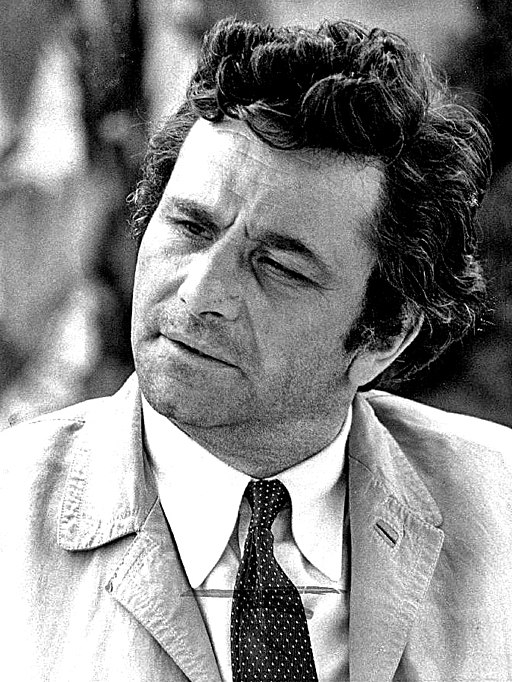
The character came together through Falk’s own instincts. He rejected the wardrobe the studio proposed and went into his own closet to find a beat-up raincoat he’d bought years earlier when caught in a rainstorm on 57th Street in New York. Then, he chose Columbo’s battered 1959 Peugeot 403 from a studio lot and brought in his own old boots. He added the habit of humming “This Old Man” while waiting on the phone, first improvised during the 1973 episode “Any Old Port in a Storm.” The raincoat became so synonymous with the character that after 25 years on television. When it grew too tattered to use, it had to be carefully replaced. The famous catchphrase came from the writers. Levinson later explained that while writing the original stage play, a scene ran short after Columbo had already exited. Rather than retype the whole page, they simply had him stick his head back in and say, “Just one more thing.”
A Show That Broke Every Rule
The leading man wasn’t classically handsome, there was no violence. He never fired a gun or threw a punch, and every episode gave away the killer at the beginning. The format was an inverted detective story, sometimes called a “howcatchem” instead of a “whodunnit,” where the pleasure came from watching Columbo slowly spring the trap. The first regular series episode, “Murder by the Book,” was directed by a 24-year-old Steven Spielberg. Who said in a tribute after Falk’s death, “I learned more about acting from him at that early stage of my career than I had from anyone else.”
And yet it worked because Falk made Columbo feel like family. “He’s like everybody, one of us,” Falk told journalist Bill Steigerwald. “But at the same time, people have always been attracted to heroes, people who are bigger than life, exceptional. In some ways, Columbo is both.” From 1971 to 1978, and again from 1989 to 2003, Falk inhabited the character across 69 episodes and TV movies while winning four Emmys and a Golden Globe. He reportedly earned $250,000 per movie. And turned down an offer to convert Columbo into a weekly series because he thought it would be too great a burden. Success fed Falk’s obsession with his work. According to multiple accounts, he became controlling and made life difficult for directors by arguing over every line and camera angle. He delayed filming so often that budgets soared. In his memoir, Falk recalled that when Lew Wasserman, the head of Universal Studios, called him a perfectionist. He wasn’t sure “whether it was out of affection or because he felt I was a monumental pain in the ass.”
The Fighting Falks and a Pattern of Infidelity
Success on screen didn’t translate to stability at home. Lertzman wrote that Falk “was an incorrigible philanderer,” and his infidelity was constant throughout his first marriage. He had married his college sweetheart, Alyce Mayo, in 1960, and they adopted two daughters, Catherine and Jackie. But the marriage ended in divorce in 1976 after Falk met actress Shera Danese on the set of Mikey and Nicky. “He saw me walking down the street, and that was it,” Danese later told the L.A. Times. They married in December 1977 when she was 28, and he was 50. Their 33-year marriage earned them the nickname “The Fighting Falks.” The couple’s public arguments became Hollywood legend, and they filed for divorce twice before reconciling. Danese once recalled to People a time when Falk moved into a hotel after a fight but kept coming back home for things like his toothbrush. So she finally told him he might as well move back in. “She makes me laugh,” Falk said of his wife. Asked what she saw in him, Danese replied with a joke that carried an edge of truth. “He has a lot of money.”
Finding Art With John Cassavetes
His artistic partnership with filmmaker John Cassavetes offered a counterweight to the commercial work of Columbo. Cassavetes made raw, naturalistic independent films outside the studio system. Falk appeared in several of them across two decades, including a cameo in Opening Night. The 1970 film Husbands paired Falk with Cassavetes and Ben Gazzara as three middle-aged suburban men facing mortality after the sudden death of their best friend. Cassavetes built the dialogue through improvisation, shaping the characters around the personalities of his actors. Critics were divided, with some calling it Cassavetes’s finest work while Pauline Kael described it as “infantile and offensive.”
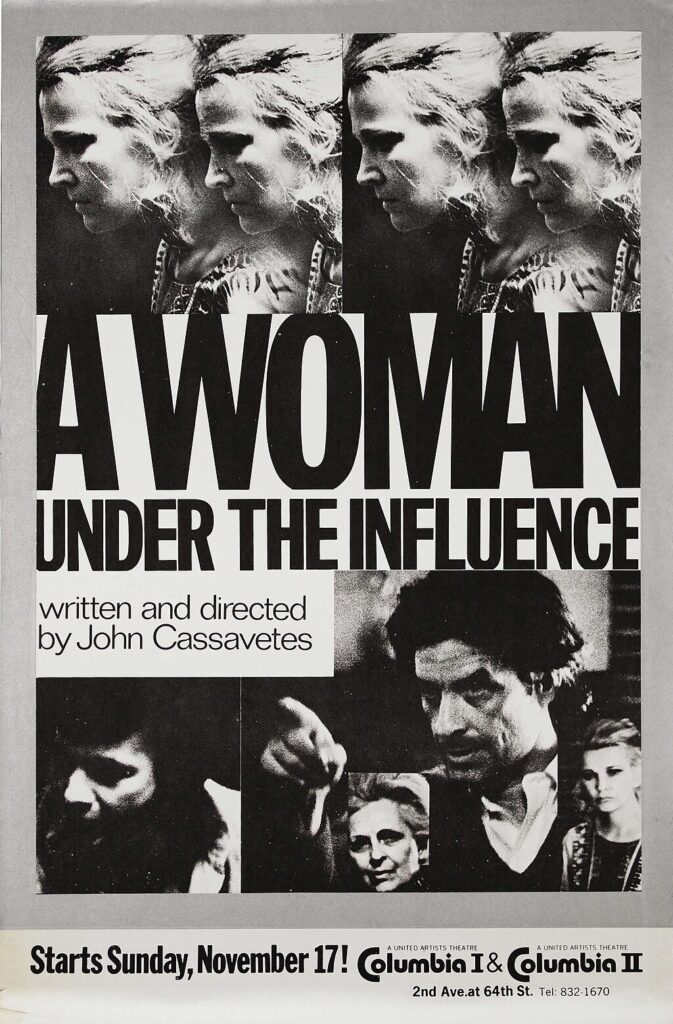
A Woman Under the Influence, in 1974, became their most acclaimed collaboration. Gena Rowlands, Cassavetes’s wife, played a housewife whose unusual behavior leads to conflict with her blue-collar husband, played by Falk. When Cassavetes tried to raise funding, studios turned him down. Lacking financing, he mortgaged his house and borrowed money from family and friends. Falk believed in the project so strongly that he turned down a role in The Day of the Dolphin and invested his own money. The film earned Academy Award nominations for Best Director and Best Actress.
Beyond Columbo
Falk brought warmth to a range of films beyond Columbo and his Cassavetes collaborations. He played the grandfather reading a fairy tale to his sick grandson in The Princess Bride in 1987, and film critic Leonard Maltin noted that while obituaries headlined Falk’s portrayal of Columbo, younger viewers who never saw the show know him best from that role. “Who better than Falk could sell a kid the idea of the greatest kiss the world has ever seen?” That same year, German director Wim Wenders cast Falk in Wings of Desire as a semi-fictionalized version of himself. A famous American actor who had once been an angel but gave up his immortality. Falk described the role as “the craziest thing that I’ve ever been offered.” He earned critical acclaim for the performance.
A Rapid Decline and Family Warfare
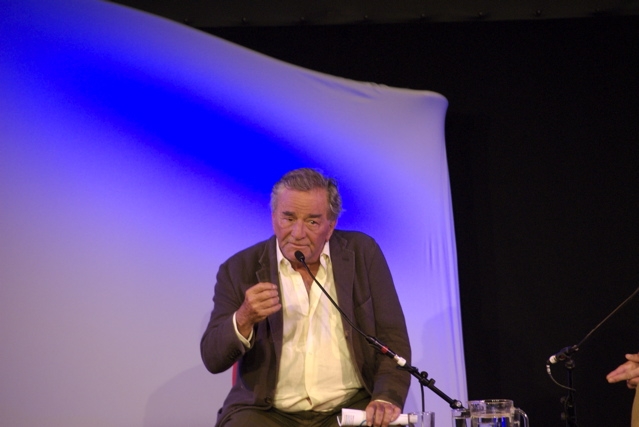
In late 2007, Falk underwent a series of dental procedures. Within weeks, his condition deteriorated rapidly. By December 2008, he had been diagnosed with Alzheimer’s disease, and his condition worsened further after hip replacement surgery. He no longer recognized his signature role as Columbo and could not remember his own acting career. At a conservatorship trial in Los Angeles, his physician, Dr. Stephen Read, testified that Falk had declined rapidly since the dental operations. Though it remained unclear whether anesthesia or some other reaction caused the deterioration.
Catherine Falk petitioned to take over her father’s affairs. Through her lawyer, she alleged that Danese had “cruelly” prevented her from visiting and blocked contact when he grew ill. Danese’s attorneys countered that Catherine had long been estranged from her father and presented his personal diary to show how he viewed their relationship. Catherine acknowledged that years earlier she had sued her father to force him to pay her tuition at Syracuse University. And that the lawsuit had driven a wedge between them.
His Final Days
The judge appointed Danese as Falk’s conservator but allowed Catherine limited supervised visits with her father. His condition meant he would not remember these visits. For the last months of his life, Falk lived in a guesthouse at his Beverly Hills home that he had converted into an art studio and living quarters. Caregivers attended to him around the clock while Danese cooked dinner for him every night. Peter Falk died on June 23, 2011, at his longtime home on Roxbury Drive in Beverly Hills. He was 83 years old, and the causes of death were pneumonia and Alzheimer’s disease. His daughters said in a statement that they would remember his “wisdom and humor.” Catherine alleged that Danese had not notified family members of her father’s death or funeral arrangements. That experience led her to advocate for legislation protecting children from being cut off from news about their incapacitated parents. New York passed the bill, known as Peter Falk’s Law, in 2016. And more than 15 states have since adopted it.
A Legacy of Brilliance and Regret
Falk is buried at Westwood Village Memorial Park Cemetery in Los Angeles. His epitaph reads “I’m not here, I’m home with Shera.” He received a posthumous star on the Hollywood Walk of Fame in 2013. Director William Friedkin, discussing Falk’s role in his 1978 film The Brink’s Job, said, “Peter has a great range from comedy to drama. He could break your heart, or he could make you laugh.” In a tribute after Falk’s death, Rob Reiner called him“a completely unique actor.” He said his work with Alan Arkin in The In-Laws was “one of the most brilliant comedy pairings we’ve seen on screen.”
Falk once tried to explain why audiences loved Columbo so much. “He looks like a flood victim,” he said. “You feel sorry for him. He appears to be seeing nothing, but he’s seeing everything.” The same might be said of Falk himself. Audiences saw the lovable detective and the warm grandfather in The Princess Bride. But they didn’t see the philanderer who was unfaithful throughout his first marriage, the absentee father who ended up estranged from his daughter, the man whose disease and family warfare consumed his final years. In the end, Peter Falk’s life contained both the comedy and the heartbreak that Friedkin described.
Read More: Glamour, Grit & Girl Power: How Charlie’s Angels Rewrote TV Rules