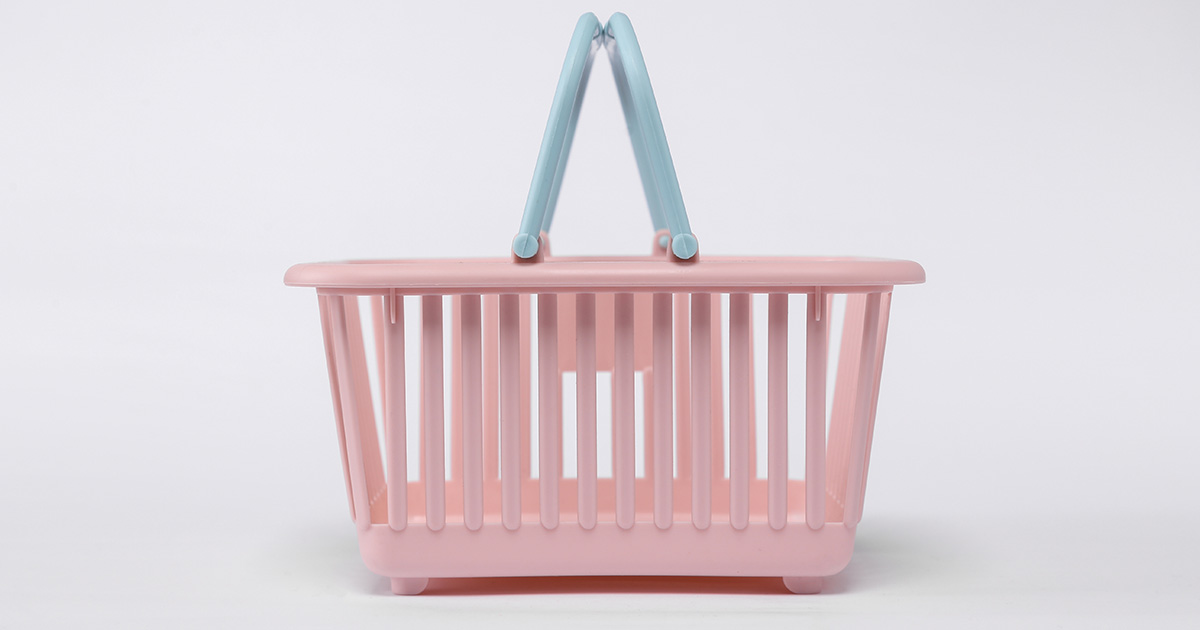

A bright pink shopping basket sits in a stack near the entrance of select Finnish supermarkets, labeled in Finnish. Pick it up and you signal to every other shopper in the building that you are single, open to conversation, and available right now. No app, no profile, no algorithm.
The baskets are called sinkkukori in Finnish, a compound word that translates as “single basket.” Select supermarkets across Finland – including participating K-Supermarket and S-Market locations – offer them as a voluntary signal. The default shopping baskets remain grey or black. By choosing the pink basket, customers indicate they are open to being approached while browsing the aisles.
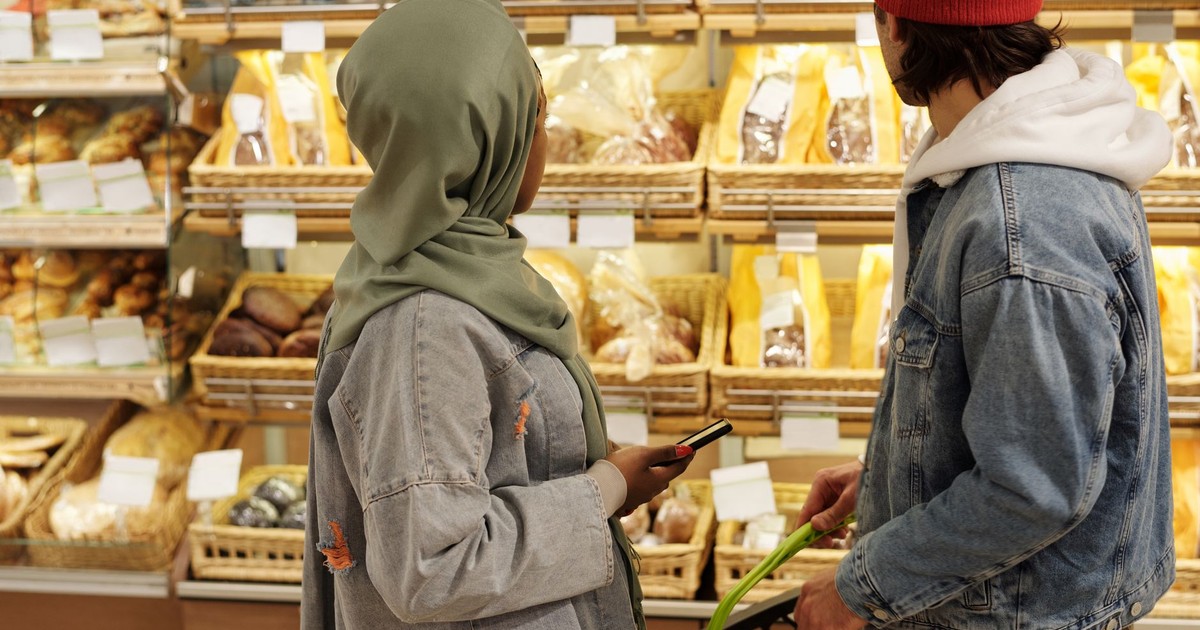
The concept remained relatively local until July 2026, when American content creator Roya Fox posted a video on Instagram from inside a Finnish Prisma store. Fox, who visits supermarkets in other countries, was taken to Prisma by her local guide Mirka. The video spread rapidly across Instagram and X. Fox told Yahoo Lifestyle she was “immediately fascinated” and had “never seen” anything like it before.
What the Sinkkukori System Actually Is
The initiative has been introduced at select stores run by Finnish grocery chains such as K-Supermarket and S-Market, where pink baskets indicate that a shopper is single and open to meeting other singles. The programme is not a standard feature across all supermarkets, and regular shopping baskets continue to be available. This is not a Finland-wide policy. It is a locally driven initiative that caught on in participating stores, spread by community interest rather than corporate mandate.
Many users found the concept novel, but several commenters claiming to live in Finland said they had never encountered it before, suggesting it is limited to participating stores and locations. A person could live in Finland for years without encountering it.
The idea has also been highlighted by the Instagram page This Is Finland. “Would you try speed dating or slow friending in Finland? Tatskatytöt (‘Tattoo Girls’) are creating welcoming spaces where people can meet, connect and have fun,” read the caption of a recent post. The sinkkukori system has been adopted and amplified by community groups interested in creating low-pressure social spaces for single people.
The Unwritten Rules of the Basket
K-market grocery stores in Finland started rolling out the specially marked shopping basket that signals “I’m single and open to being approached” while you do your groceries, so another single person carrying the same basket knows it’s fine to strike up a conversation in the cereal aisle. The basket does not give any shopper licence to approach anyone carrying one. The implied social contract is that two people holding pink baskets have both opted in, creating a mutual signal. A person with a grey basket approaching someone with a pink one is a different and less welcome interaction entirely.
Most cultures handle the challenge of signaling romantic availability to strangers through talking: small talk, eye contact, or someone’s friend nudging them over at a bar. Finland, a culture famously reluctant to engage in unprompted conversation with strangers, uses what one observer called “the most unhinged solution imaginable: plastic shopping baskets as ice breakers.” The sinkkukori system is a workaround for a communication style that values directness in principle but finds unsolicited approach deeply uncomfortable in practice.
The Viral Moment That Took It Global
The video, captioned “How Finnish people find love,” quickly caught the internet’s attention. The trend gained widespread attention after an Instagram video by creator @royaventurera, later shared on X by @gofishh77, showed stacks of pink baskets inside a Finnish grocery store.
The X post asked directly: “Should we get these in the States?” One X user argued in favor of adopting a similar signal in the US, writing that “the smallest encouragement that it is okay to approach” could benefit both genders. Another asked directly whether the system extended to same-sex dating. Both questions reflect the desire for clearer, lower-stakes social signals in real-world environments, and the uncertainty about whether a system designed in one cultural context translates neatly into another.
Some people online pointed out that if you don’t read Finnish, you could easily pick one up thinking it’s just a basket and accidentally gain unwanted attention. The pink basket works on the assumption of informed consent. Remove the linguistic context and you have a tourist cheerfully carrying a singles signal through a Finnish supermarket while thinking the colour is simply nice.
The Privacy Counter-Argument
Not everyone found the concept charming. Some commenters raised privacy concerns, with one writing that it was “no one’s business” and pointing to a broader unease about being watched while shopping. Another commenter joked about the potential for awkward timing, writing, “Yeah, what if you’re buying some embarrassing items and you get hit on by some hunk.”
The privacy objection has a specific texture to it. The concern is not exactly about safety – no one is compelled to pick up a pink basket – but about the secondary visibility the system creates. When you carry a sinkkukori, you disclose your relationship status to every other person in the store, not just the ones you might want to meet. For people who guard personal information carefully in public spaces, that disclosure is the cost of entry, and not everyone considers it worth paying.
Other, more introverted types, think there should also be a colored basket that signals others to leave them alone.
Why This Is Happening Now: The Context Behind the Basket
A Country Grappling With Real Loneliness
Loneliness in Finland has increased since last year, according to the Loneliness Barometer survey carried out by the Finnish Red Cross. The most lonely demographic groups in Finland are 16-24-year-olds and 25-35-year-olds, whose responses reflect a poor financial situation and increased mental health problems. The experiences of loneliness of those residing in Finland have continued to increase since last year, when 59 percent experienced loneliness at least sometimes. Now, the corresponding figure is 65 percent.
One in five people in Finland now experience loneliness once a week or more frequently. The situation among 16-24-year-olds is even more alarming: nearly one third of them experience loneliness at least once a week or more frequently. These are not numbers from a society with robust informal social infrastructure. They describe a country where the processes for casual human connection have eroded significantly, particularly among younger adults.
This is the population the sinkkukori system is designed to serve. Not people who are perfectly comfortable walking up to strangers and expressing interest, but people who want permission – a clear, consensual, low-stakes signal – before they say a word.
Global Dating App Fatigue Is Real and Measurable
The international reaction to the sinkkukori trend cannot be separated from a broader context: a significant and growing disillusionment with digital-first dating. A Forbes Health/OnePoll survey reveals that swiping is leading to fatigue. That same 2024 Forbes Health survey found 78 percent of users report dating app burnout.
The platform-level numbers reinforce the attitudinal data. Match Group reported a 5 percent decline in paying users to 14.9 million in 2024. Tinder paying subscribers dropped to 8.8 million by Q4 2025, down 8 percent year-over-year. Bumble’s paying users fell 16 percent year-over-year in Q3 2025. These are not rounding errors. They represent millions of people who paid for a premium online dating experience and, at renewal time, decided not to continue.
In a survey examining swipe fatigue, 40 percent of respondents said they struggled to find genuine connections on dating apps. When a pink basket in a Finnish supermarket generates 15.7 million video views, the appetite it reveals is not just curiosity about Finland. It is the appetite of people who are tired of a dating experience that feels like scrolling a catalogue and who recognise, in the grocery store basket, something they have been missing: a real person, in a real place, making a real and legible signal.
The dating trend toward real-world connection reflects the broader shift in how people are rethinking what they want from their romantic lives and the venues through which they find it.
The Broader Cultural Meaning of the Sinkkukori
An Opt-In System in a World of Algorithmic Assignment
What the sinkkukori system offers that no dating app currently replicates is purely voluntary, fully transparent, and spatially limited signaling. The choice is made in the moment, in a specific physical space, and it ends when you leave the store. There is no persistent profile, no digital record, no inbox that keeps filling with messages after you have mentally moved on. You pick up a basket, you do your shopping, and if nothing happens, you put it back and go home.
This is the design logic that commentators noticed immediately. The system is intended to provide a low-pressure alternative to dating apps, bars, or clubs by allowing people to signal romantic interest while going about their daily routines. The grocery store, in this context, is not a venue for dating. It is a place where dating becomes possible, optionally and without reorganising your entire evening around it.
One commenter who wrote she had lived in Finland for two years noted that Finnish people had told her that men don’t really approach women there, and that women have to approach them first. The sinkkukori system does not resolve the awkwardness of approach in Finnish social culture – it scaffolds it. Two people with pink baskets have established, without any conversation, that both of them are at least theoretically open to one.
The Comparisons That Emerged Online
The Finnish basket immediately triggered comparisons to informal signaling traditions in other countries. One commenter noted that in Spain, after 7 p.m., shoppers at certain stores who pick up a pineapple and put it in their basket signal that they are open to a relationship. Whether or not that tradition has the same organised provenance as the sinkkukori system, its appearance in the conversation speaks to a universal wish: a way to indicate openness without the vulnerability of direct declaration.
The concept has also surfaced on the Instagram page This Is Finland, which linked the baskets to a wider community initiative and asked followers whether they’d be up for speed dating, or “slow friending,” in Finland. The phrase “slow friending” is doing interesting work in that sentence. It suggests the sinkkukori basket is not necessarily a search for romance in the cinematic sense, but a search for human contact of any meaningful variety – a problem that Finnish loneliness data makes clear is substantial.
What It Reveals About Meeting People in 2026
Many users joked that the biggest nightmare would be confidently picking up the pink basket only to complete their shopping without anyone striking up a conversation. That comment, delivered as a joke, exposes something real. The vulnerability of the sinkkukori is identical to the vulnerability of any romantic signal: you might be visibly available and still not be chosen. The basket does not guarantee an encounter. It makes one possible.
Many social media users considered the idea a creative alternative to dating apps and digital matchmaking, while others questioned privacy concerns and being uncomfortable publicly signaling their relationship status. Some saw the idea as a fun and harmless way to encourage real-world interactions. Those two camps – the enthusiasts and the sceptics – map almost perfectly onto two different theories of what intimacy requires: the belief that openness enables connection, and the belief that openness creates exposure.
Read More: Breadcrumbing: The Dating Trend That Needs to End
The Real Point of a Pink Basket
The pink basket dating trend from Finland is not, at its core, a story about shopping. It is a story about what people reach for when the dominant model of finding connection – digital, gamified, profile-based – stops feeling worth the effort. The sinkkukori system is low-tech by any measure: a coloured plastic basket with a Finnish label. But the idea underneath it is precise and human. It acknowledges that people want to meet each other, that approach is difficult, and that a shared visible signal reduces the cost of trying.
What made the trend go global in July 2026 was not novelty alone. A bright pink basket in a grocery store is not exactly a technological breakthrough. What caught people’s attention was recognition – the feeling that someone, somewhere, had solved a problem that millions of people are living with daily. The loneliness data in Finland is stark, and the dating app fatigue data globally is equally so. Against that backdrop, a simple colour-coded basket represents something that resonates across cultural contexts: the idea that connection should be possible in ordinary life, without an intermediary, without a subscription, and without having to pretend that swiping through photographs is an emotionally neutral activity.
Whether the sinkkukori system would translate into other cultural contexts – with different norms around public social interaction, different comfort levels with visible disclosure, and different retail environments – remains an open question. One X user said the smallest signal that approach was acceptable would change things. Another said the privacy cost was already too high. Both responses are honest. The basket does not resolve the difficulty of wanting to meet someone. It just makes the first step slightly less impossible for people who have spent a long time waiting for a clear, mutual, no-app-required sign that it is okay to say hello.
AI Disclaimer: This article was created with the assistance of AI tools and reviewed by a human editor.