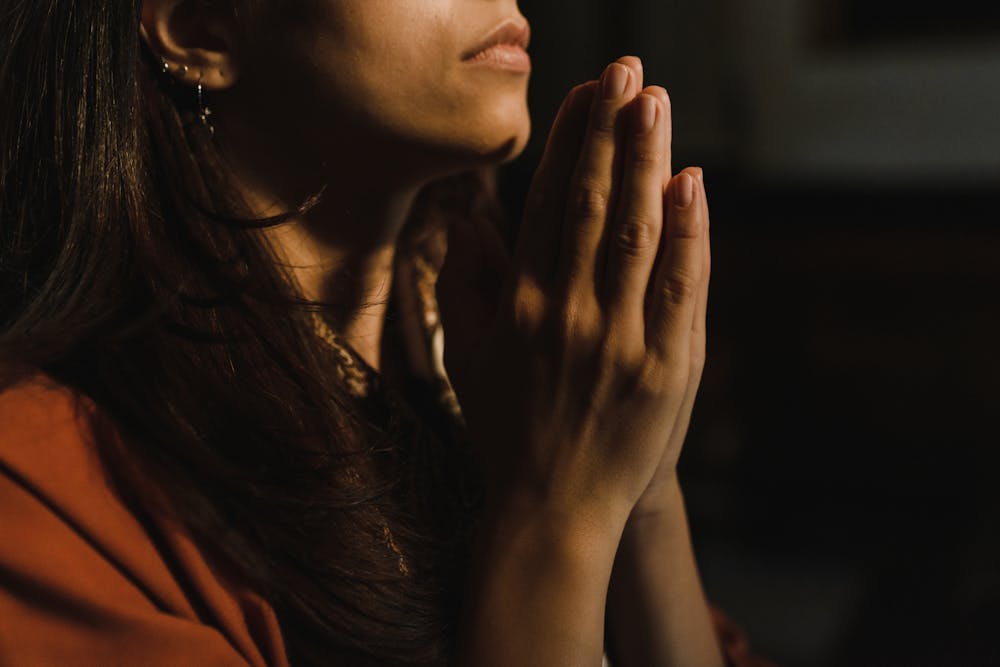

Prayer is one of those things that sits in the gap between the deeply personal and the quietly public. Millions of people do it, most of them without any expectation that a scientist in a white coat will one day arrive to measure whether it helps. The assumption, for a long time, has been that faith is a private matter, and clinical research is a very different business.
That wall has been getting more permeable, slowly but meaningfully. Researchers have grown more willing to ask inconvenient questions: What if the things people have been doing for centuries to feel better – the rituals, the community, the spoken appeals to something larger than themselves – actually do something measurable in the body? What if the prayer health benefits that believers have described for generations are not anecdotal at all?
A study published in the May/June 2026 issue of a respected medical journal suggests the answer might be more interesting than either camp expects. And it does not take an hour, or a pilgrimage, or even a particularly strong faith. According to the research, five minutes is enough to move the needle.
What the Study Actually Did
A randomized controlled trial conducted at the University of Maryland School of Medicine found that a five-minute session of proximal intercessory prayer – in-person prayer offered by a trained volunteer – significantly reduced pain and anxiety in primary care patients compared to a music control group. The music group is not incidental to the design: the researchers chose it deliberately, so they were comparing prayer not to nothing, but to something with its own well-documented calming properties. Music is not nothing. Prayer still came out ahead.
Researchers enrolled 180 patients from a university family medicine practice who reported clinically significant pain or anxiety. After their medical appointments, participants were randomly assigned to receive either five minutes of Christian intercessory prayer from a trained volunteer – incorporating laying-on-of-hands – or five minutes of soft music as a control. The recruited patients were not yoga retreat regulars or people already embedded in a religious community. The study population was predominantly Black, female, and low-income, reflective of the clinic’s patient base – meaning this was a real-world clinical sample, not a curated group of people already inclined to believe the intervention would work.
The findings were published in the May/June 2026 issue of the Annals of Family Medicine, suggesting that proximal intercessory prayer may offer a practical, non-pharmacologic complement to conventional care, particularly for underserved populations.
The Results, by the Numbers
Patients who received prayer reported greater relief from both pain and anxiety than those who listened to music. Prayer recipients reported greater reductions in pain immediately and at two weeks compared to the music group. At the six-week check-in, the pain difference between the two groups was no longer statistically significant – which is worth noting honestly, because this is not a study claiming prayer cures chronic pain. It is saying the acute reduction was real, and it held for at least two weeks.
Anxiety told a different story. According to reporting on the study’s findings, prayer recipients reported significantly greater reductions in anxiety immediately after the session, and these positive effects remained statistically significant at both the two-week and six-week checkpoints. Six weeks is not a long time in the grand arc of a life, but it is longer than anyone might have predicted from a five-minute encounter with a stranger in a clinic corridor. For people who live with persistent anxiety – the low-level hum of dread that has a way of making every ordinary day harder – that is a finding worth paying attention to.
The Part That Surprised Even the Researchers
The most unexpected piece of this study is not how well prayer worked. It is for whom it worked.
Co-author Joshua W. Brown, PhD, Professor of Psychological and Brain Sciences at Indiana University, noted that “the prayer intervention was effective regardless of the patient’s faith or no faith,” adding that the findings contribute to research on how prayer changes brain function in ways that promote health. That framing – brain function – is deliberately careful, and it matters. Brown is a neuroscientist, not a theologian. He is making a claim about a measurable physiological effect, not a supernatural one.
Lead author Dr. Katherine Jacobson noted that the team expected patients who expected prayer to work would benefit more, but that wasn’t what they found. Religious affiliation, religious intensity, and expectancy of healing did not predict who improved. Benefits appeared across a wide range of patients, including those not of the Christian faith and those who did not expect the intervention to help them.
That last part is particularly hard to file away neatly. The placebo effect relies on expectation. If you don’t believe the pill will help, you’re less likely to respond to a sugar pill. The fact that people who anticipated no benefit still experienced measurable relief suggests something more complicated is happening – though the researchers are careful not to overstate what that something is.
The Context: Prayer Is Already Everywhere in Healthcare
None of this emerges from a vacuum. Prayer is the most common form of complementary medicine in the United States. A 2002 National Health Interview Survey, one of the most comprehensive datasets on complementary medicine use ever conducted, found that prayer specifically for one’s own health was the single most-used CAM (complementary and alternative medicine) therapy in the country – ahead of herbal supplements, ahead of chiropractic, ahead of meditation – relied on by 43% of Americans, with 62% of this group identifying as Christian.
People have not been waiting for researchers to give them permission. They have been doing this for a very long time. What is newer is the willingness of clinical medicine to ask whether it has anything to add to the conversation beyond skepticism.
Despite this widespread use, rigorous clinical trials of in-person intercessory prayer have been scarce. This study is among the first well-powered randomized controlled trials of proximal intercessory prayer conducted in a standard primary care setting. Which means the silence from the research world has not been evidence of ineffectiveness. It has mostly been evidence of reluctance to look.
What “Proximal Intercessory Prayer” Actually Means

The clinical term sounds colder than the thing it describes. Proximal intercessory prayer – PIP, in research shorthand – simply means prayer that happens face-to-face, person to person, with intention and physical presence. In the study, this included gentle laying-on-of-hands, eye contact, and spoken prayer from a trained volunteer who was not a medical professional.
This is where the researchers themselves flag something important. The study could not prove that prayer itself caused the improvements. The team also noted that patients receiving prayer had human contact, while the music control group did not. The eye contact and gentle laying of hands from the prayer volunteers may have had an impact, as that type of contact is known to reduce pain.
That is an honest limitation, and it is offered in good faith. Future studies, the researchers noted, should include a control group that receives the same quality of human contact without the prayer, to isolate the effect. But even if the mechanism turns out to be partly about presence and touch rather than prayer per se, the practical takeaway does not change much. Something about this brief, intentional, human encounter – one person turning their full attention toward another person’s wellbeing for five minutes – reliably reduced pain and anxiety in a controlled clinical setting. Whatever you call that, it is worth paying attention to.
What It Could Mean for Primary Care
Rather than replacing traditional treatments, the authors indicate that this type of brief, faith-based intervention could be integrated into primary care settings to help manage pain and anxiety. That framing is careful and correct. No one in this study is suggesting that a five-minute prayer replaces a prescription, or that patients with chronic conditions should stop pursuing conventional care. The word used throughout is “complement” – something added to the existing toolkit, not a replacement for it.
The findings suggest proximal intercessory prayer may be a low-cost, non-pharmacologic complement to standard care for a wide range of patients. Low-cost is not nothing, particularly for the populations most likely to be sitting in a family medicine waiting room. Interventions that require no equipment, no insurance authorization, and no specialist referral have a different kind of accessibility than most additions to a care plan.
The study also reported that the intervention was very well received. Lead author Dr. Katherine Jacobson described the prayer as “safe, effective, and well-received as complementary treatment for pain and anxiety.” A 97% neutral-or-supportive response rate from patients who were asked about having this available in medical visits is not a number that suggests widespread resistance to the idea. Most people, it turns out, are not offended by the offer of prayer. They’re just not used to being offered it in a clinic.
Read More: Mother Sees ‘Hand of God’ in Ultrasound After Praying for Baby’s Health
What You Do With This
Here is the honest shape of what this research says and doesn’t say. It says that five minutes of in-person, intentional prayer reduced pain and anxiety in a controlled trial. It says the effect on anxiety lasted at least six weeks. It says the benefit was not limited to people who expected it to work or who identified with the faith tradition involved. It does not say prayer is a cure, or that it works for everyone, or that science has confirmed the existence of God, or any of the other things that headlines about studies like this sometimes imply.
What it does say – carefully, in the language of peer-reviewed research – is that something humans have been doing for millennia, largely in private, has a measurable effect on the body. The prayer health benefits that people of faith have described experientially now have a randomized controlled trial behind them. That does not settle every question. It opens new ones.
You do not need to be a believer for that to be interesting. You do not need to abandon your skepticism. You might simply need to stop being surprised that the things people reach for when they are in pain – presence, intention, the feeling of not being alone with it – register as real and measurable in the body.
The Thing Nobody Expected to Be True
The finding that stays with you in this study is not the pain data or the six-week anxiety effect. It is the detail that expectation did not drive the outcome. The person who walked into that room certain that prayer was not going to help them left with measurably reduced anxiety anyway. That is not supposed to happen, according to the usual rules of how we think about belief and healing.
It suggests that whatever prayer does – whether you locate the mechanism in neuroscience, in the quality of human attention, in something faith traditions have their own language for – it does not require your prior agreement to get started. Five minutes. A person who means it. Someone who is willing to receive it, even skeptically. The research says that might be enough. What you make of that is entirely yours.
Disclaimer: This information is not intended to be a substitute for professional medical advice, diagnosis, or treatment and is for information only. Always seek the advice of your physician or another qualified health provider with any questions about your medical condition and/or current medication. Do not disregard professional medical advice or delay seeking advice or treatment because of something you have read here.
AI Disclaimer: This article was created with the assistance of AI tools and reviewed by a human editor.