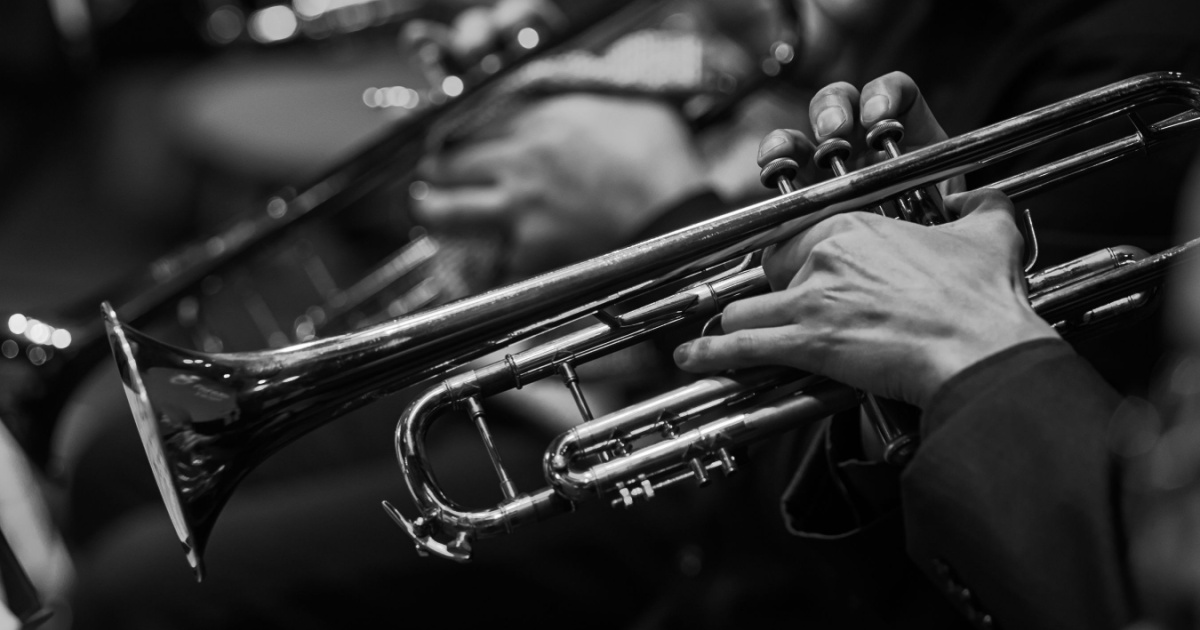

The Dragnet theme is one of the most recognizable pieces of music in American history, four notes that became cultural shorthand for police procedurals and parody sketches and a thousand movie references. The Bunny Hop has been filling wedding dance floors for decades, and “At Last” has scored countless commercials and romantic comedies. The man who recorded all of it, Ray Anthony, is still alive at 103 years old.
He still lives in the Hollywood Hills home he bought in 1975, a place with lush carpets, a sunken dining room, and a view of the ocean when the weather cooperates. His trumpet sits by his bedside, and that instrument has been part of his life since before the first transatlantic flight, before the presidency of Herbert Hoover, before most of the 20th century happened.
Anthony is the last living member of the Glenn Miller Orchestra. Miller’s band was the biggest act in the world during the early 1940s. An era when radio and live shows were the only game in town. Anthony played with Miller before Pearl Harbor, entertained troops in the Pacific during the war, then watched rock and roll displace everything he knew about popular music. He outlived nearly every musician he ever shared a stage with. But his story starts long before any of that.
A Trumpet at Five
He was born Raymond Antonini on January 20, 1922, in Bentleyville, a small town near Pittsburgh. His family was Italian and had recently immigrated, and music sat at the center of everything they did. They moved to Cleveland when he was five, and that’s when his father put a trumpet in his hands.
Their household ran on music. His father trained all the children to play, and they performed together as the Antonini Family Orchestra. For young Raymond, the trumpet wasn’t a hobby or a phase. It was simply what he did.
By his teenage years, he’d developed an obsession with Harry James, a trumpet player only a few years older who was already making a name for himself in the big band scene. Anthony studied James the way athletes study film, absorbing every note, every technique, every stylistic choice. Years later, he’d still call James “the greatest trumpet” he’d ever heard. “He had a complete mastery of the instrument,” Anthony said in an interview with Big Band Library, “and a conception I admired.”
That admiration pushed him forward. While still in high school, he formed his own band in Cleveland and started playing local gigs. He was good, good enough that word spread beyond Ohio, and by 18, he’d caught the attention of established bandleaders who needed young talent. His professional debut came in 1940, backing a bandleader named Al Donahue. The job didn’t last long because something better came along almost immediately. An invitation to join the most famous orchestra in America. Glenn Miller wanted him.
The Kid in Glenn Miller’s Band
To understand what joining Glenn Miller meant in 1940, consider how big Miller was. There was no television bringing entertainment into living rooms yet. No rock and roll. No internet. Popular entertainment meant going out to movie theaters, radio broadcasts, and live shows, and Glenn Miller dominated all 3. His orchestra was the hottest act in the country, maybe the world. Getting hired by Miller was like getting drafted by the Yankees in their prime.
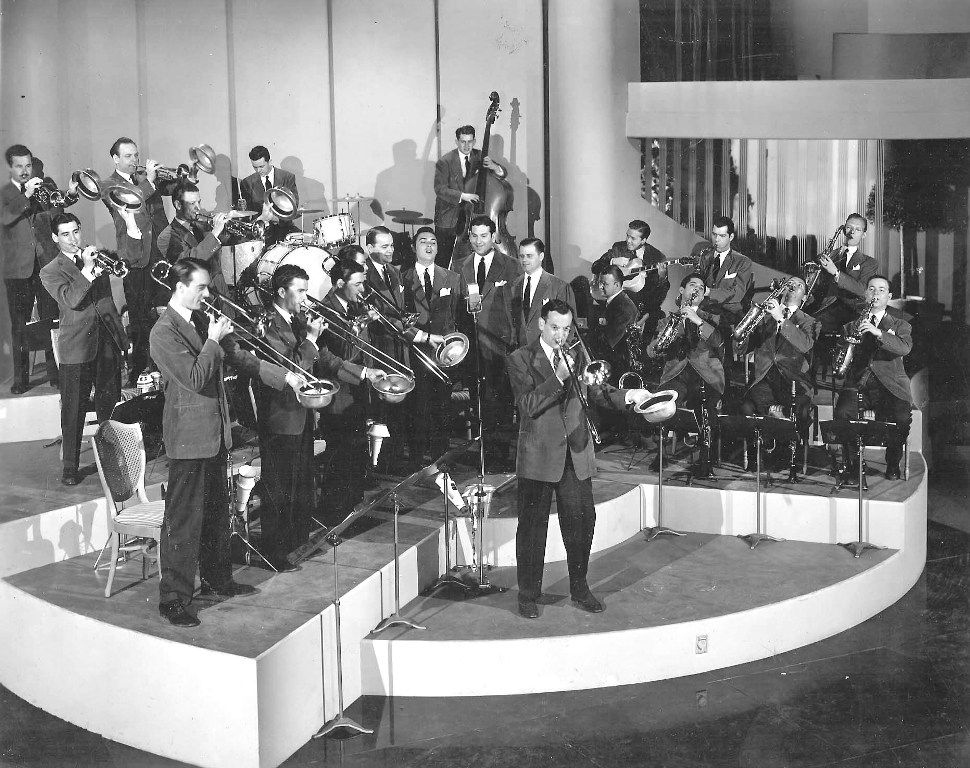
Anthony was 18 and the youngest member of the band by a wide margin, surrounded by seasoned musicians who’d been playing professionally since before he hit puberty. They teased him for his age, and Miller himself was demanding in a way Anthony had never experienced. “He was tough,” Anthony recalled to Big Band Library. “But it’s a business. You don’t have much time to do anything but follow the lines.”
The problem was that Anthony didn’t just want to follow lines. He had ideas, too many of them, and he kept pushing Miller on arrangements and techniques and different ways of doing things. Miller kept firing him. But Anthony’s playing was too good to let go, so Miller kept hiring him back. This cycle earned the young trumpet player a nickname. They called him Peck’s Bad Boy.
The arrangement couldn’t last. After less than a year and an appearance in the 1941 film Sun Valley Serenade, Anthony left for good. He landed briefly with Jimmy Dorsey’s band, a different world entirely because Dorsey was relaxed, whereas Miller had been rigid. Then came Pearl Harbor. Anthony joined the Navy, while Miller joined the Army and formed a famous military band. Miller disappeared over the English Channel in 1944 and was never found.
War and a Band of His Own
He enlisted in 1942 and was assigned to lead a service band in the Pacific. The Navy sent him first to Midway Island, a tiny spit of land in the middle of the ocean, where there wasn’t much to do but play music and wait. Then came transfers to Okinawa and Hawaii, where he entertained troops at the Royal Hawaiian Hotel. It wasn’t combat. But it was formative because for the first time in his career, he wasn’t playing in someone else’s orchestra but running his own show and making his own decisions. “That’s where I did most of my growing with the band,” he told Big Band Library, “and eventually took it into civilian life when the war was over.”
He was discharged in 1946 and didn’t waste time looking for work with established orchestras. Instead, he formed the Ray Anthony Orchestra almost immediately, assembling musicians and hitting the road. The band traveled constantly, playing ballrooms and dance halls across the country, building a reputation through sheer persistence. Every night was another chance to prove they belonged.
The work paid off. In 1949, Capitol Records signed him to a contract that would last 19 years. Capitol was a major label, home to artists who sold millions of records, and for a bandleader barely into his late 20s, it was proof that everything he’d been building was real. He’d entered the Navy as Glenn Miller’s former trumpet player, a young man known mostly for getting fired. He emerged as a bandleader with his own orchestra and his own label and ambitions to match.
The Sound Everyone Knows
The 1950s turned Ray Anthony into a household name. His version of the Dragnet theme sold over 500,000 copies and reached No. 3 on Billboard. Turning the opening notes of a television police show into one of the most recognizable sounds in America.
But Dragnet was just the beginning. “The Bunny Hop” hit No. 13 on Billboard and set off a nationwide dance craze, and “Hokey Pokey” followed right behind it. Getting people out of their chairs at parties across the country. His 1952 recording of “At Last” became the highest-charting pop version of that song in U.S. history, reaching No. 2. Later, his take on the Peter Gunn theme hit No. 8.
He wasn’t just playing covers. Anthony wrote his own material too, songs like “Thunderbird,” “Trumpet Boogie,” and “Mr. Anthony’s Boogie” that filled out a catalog and kept his orchestra booked year after year.
Jazz purists dismissed him. They called his music commercial, watered down, too accessible, the kind of sound that critics of the era would have called “corn,” jazz slang for music that was too sweet, too safe, too eager to please the masses. They weren’t entirely wrong.
Anthony wasn’t trying to impress critics sitting in smoky clubs debating technique, but trying to fill dance floors. His music was fun and uncomplicated, and energetic, designed to make people move rather than sit and analyze. The serious jazz artists who looked down on him faded from public memory. While Anthony’s recordings kept showing up in movies and commercials for decades. Fun, it turns out, has staying power.
Hollywood’s Swinging Bandleader
In the summer of 1953, Anthony’s orchestra was featured on CBS as part of a replacement program for Perry Como’s show. And from 1953 to 1954, he served as musical director for the television series TV’s Top Tunes. The exposure made him a familiar face in American living rooms at a time when television was still a novelty, and more opportunities followed. In 1956, he launched his own variety program on ABC, The Ray Anthony Show, which ran for 30 weeks.
Film work came next. He appeared as himself in Daddy Long Legs in 1955, sharing the screen with Fred Astaire and Leslie Caron. And his orchestra performed in The Girl Can’t Help It the following year. In 1959, he landed the role of bandleader Jimmy Dorsey in The Five Pennies. A part that made sense because Anthony had actually played in Dorsey’s band years earlier. People compared his looks to Cary Grant, and he trained with respected acting coaches Estelle Harman and Sanford Meisner. Hollywood seemed ready to embrace him as more than just a musician.
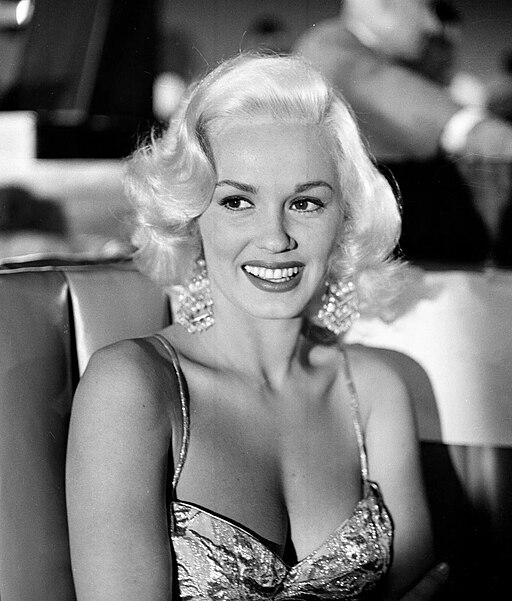
Then came Mamie Van Doren. In 1955, he married the actress, a blonde bombshell and one of the era’s most visible sex symbols. Their son Perry was born the following year. They made films together, including High School Confidential, Girls Town, and The Beat Generation, and the marriage put Anthony in tabloids in a way his music never had. Van Doren filed for divorce in 1958, citing cruelty and long absences, and it was finalized in 1961. His film career ended around the same time. But the music never stopped. When the Hollywood Walk of Fame opened in 1960, Anthony’s name was among the original stars, placed at 1751 Vine Street.
Keeping the Music Alive
The 1960s hit big bands hard. Rock and roll had reshaped popular music, and the swing sound that once packed ballrooms suddenly seemed like a relic. The crowds who used to dance to orchestras were staying home to watch television or going out to hear something louder and younger. Anthony’s chart success faded after 1962, with only occasional entries on the Adult Contemporary charts through the rest of the decade. He didn’t stop. He adapted.
Through the 1970s, he continued touring and recording, releasing albums that ranged from lounge music to blues to country. His Dream Dancing series kept his name alive among swing enthusiasts who remembered what the old sound felt like and wanted to hear it done right.
The 1980s brought a revival. Anthony formed Big Band ’80s, a supergroup featuring legends like Buddy Rich, Harry James, Les Brown, and Alvino Rey, and they toured together to prove that audiences who’d grown tired of disco still had an appetite for elegance. He started his own label, Aero Space Records, and opened the Big Band Record Library, a mail-order service selling recordings that mainstream stores no longer stocked.
“People hear this music, and they want to buy it, but there’s no place to buy it,” he told Big Band Library. “The record stores have stopped selling it.” He even created a program to supply musical charts to school band programs. Making sure the next generation would know how to play this music even if they never heard it on the radio. He finally retired from touring in 1998 at 76 years old, after leading his orchestra for more than half a century. Even then, he kept telling friends to “get out there and keep my name alive.”
Read More: Elvis Presley’s Final Performance: An Amazing Display Just Two Months Before His Death
The Last One Standing
He became the last living member of Glenn Miller’s band when trombonist Nat Peck died in 2015, and no one else from that orchestra had made it to 100.
His 100th birthday in January 2022 became a celebration of survival itself. Friends gathered at his Hollywood Hills home, the same house he’d lived in since 1975, surrounded by balloons shaped like the number 100. Someone brought a pizza with the number inscribed in olives. Anthony looked at it all and remarked to the Los Angeles Times that they “really wanted to remind me of my age.”
The house hasn’t changed much over the decades, and his son Perry, his only child from the Van Doren marriage, helps maintain his daily routines. Anthony’s hearing has faded considerably in recent years, but he remains there, on the hill, in the home he made his own half a century ago.
He turned 103 in January 2025, and multiple sources now list him as the oldest living recorded musician. His recordings still reach people who never saw him perform through films like Sixteen Candles in 1984, Uncle Buck in 1989, and Ed Wood in 1994. People who’d never heard of the swing era grew up hearing the Dragnet theme without knowing who played it. His sound became part of the cultural background, music that just exists without anyone stopping to ask where it came from.
Still Swinging
On January 20, 2026, Ray Anthony will turn 104. He is the last surviving member of the Glenn Miller Orchestra. The last link to an era when big band swing was the sound of American life.
His name appears in the lyrics of “Opus One,” the swing standard that Sy Oliver wrote for Tommy Dorsey in the mid-1940s. The song imagines various bandleaders taking a turn at the melody, and one line goes, “And Ray Anthony could swing it for me.” He was only in his early 20s when he was already recognized as someone worth naming alongside the greats. Now he’s the only one of them still here.
He always knew where he stood in the hierarchy of American music and never claimed to be the best. “I think Harry James was the greatest trumpet,” he said in a profile on CMG Worldwide, “and I think Glenn Miller was the greatest bandleader of all time.”
He played with both of them and learned from both, then outlived them by decades. But the music itself mattered more than any ranking. “Music puts wings on the human soul,” he wrote. “Nothing can touch people the way music can.” He spent his life making music, and the music kept him here. That’s not mysticism, just observation.
Read More: How Jelly Roll Is Giving Back With a Massive Rehab Facility in Tennessee