

Retirement has a marketing problem. The brochure version, the one with the couple on the dock at sunset and the modest sailboat in the background, sells it as the reward at the end of a long career. Freedom. Rest. Your time, finally. And for a lot of people, the first few months genuinely feel that way. The alarm doesn’t go off, the commute is gone, and the inbox belongs to someone else now.
Then, somewhere between month four and month eighteen, a quieter reckoning tends to arrive. The structure that work provided turns out to have been doing a lot of invisible lifting. The water-cooler conversations, the sense of forward motion, the feeling that Tuesday is different from Saturday because someone needs something from you – all of it disappears at once. And the retirement habits that could fill that gap are almost never the ones that get talked about at the financial planning seminar.
Most retirement advice is about money. When to claim Social Security, how to draw down your portfolio, whether to downsize. That’s not nothing, but it’s also only part of the picture. The retirement habits to build are often the ones that nobody puts on a checklist – the ones that protect your brain, your sense of self, your health, and yes, your finances, in ways that compound over a decade rather than a quarter. Here are ten of them.
1. Building a Replacement for the Structure Work Gave You
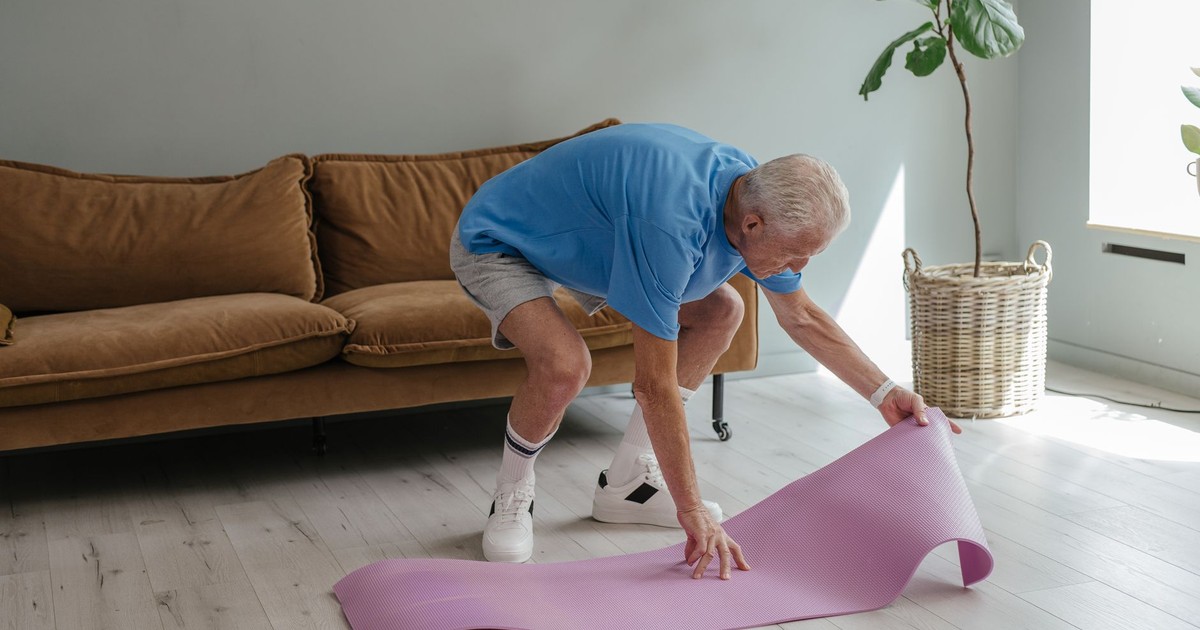
Work is a time architecture. It tells you when to wake up, when to eat, when to be somewhere, when to stop. That architecture is annoying while you’re inside it, and badly missed once it’s gone. Retirees who don’t consciously replace it often find themselves in an ambiguous drift that can look like freedom from the outside and feel like formlessness from the inside.
Research found that retirees who maintained moderate daily routines reported 31% higher life satisfaction than those with either chaotic or overly rigid schedules. The word “moderate” is doing real work in that finding. The goal isn’t to reconstruct the office in your living room – it’s to anchor the day without strangling it. A consistent wake time, a morning walk, a defined block for whatever project currently has your attention: these aren’t restrictions, they’re the scaffolding that makes the rest of the day feel earned rather than accidental.
The other thing structure provides is a way to tell time. When every day is open, they start to blur into each other by month three, and that sameness has a flattening effect. Building in weekly commitments – a standing lunch, a class, a volunteer shift – gives the week shape and gives you something to orient around. The goal isn’t busyness for its own sake. It’s punctuation.
2. Deliberately Maintaining Your Social Infrastructure

The thing about workplace friendships is that most of them are held together by proximity. You didn’t choose to spend forty hours a week with these people; you were assigned to the same floor and the relationship grew from there. When the proximity ends, most of those connections quietly fade unless someone makes an active effort, and making that effort runs against the grain of how adult friendships typically work.
Researchers at the NIA analyzing data from more than 7,000 participants aged 65 and older found that high social engagement, including visiting with neighbors and doing volunteer work, was associated with better cognitive health in later life. That’s not a surprising conclusion, but the specifics matter. It’s not just about having people around – it’s about the active, reciprocal quality of the engagement. Attending somewhere regularly, contributing to something, being expected by people who will notice if you’re not there.
The retirement habit here is proactive and recurring: scheduling social contact the way you’d schedule a doctor’s appointment, not waiting until you feel like it. Left to its own devices, the social calendar tends to contract in retirement, because the automatic replenishment that work provided is gone. The people who do this well tend to attach their social life to an activity rather than just arranging it in the abstract – a book club, a pickleball league, a cooking class where the same twelve people arrive every Thursday.
3. Building a Practice That Keeps the Brain Working Hard

There is a concept in neuroscience called “use it or lose it” that gets applied to cognitive function in retirement – and while the pop-science version oversimplifies it, the underlying evidence is solid. The brain benefits from being genuinely challenged, not just entertained. Watching documentaries counts for something, but it does not count the same as learning to read music, picking up a language, or mastering a craft that requires sustained, effortful attention.
The mental retirement hypothesis – the idea that retirement may lead to cognitive decline due to reduced intellectual engagement and decreased cognitive reserve – has led researchers to actively encourage retirees to engage in mentally stimulating environments. The key word is “engage”: passive consumption does not substitute for active struggle. Whatever the activity is, it needs to involve regular failure on the way to improvement. That’s what the brain is responding to. The stumbling, not the competence.
This doesn’t require expensive courses or grand ambitions. Learning to paint badly, playing chess at a mediocre level, writing a journal in a language you studied in college: all of it counts, as long as the difficulty is real. The habit is building something like a weekly investment in productive discomfort.
4. Treating Loneliness as a Health Issue, Not Just a Feeling

Loneliness in retirement is common, underdiscussed, and carries consequences that go well beyond feeling sad. The connection isn’t just psychological – older people who are socially isolated are more likely to suffer from cardiovascular disease, dementia and cognitive decline, physical frailty, depression, and chronic pain. This is not a matter of personality or resilience. Isolation produces measurable physiological effects, including elevated cortisol (your body’s main stress hormone) and chronic low-grade inflammation. The body registers social disconnection as a threat.
What makes this retirement habit unusual is that it requires recognizing loneliness before it becomes entrenched. The early stages don’t always feel like loneliness – they can feel like introversion, or preference, or not being in the mood. By the time it feels acute, the patterns that feed it are usually well established and harder to shift. The habit here is periodic honest accounting: not “am I lonely?” which is too loaded a question, but “how many reciprocal relationships did I have substantive contact with this week?”
Building in a weekly social minimum – two or three meaningful interactions that don’t happen to you passively but that you initiate – is a concrete way to hold the line. Some people keep a loose running log of who they’ve connected with. It sounds clinical for something as human as friendship, but so does tracking exercise, and nobody questions that.
5. Developing a Genuine Sense of Purpose That Isn’t Borrowed From Work
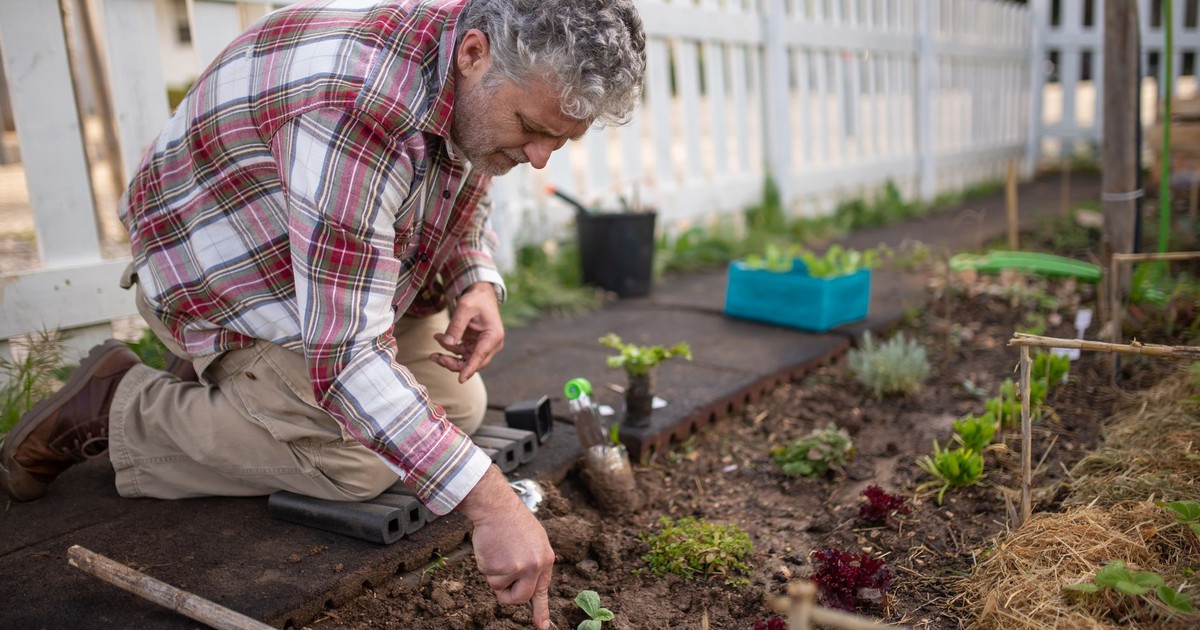
This one is harder than it sounds, because most people’s sense of purpose throughout their working years was provided by their job without requiring them to think about it. The title did some of it, the paycheck did more, the fact of being depended upon did the rest. Remove those three things at once and you find out quickly that “purpose” is not something you just have – it’s something the structure of your life was generating for you.
Research published in the NIH shows that sense of purpose is significantly related to mental health outcomes including depression and anxiety, and that retirees are at higher risk for having a lower sense of purpose – which means helping retirees increase their sense of purpose may also improve their mental health. The implication is that this is something worth actively working on, not waiting to feel organically.
The retirement habits to build that hold up over years tend to be organized around contribution rather than consumption. Volunteering, mentoring, caregiving, advocacy, community involvement – all of these give you somewhere to put your competence and someone to receive it. The sense of purpose that comes from being genuinely useful to other people turns out to be surprisingly durable, in a way that hobbies undertaken purely for personal enjoyment sometimes aren’t.
6. Building a Healthcare Literacy Habit

Most people’s engagement with their own healthcare throughout their working lives is reactive. Something hurts, they see someone about it. The checkup happens because HR sends a reminder. This approach gets away with a lot when you’re 40. It becomes genuinely costly in your 60s and 70s, when the preventive window for a number of conditions is real, and when the complexity of managing multiple providers, prescriptions, and coverage options exceeds what a reactive approach can handle.
According to the 2025 Fidelity Retiree Health Care Cost Estimate, a 65-year-old individual may need $172,500 in after-tax savings to cover health care expenses in retirement. That number isn’t a reason to panic – it’s a reason to pay attention. Healthcare in retirement isn’t something to outsource entirely to a doctor’s visit twice a year. The habit involves becoming genuinely conversant with your own conditions, medications, and coverage: knowing what your Medicare plan actually covers (and doesn’t), keeping your own medication list current, tracking patterns in your own data between appointments, and asking questions that are specific enough to produce useful answers.
People who do this well tend to keep a simple running document – not a medical record, just a personal log of symptoms, questions, and key information – that they bring to appointments. It sounds like extra work. What it actually does is halve the chance that something important falls through the cracks.
7. Getting Deliberately Good at Spending Less Without Feeling Deprived

Retirement income is typically fixed or constrained in ways that working income isn’t, and the spending habits that formed during peak earning years don’t automatically adjust downward just because the income has. Plenty of retirees find that the emotional weight of scaling back spending is harder than the math – not because they can’t do it, but because changing spending habits requires changing the identity and habits that were attached to them.
One of the most well-documented patterns in retirement research is the spending curve: the “Go-Go Years” from 65 to 74, when most retirees are healthiest and most active, see near pre-retirement spending levels; by the “Slow-Go Years” from 75 to 84, activity-based spending naturally reduces; and then in the “No-Go Years” at 85-plus, healthcare and potential long-term care costs push spending back up. Knowing this curve in advance lets you plan around it rather than be surprised by it. The habit is not deprivation planning – it’s building awareness of the shape of your own spending as it evolves, so that the adjustments in the middle years feel chosen rather than forced.
Practical tools help here. A monthly spending review, even a brief one, builds the habit of looking at where money went before the end of the month, not after the end of the year. The people who do this consistently tend to report less financial anxiety – not because they have more money, but because they have more information.
8. Learning Something That Requires Your Body, Not Just Your Mind

Exercise in retirement gets talked about plenty, but the conversation usually stops at cardio and weights – important, but missing something. Physical practices that require skill, coordination, and learning – dancing, swimming, yoga, tai chi, rock climbing at a beginner wall, pickleball, golf – engage the brain in ways that a treadmill walk doesn’t. They also tend to come with a social element built in, which doubles the benefit, and they create a skill arc that keeps motivation alive in a way that pure fitness maintenance sometimes doesn’t.
For many retirees, retirement can entail the loss of daily routines, physical and mental activity, sense of identity and purpose, and social connections all at once. A physical practice that involves skill development addresses several of those losses in a single investment of time. It gives you something to get better at. It gets you into a room with other people regularly. It keeps the coordination-balance-reaction time circuitry active, which has practical protection against falls as you age.
The specific activity matters less than the commitment to learning rather than just executing. An activity you’ve fully mastered offers less cognitive benefit than one where you’re still figuring out what you’re doing wrong. Structured beginner classes in something you’ve never tried – not something you were already good at thirty years ago – tend to offer the most.
9. Making Formal Plans for Transferring Knowledge and Memory

Most retirees carry decades of irreplaceable expertise, stories, and family history that exist nowhere but in their own heads, and the habit of transferring that outward is one that almost no one starts early enough. This is different from estate planning, though it sometimes overlaps. It’s more about the non-financial inheritance: the recipe that nobody wrote down, the professional knowledge that could save a younger colleague years of trial and error, the family history that will simply vanish if it isn’t recorded.
This habit has practical and psychological dimensions. Practically, it preserves things that cannot otherwise be preserved. Psychologically, it creates a form of purposeful contribution that requires no commute and no calendar invitation – it’s something you can do at a kitchen table with a notebook or a phone. Writing a memoir, recording video stories for grandchildren, mentoring in your old field, teaching a class at a community college in a subject you know inside out: all of these are different expressions of the same impulse.
The archive of a life does not maintain itself. The people who act on this tend to discover that the process of articulating what they know is itself clarifying – that explaining something to someone else reveals how much you actually understood it, and how much you’d simply been doing by instinct for thirty years.
10. Practicing Financial Flexibility Rather Than Financial Rigidity

Most retirement financial plans assume a relatively stable trajectory, and most financial advice for retirees still anchors heavily on a fixed withdrawal strategy. The 4% rule is a useful starting point, but the retirement that unfolds is rarely the one that was planned in the final year of work. Markets move, health events arrive early or late, family circumstances change, and the spending reality of the actual life turns out to differ meaningfully from the projected one.
The habit here is adaptability rather than adherence. Many financial experts recommend drawing down 4% to 5% of total portfolio value rather than a fixed dollar amount – so you’re less likely to deplete investments faster than they can grow – with adjustments based on market conditions and personal needs in any given year. That percentage-based approach only works if you are actually monitoring and adjusting, which is a habit rather than a one-time decision.
The retirees who manage this best tend to do annual reviews of the plan against reality: not just the portfolio balance, but the actual spending categories, the healthcare cost trajectory, the gap between projected and actual income from all sources. It’s the difference between a plan that was built once and a plan that is tended. The financial news is full of people who built excellent retirement plans and then watched them quietly become obsolete because nobody updated them after year two.
Read More: Retirees Are Leaving Florida: 5 States Poised to Be the Top Retirement Spots in 10 Years
The Habits Nobody Talks About at the Seminar

The financial planning industry is very good at preparing people for the logistics of retirement. It is considerably less good at preparing people for the life. The habits above don’t appear in the usual conversation because they’re not products anyone sells and they don’t have a quarterly metric attached to them. They’re slow-building, private, and their returns are measured in decades rather than percentage points.
What they share is a kind of proactiveness that runs against the grain of what retirement is supposed to feel like. The whole point was to stop having to try so hard, and here’s a list suggesting you build ten new habits. The honest answer is that the trying looks different – it’s lighter, it’s self-directed, it comes without a boss or a deadline – but it’s still intentional. The retirees who tend to report the highest satisfaction aren’t the ones who stopped entirely. They’re the ones who redirected.
None of these habits are complicated, and none of them require a lot of money. Most of them require only that you take the idea of retirement as seriously as you took the career that preceded it: not as an ending to coast through, but as something worth building deliberately, one week at a time.
AI Disclaimer: This article was created with the assistance of AI tools and reviewed by a human editor.