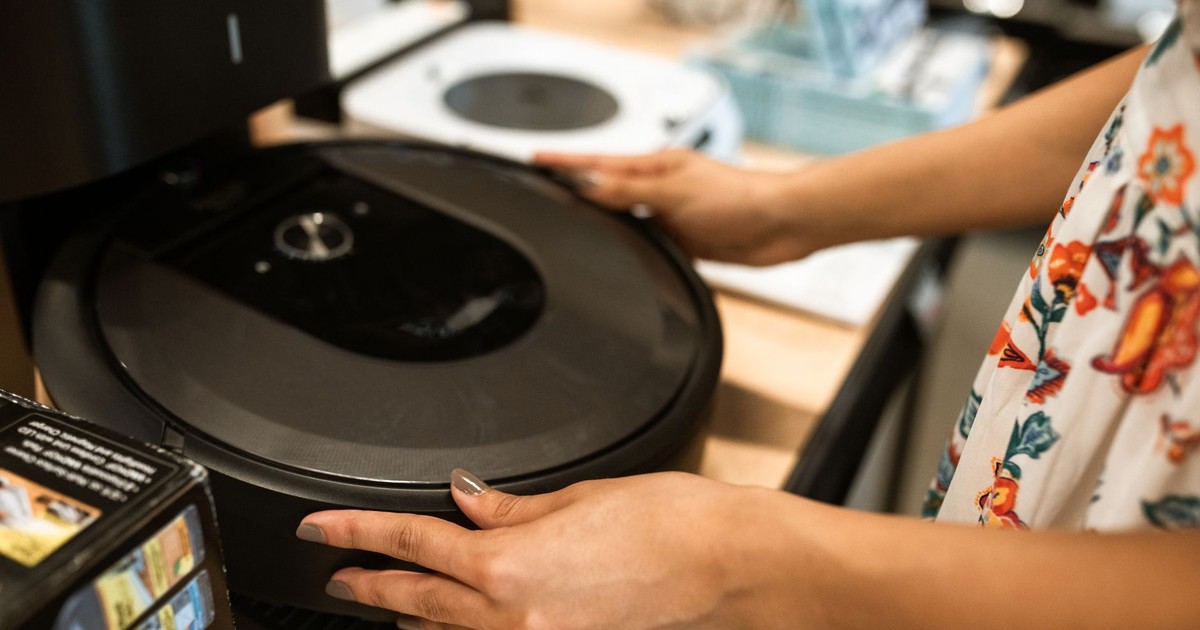

The little disc humming around your kitchen floor has been a household staple long enough that most people stopped thinking of it as technology and started thinking of it as furniture. It docks itself, avoids the dog, occasionally gets stuck under the couch, and texts you about it. But as of late July 2026, the federal government has decided that it also poses a risk to national security – and the robot vacuum ban in the US means the model you’re eyeing right now might be among the last of its kind to hit store shelves.
This isn’t a tariff skirmish or a supply chain headache. The Federal Communications Commission took a formal step that puts an entire category of home appliances into the same regulatory bucket as Huawei networking equipment and Kaspersky software. If that sounds like a significant escalation from your floor-cleaning robot to a national security threat, you’re not wrong to do a double-take. The reasoning, though, is more coherent than it sounds on first read.
Here’s what actually happened, what it means for the Roomba already docked in your hallway, and whether you need to do anything at all.
What the FCC Actually Did
On July 28, 2026, the FCC announced that new foreign-made advanced robotic devices are prohibited from receiving FCC equipment authorizations necessary for the import, marketing, or sale of these products in the United States. The instrument enforcing this is the agency’s “Covered List,” a register of communications equipment deemed to threaten national security. The Covered List was originally published in 2021 and identifies communications equipment and services that pose a threat to national security. Before this latest update, it was primarily populated by telecom giants like Huawei and ZTE. Robot vacuums are now in that company.
The new additions continue a pattern of decisions placing entire categories of foreign-produced devices on the Covered List: the FCC added all foreign-produced unmanned aircraft systems (drones) in December 2025, followed by all foreign-produced routers in March 2026. The robots and power inverters are the third wave in less than a year. Whoever is running that Covered List calendar has been busy.
The FCC updated the Covered List following a thorough review by a White House-convened Executive Branch interagency body with national security expertise, which jointly determined that all foreign-produced “advanced robotic devices” pose an “unacceptable risk to the national security of the United States and to the safety and security of U.S. persons.”
Which Devices Are Actually Covered

The definition of “advanced robotic device” matters here, because it is both more specific and broader than the headlines suggest. A covered robot must move across the ground, operate away from a human supervisor, weigh more than 4.4 pounds (including its dock), and contain environmental sensors, network connectivity, and software controlling its movement. That description fits the vast majority of full-size robot vacuums currently on the market.
The definitions of advanced robotic devices appear broad enough to reach humanoid and quadruped robots, robotic vacuums, pool cleaners, and lawn mowers. So if you were also looking at a robotic lawn mower this season, that is equally affected.
The restriction is based on where the device is produced, not the nationality of the company selling it. That means a robot from an American brand could still be covered if it is manufactured abroad. This is the part that catches a lot of people off guard. It is not a ban specifically on Chinese companies. According to Fox Business, major manufacturers including iRobot, SharkNinja, Dyson, Samsung, and LG sell robotic vacuums in the US, with most production taking place in China, alongside manufacturing operations in Vietnam, Malaysia, and Indonesia. All of those new models are now blocked from receiving FCC authorization, regardless of which country’s flag is on the company’s headquarters.
Drones already went through their own round of this regulation, so they are exempt from this particular restriction, as are connected vehicles and medical devices.
The Roomba You Already Own Is Fine
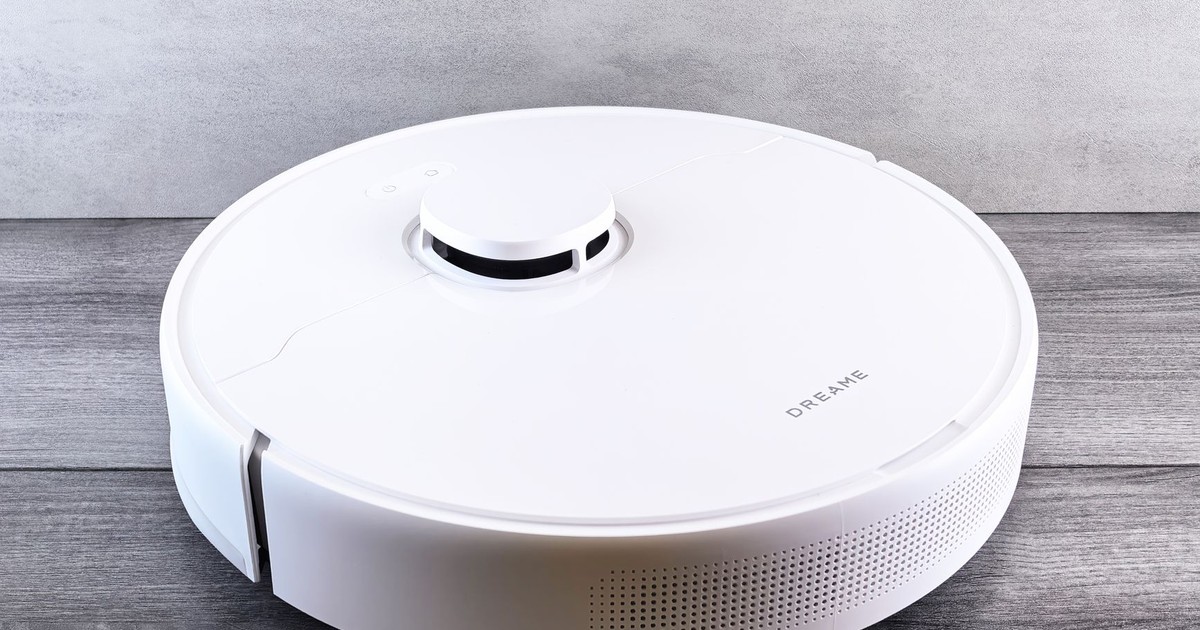
Before anyone starts hauling their robot vacuum to the curb: being added to the Covered List does not prohibit the import, sale, or use of any existing device models the FCC previously authorized. The Covered List does not restrict the continued use by consumers of previously purchased devices.
The robot vacuums currently selling in stores have already been approved through the FCC’s equipment authorization process. So the model that has been bumping into your baseboards for the past two years is not going anywhere, and the ones still on store shelves right now are equally safe to purchase. You can confirm whether a robot vacuum has received FCC certification by looking up the device’s FCC ID, usually listed on the model’s label.
What the ban prevents is new models from being brought to market. The version of the Roborock or Dyson that launches next spring, with newer sensors and a redesigned dock, will not be able to get the authorization it needs to be sold in America unless something changes. The model on shelves right now is grandfathered in. It’s the next generation that runs into the wall.
For context on just how attached people have become to these little machines, there’s already a corner of the internet devoted to their personalities – the trapped robot vacuum cleaner that sends increasingly distressed texts to its owner is a whole genre.
Why a Vacuum Is a National Security Risk
This is the question that deserves a genuine answer rather than a dismissive one. The government’s claim is that networked robots create cybersecurity risks due to how they collect floor plans, images, and other information about the spaces they map, and that foreign actors could potentially use this collected data for surveillance or remotely interfere with a robot’s physical operation.
That is not hypothetical. LiDAR-equipped vacuums build a precise floor plan over their first few runs, recording room dimensions, furniture placement, and doorway locations, and that map is uploaded to the manufacturer’s cloud. A detailed map of the inside of a federal building, a defense contractor’s home, or a military officer’s residence is genuinely sensitive information when it leaves the country.
The FCC’s Covered List FAQ states that these advanced robotic devices pose cybersecurity risks and can create supply chain vulnerabilities that could disrupt U.S. economic and national security. The supply chain argument is the less-discussed half of this. A device that operates autonomously inside your home, connects to Wi-Fi, and receives software updates from servers abroad is, in a very technical sense, a remotely operable platform inside U.S. homes. When millions of those platforms are manufactured by and connected to foreign infrastructure, that creates a potential exposure point that goes beyond any individual device.
Is There a Path Back to Market?

If a manufacturer wants to sell a new model that hasn’t received authorization, it can apply for conditional approval from the government to prove that its products don’t pose risks to national security. Once it has received the approval, the product will be exempt from the ban.
Consumer Reports notes that companies can apply for “Conditional Approval” for new foreign-produced advanced robotic devices from the Department of War, which can be granted upon a determination that the devices do not pose unacceptable risks. In practice, this process is likely to favor defense and industrial contractors over consumer electronics companies trying to get the latest Roomba into Target. Whether a brand like SharkNinja can realistically navigate that approval process in time for a product launch is genuinely unclear right now.
iRobot stated publicly that it is “aware of the FCC’s recent action and is working with them to better understand its implementation and potential impact,” adding that it “remains committed to serving customers” and will share updates as more information becomes available. Which is a very polished way of saying: we have no idea what happens next.
Matic is one of the few companies that says it makes its robot vacuums in the United States, according to its website – which puts it in a rare and suddenly enviable position.
What Happens to the Market Now
The practical effect of this ban will take time to become visible in stores. Existing inventory can still be sold. Models already authorized can still ship. But the pipeline of new products will start to thin as manufacturers either work through the conditional approval process, begin shifting production to U.S. soil (an enormous undertaking), or simply stop introducing new models to the American market.
iRobot, which makes Roombas, was recently acquired by Chinese manufacturer Shenzhen PICEA Robotics Co., Ltd., after the company filed for bankruptcy in December 2025, which adds another layer of complexity to how that brand navigates the new rules. A company now owned by a Chinese manufacturer, trying to get FCC conditional approval for advanced robotic devices, has a particularly interesting argument to make.
The broader category of consumer robotics in the US is facing a structural disruption, not just a short-term supply hiccup. The FCC’s covered list FAQ makes clear that this is not a temporary measure pending negotiation. It is a category-level restriction with no announced sunset date.
Where This Leaves You

The robot vacuum ban in the US does not require any action from people who already own one. Your device still works, your warranty still applies, and nothing changes about how you use it today. The place where this bites is in future purchases, in the innovation pipeline, and in the quiet fact that a device most households treat as a minor appliance has just been formally classified as a potential national security concern.
Some of that concern is more abstract than the government’s language implies – a robot vacuum mapping your living room is not quite the same threat as a hacked telecommunications network. But the logic is not invented. These devices do collect significant data, they do transmit it to foreign-held servers, and the track record of consumer IoT security is not exactly confidence-inspiring. A security researcher proved in early 2026 that Roborock vacuums could be remotely hijacked through a vulnerability, accessing both cameras and home floor maps in the process – and earned a $30,000 bounty for the discovery.
What the government is doing, essentially, is treating every new foreign-made connected robot as a potential vulnerability rather than waiting to evaluate them case by case. Whether that is proportionate, and whether it will ultimately push production onshore or simply freeze the market, is the question the next few years will answer. For now, the little disc humming around your kitchen floor is one of the last of its kind that the US government will allow through the door.
Disclaimer: This information is not intended to be a substitute for professional medical advice, diagnosis, or treatment and is for information only. Always seek the advice of your physician or another qualified health provider with any questions about your medical condition and/or current medication. Do not disregard professional medical advice or delay seeking advice or treatment because of something you have read here.
AI Disclaimer: This article was created with the assistance of AI tools and reviewed by a human editor.