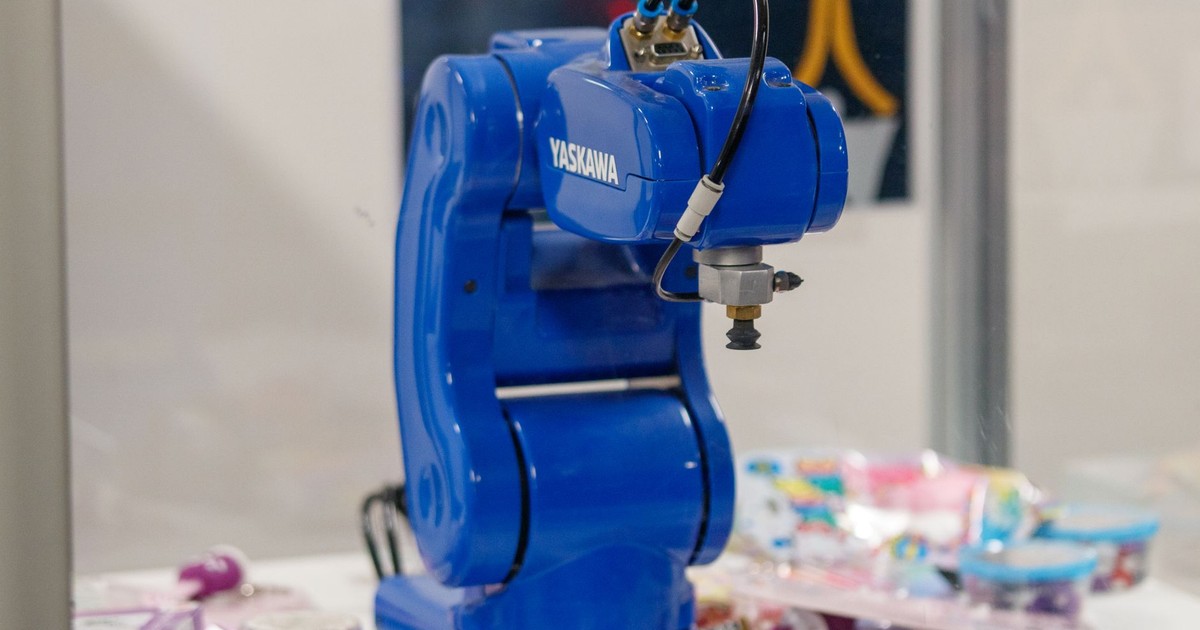

The prescription is already waiting when you walk up. You scan a QR code. In roughly 60 seconds, a sealed, labeled vial drops into the collection slot. No pharmacist. No technician. No line. No counter, even. Just a machine that took a sealed bottle of medication in one end and produced your exact prescription out the other, entirely on its own.
As of June 2026, that’s a working commercial unit deployed with a major U.S. pharmacy chain. The company behind it is called Queue, a Palo Alto-based startup that emerged from stealth last week. Not a dispensing assistant, not a pill-counting aid to lighten a pharmacist’s load. A complete, end-to-end replacement for the prescription fulfillment process itself.
Pharmacy robots aren’t new. Hospitals have used automated dispensing cabinets for years. Retail chains run centralized robotic fill systems in large warehouses. But every one of those systems still requires a licensed pharmacist to supervise the final step. Queue eliminates that on-site presence entirely.
How the Machine Actually Works
A technician loads sealed manufacturer bottles into the kiosk. Computer vision identifies every pill down to the National Drug Code level. The system counts, dispenses, labels, and seals each vial automatically. The patient walks up, scans a QR code, and collects their prescription in roughly 60 seconds.
Queue’s platform integrates dispensing, verification, and fulfillment into a single autonomous workflow. Medications enter the system in sealed manufacturer bottles, where robotics, computer vision, and automated handling manage storage, counting, dispensing, and verification before generating patient-ready prescription containers.
Queue says it can fill a 60-pill vial every 30 seconds, roughly 600 pills per minute at full configuration. The kiosks have limited space, so the selection of 250 medications includes the most commonly prescribed in the United States. Blood pressure medication, antibiotics, inhalers, common diabetes drugs. The medications most people are picking up on a Tuesday afternoon.
A predictive AI system tracks usage and calls a pharmacy technician to refill the kiosk when certain medications run low. The human role doesn’t disappear entirely; it just becomes remote and logistical rather than physical and supervisory.
The Problem It’s Designed to Solve
Pharmacies in the U.S. are facing workforce shortages and economic pressures. According to the National Community Pharmacists Association, 67% of independent pharmacy owners said in 2024 that they were having a difficult time filling open staff positions, with pharmacy technicians being the hardest role to fill. Overall, 73% of full-time pharmacists in 2024 rated their workload as “high” or “excessively high,” compared with 66% in 2014.
The need for skilled pharmacy professionals remains strong yet the supply continues to lag. With an estimated 14,200 pharmacist openings available each year, only about 12,639 graduates were entering the workforce annually, a gap that’s expected to grow over the next five to six years as pharmacy school enrollment continues to fall.
More demand, fewer people willing to fill the roles, and thousands of U.S. pharmacy locations have shuttered in recent years, particularly in rural areas. Queue’s pitch is that a machine can sit where a pharmacy can’t afford to, in a hospital lobby, a grocery store, a rural clinic, anywhere patients actually are.
The Safety Argument
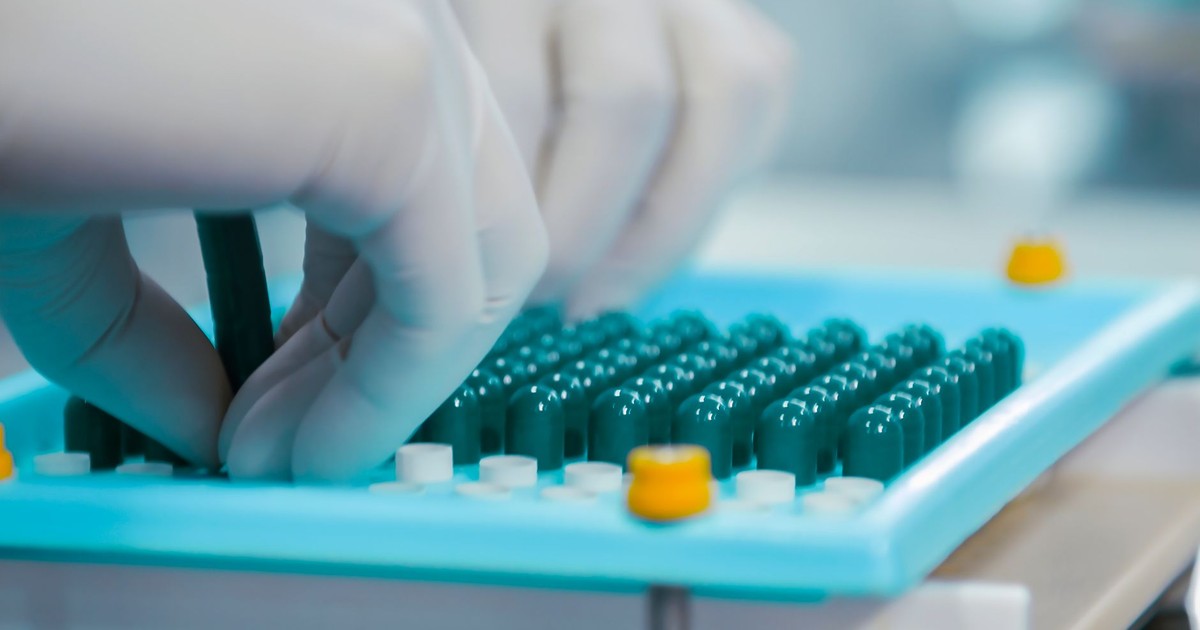
Automation in pharmacy isn’t just about speed and cost. The error rate in manual dispensing is a stubborn problem that has proven hard to fix through training and process alone.
Most dispensing errors involve incorrect medication, dosage, and form, driven by high workload, staffing shortages, and medication similarities. A stressed pharmacist managing a 200-prescription afternoon shift, fielding phone calls, handling insurance queries, and counseling patients is operating in conditions where small errors become more likely.
The Academy of Managed Care Pharmacy estimates that medication errors harm at least 1.5 million Americans every year, with the extra medical costs of treating drug-related injuries in hospitals alone running to at least $3.5 billion annually. Pharmacy automation systems address this directly, reducing dispensing errors significantly compared to manual processes while improving throughput across prescription fulfillment operations.
Queue’s system is built with multiple automated safety and verification steps, designed to reduce dispensing errors and maintain consistent prescription accuracy throughout the fulfillment process. Computer vision checking each pill against its National Drug Code means the machine isn’t guessing. It’s confirming identity at a level of consistency a human eye simply can’t sustain across hundreds of prescriptions in a single shift.
The Cost Equation

Queue can deliver medications at up to 96% lower cost than traditional pharmacy operations and can be deployed across retail locations, hospitals, rural communities, and other care settings where pharmacy access is constrained.
That 96% figure is Queue’s own claim, and it should be read with appropriate context. The company is pre-commercial at scale and has obvious incentive to frame its numbers optimistically. But even if the real-world reduction comes in at half that, it still represents a structural shift in what’s economically possible for pharmacy access in underserved areas.
According to a 2026 GlobeNewswire market report, the robotic pharmacy prescription market grew from $214 million in 2025 to $237 million in 2026 and is expected to continue growing at 9.18% annually, reaching $396 million by 2032. Queue is entering a market already in motion, not creating one from scratch. But the fully autonomous model, no on-site staff, no pharmacist loop to close, is a genuinely different category from the dispensing robots already operating in hospital back rooms.
The company recently closed an oversubscribed $12.6 million seed round led by AlleyCorp, following a $6 million pre-seed round led by Riot Ventures less than a year ago, bringing Queue’s total funding to $18.6 million. Additional investors include House Capital, Ubiquity Ventures, Grep Ventures, and Banter Capital. The startup employs about 20 engineers in Silicon Valley and is hiring across robotics, hardware, software, and pharmacy operations.
The Regulatory Reality

Queue eliminates the on-site pharmacist presence. Investors say Queue has already navigated initial state pharmacy board requirements.
Nationwide deployment demands state-by-state approvals. Independent pharmacy and regulatory voices have yet to weigh in publicly on whether autonomous verification can fully substitute for on-site clinical judgment, particularly for complex regimens or counseling situations the kiosk isn’t designed to handle.
Pharmacy law in the United States is governed at the state level, with each state board setting its own rules about what constitutes lawful dispensing. Many of those rules were written with a human pharmacist in the room as a baseline assumption. Rewriting them takes time, lobbying, and a track record of safety data that Queue is only just beginning to accumulate.
Amazon Pharmacy announced a similar initiative with its automated kiosk concept at One Medical locations, which suggests Queue isn’t the only company reading the market this way. When Amazon sees an opportunity in autonomous prescription kiosks, the regulatory conversation tends to move faster.
Read More: Could Gene Therapy Change Cholesterol Treatment With a Single Infusion?
What This Actually Changes

The conversation around robotic pharmacy automation tends to split into two camps almost immediately. One side sees a patient walking into a rural community without a pharmacy for 40 miles, scanning a QR code, and leaving with a filled blood pressure prescription in under a minute. The other sees a pharmacist job disappearing, and with it the clinical judgment to catch the drug interaction that the computer didn’t flag, the off-script question about a medication that turns out to matter, the human presence that still catches things algorithms miss.
Both of those things are true. The pharmacist shortage isn’t going away. Large parts of the country now count as pharmacy deserts, where the nearest counter sits miles away. For people in those communities, a kiosk that handles the 250 most common prescriptions isn’t a compromise. It’s the only option.
Queue’s machine also presents a second opportunity: giving pharmacists in existing venues some relief when they’re understaffed and overwhelmed. Customers seeking common medications can skip the line while pharmacy staff handles complex cases. The robotic kiosk handles the routine; the pharmacist handles the clinical. Whether that division holds up across the full range of patients who walk through a pharmacy door is the question that only real deployment data will answer.
The Part No Machine Can Resolve

The company expects to begin broader commercial deployments in early 2027. Between now and then, Queue will be building the safety record and the regulatory relationships it needs. Every prescription dispensed without error adds to the case. Every edge case the machine can’t handle, a dosing question, a drug interaction flag, a patient who needs more than a 60-second transaction, will sharpen the boundaries of where robotic dispensing belongs and where it doesn’t.
The technology is real and it works. But healthcare access has never been a purely technical question. The gaps in pharmacy coverage go back decades of economic and policy decisions that no kiosk resolves on its own. What Queue has built addresses the physical act of counting and labeling pills, doing it faster, cheaper, and with fewer errors than a fatigued human on a Friday afternoon. How much it matters depends entirely on whether the regulatory, clinical, and economic pieces fall into place around it.
Disclaimer: This information is not intended to be a substitute for professional medical advice, diagnosis, or treatment and is for information only. Always seek the advice of your physician or another qualified health provider with any questions about your medical condition and/or current medication. Do not disregard professional medical advice or delay seeking advice or treatment because of something you have read here.
AI Disclaimer: This article was created with the assistance of AI tools and reviewed by a human editor.