
You already know your coffee isn’t quite right. Maybe it’s too harsh, too flat, too much like something brewed in a breakroom nobody cleaned since 2019. You’ve tried a better grind, a different roast, filtered water. You’ve spent money on equipment that now lives in a cabinet. And somehow, the answer the whole time might have been a pinch of something you already have on your kitchen counter.
Salt in coffee is one of those ideas that sounds like a joke until you try it. It isn’t a trend invented by food bloggers looking for content. It predates specialty coffee culture, social media, and very possibly your grandmother. What it took was a 2024 peer-reviewed study and a viral moment out of central Vietnam to get the rest of the world to pay attention.
There’s real science here. Knowing why something works makes you more likely to actually do it, and more likely to do it right.
What’s Actually Making Your Coffee Bitter
Most people assume the bitterness comes from caffeine, but while caffeine contributes a small percentage, the majority comes from two compounds: chlorogenic acid lactones and phenylindanes, according to Perfect Daily Grind. These aren’t present in the raw coffee bean at all. They are released when coffee is roasted, as chlorogenic acids are broken down during the roasting process. That’s why the same bean can taste completely different depending on how it was roasted. The darker the roast, the more phenylindanes there will be, which is precisely why dark roast drinkers tend to reach for cream or sugar more than anyone else.
Extraction matters too. The majority of bitter tastants are more evident in overextracted coffee beverages, which is why a cup left on a drip machine burner for forty minutes tastes like battery acid. Over-extraction drags more of those bitter compounds out of the grounds, concentrating what was already there. The result is a cup that no amount of oat milk can fully redeem.
The Receptor-Level Science
Salt doesn’t neutralize bitterness the way you might rinse acid off a pan. The mechanism is not a simple matter of pH adjustment or a single suppression pathway. Sodium ions activate dedicated salt receptors — primarily the epithelial sodium channel (ENaC) — and at low concentrations this suppresses the brain’s perception of bitterness through a process called cross-modal masking, where one taste sensation actively mutes another without removing the underlying compounds.
In the past, taste interactions between sodium chloride and bitter tastants were investigated in human sensory studies, and the suppression of bitterness by sodium was observed, though it was not clear if this phenomenon occurs predominantly at the peripheral receptor level or centrally in the brain, and whether the effect is general or only particular bitter compounds are blocked. A 2024 study in the Journal of Agricultural and Food Chemistry started to answer those questions directly. Researchers tested the influence of sodium chloride at the receptor level using functional expression assays with four human bitter taste receptors. They found that NaCl affected only particular receptor-compound pairs, while other bitter responses remained unchanged. Among the tested receptors, TAS2R16 showed a measurable reduction in signaling in the presence of NaCl.
In plain language: salt doesn’t erase all bitterness equally. It targets specific receptors, and for those receptors, it genuinely reduces activation. The brain isn’t being tricked. The signal itself is quieter. The 2024 study in the Journal of Agricultural and Food Chemistry used isolated receptor assays in a lab setting, not brewed coffee with human tasters, suggesting that suppression works partly at the receptor level and partly through brain processing. Both things are happening, and together they produce a cup of coffee that tastes noticeably different from the one you made three minutes ago without the salt.
How Much Salt, and When
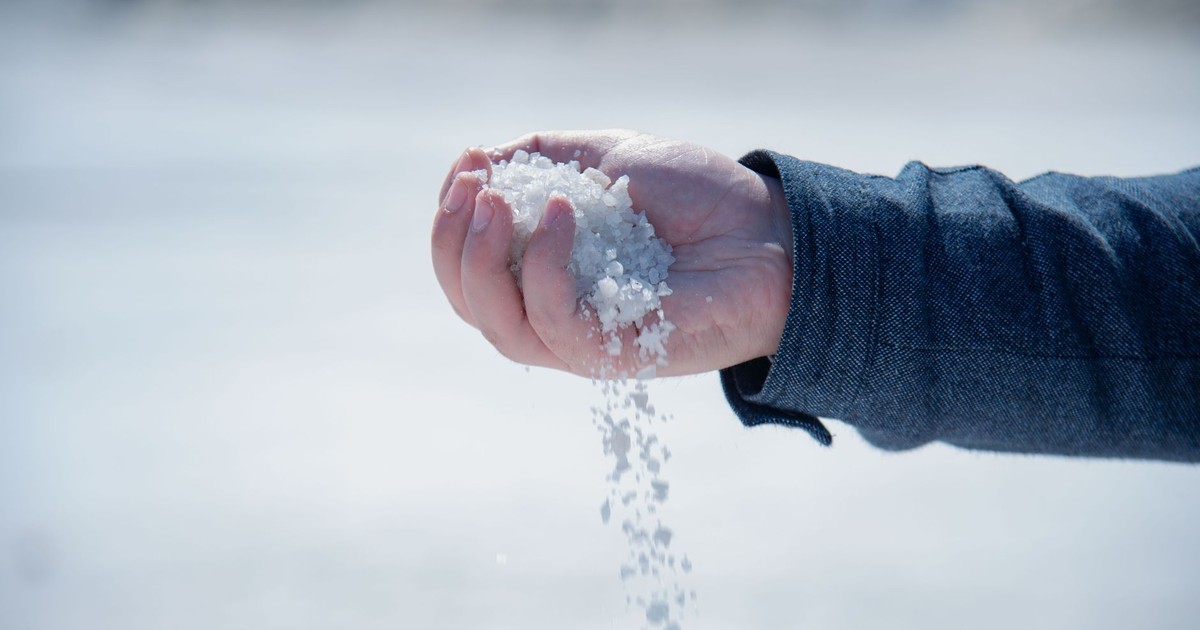
The dose is genuinely important here. This isn’t a case where more equals better. The effective dose starts at approximately 0.1 grams per cup, which is roughly 1/16 of a teaspoon. That amount is low enough that you won’t detect any saltiness. The salt is working in the background, not announcing itself. Your taste receptors operate at a scale where tiny quantities of a compound can completely change what you perceive.
Where you add the salt also depends on your brewing method. Adding a small amount directly to your grounds before brewing works well for immersion methods like a French press or cold brew, where the salt has time to disperse evenly through the water. For pour-over or drip, you can stir a pinch into the finished cup.
One specific scenario where salt in coffee earns its place: water that has been sitting in a tank or reservoir, which can develop a flat or slightly metallic quality that comes through in the finished cup. Salt not only cuts the bitterness, it also smooths out the stale taste of tank-stored water — a point Alton Brown has made about adding salt to coffee grounds, a practice with centuries-old roots in multiple cultures.
The Cultural History Nobody Taught You

Long before anyone was writing explainer articles about sodium ions and bitter taste receptors, people in various parts of the world were already putting salt in their coffee. The tradition goes back hundreds of years in countries like Turkey, Hungary, and Siberia, often tied to practical necessity as much as preference. Sailors and fishermen working with limited fresh water would brew with slightly saline water and discovered, at some point, that the result wasn’t worse. It was different, and often better.
The modern version of salted coffee that captured global attention came from somewhere more specific: a small café on Nguyen Luong Bang Street in the historic Vietnamese city of Hue. The true origin of the drink, while a topic of debate, is generally attributed to a couple who own a café in Hue, according to Chowhound. In 2010, Mr. Tran Nguyen Huu Phong and Mrs. Ho Thi Thanh Huong created the drink as a strategy to attract more customers — a detail the co-owners confirmed directly to CNN Travel — and their café, aptly named Cà Phê Muối, or “Salted Coffee,” quickly became one of the city’s most famous spots.
Ca phe muoi is a Vietnamese coffee drink topped with a layer of lightly salted cream: sweet, bold, and creamy all at once. The structure of the drink is part of the experience. A cup of Hue salted coffee has three layers: a base of condensed milk, a smooth salted cream layer, and freshly brewed coffee dripping from the phin filter above, as described by Local Vietnam. You can drink it in layers for contrast or stir it together for something more unified. Either way, the salt enhances the sweetness of the milk and softens the bitterness of the coffee.
Despite the drink’s rising popularity, the couple chose not to patent it or protect the concept commercially. Once salted coffee caught on, it rapidly spread across Hue and reached nearby cities like Da Nang and Hoi An. It has since gone considerably further than that. By 2024, international coffee chains operating in Vietnam had launched their own versions of ca phe muoi, and the drink had become a fixture on specialty menus around the world.
The Types of Salt (and Why Most of Them Work)
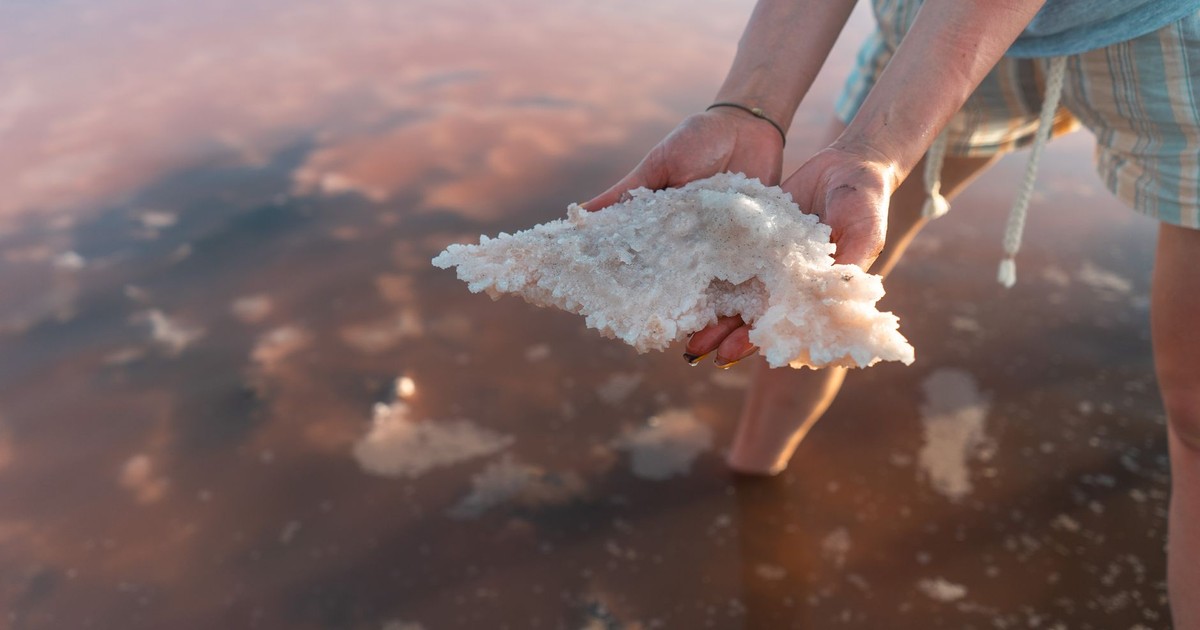
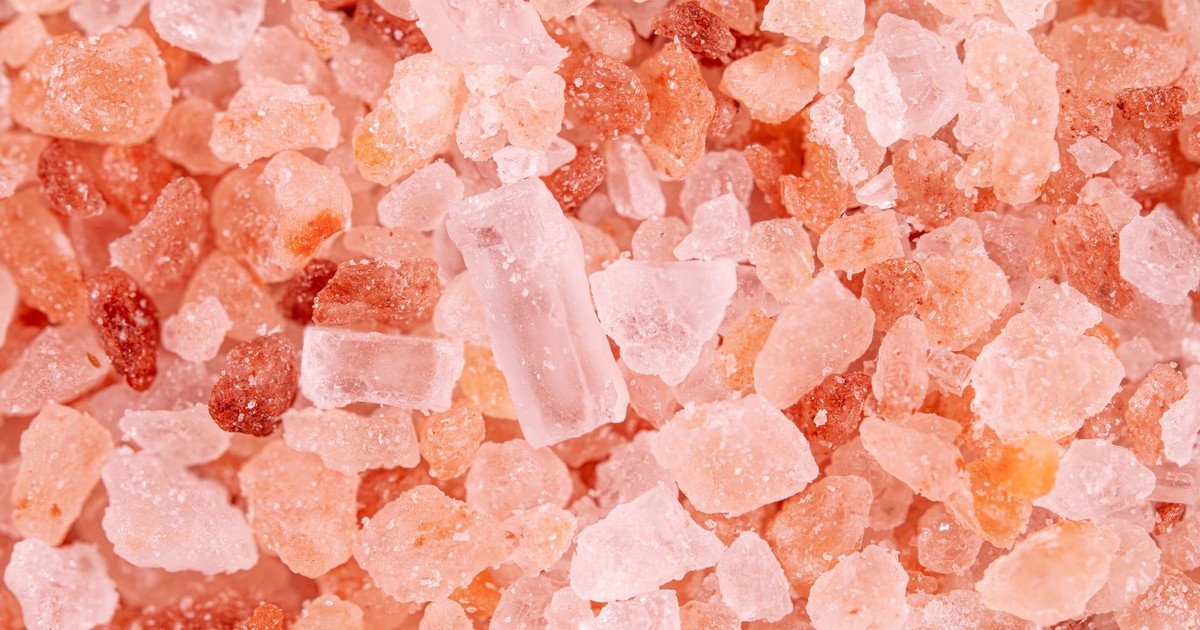
Standard table salt, sodium chloride, does the job. You don’t need anything fancy. That said, different salt types do behave slightly differently in a cup. Kosher salt and sea salt dissolve quickly and evenly, which matters when you’re adding such a small amount. Himalayan pink salt has essentially the same chemical composition as table salt with trace minerals that are present in quantities too small to affect flavor in a meaningful way, despite what packaging copy would have you believe.
The one variable worth paying attention to is grain size. Coarse salt doesn’t dissolve as readily as fine salt, which can mean uneven distribution in your cup, particularly if you’re adding it to an already-brewed drink rather than to the grounds. Fine sea salt or table salt gives you more consistent results with less stirring required. If you’re already in the habit of decluttering your kitchen and keeping only what earns its place, you don’t need a specialty salt for this. Whatever’s already in your cabinet will work.
When Salt Won’t Save Your Coffee
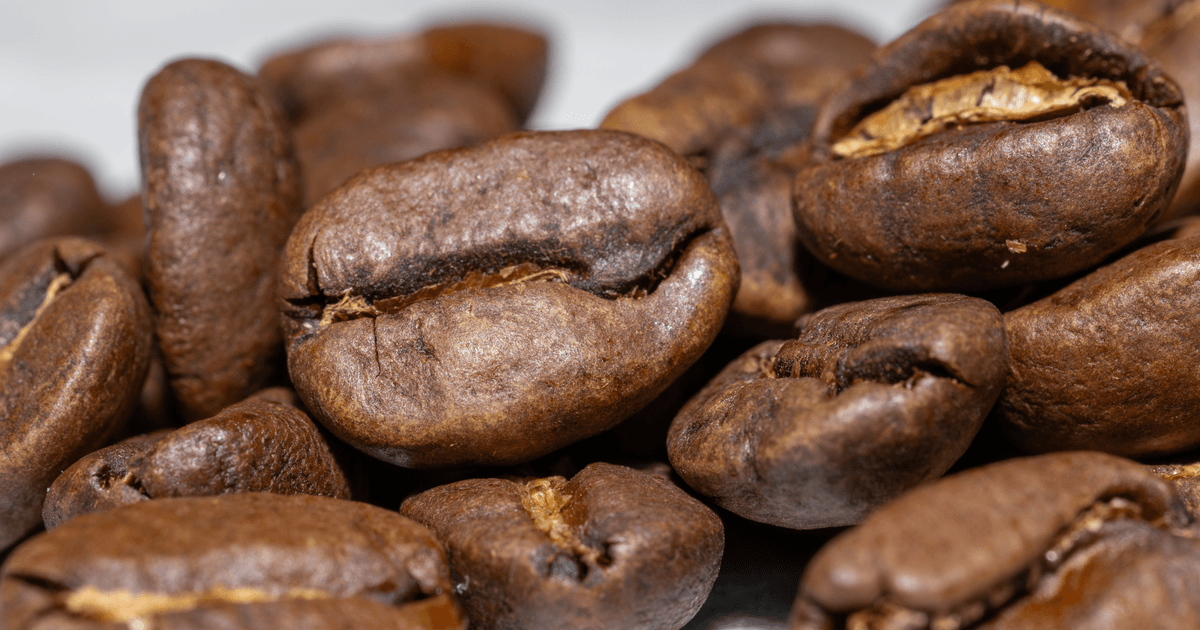
Salt is not a rescue operation for genuinely bad beans. In blind trials with defective beans – stale, scorched, or underdeveloped – salt amplified off-flavors like rubbery, sour, and papery notes by a significant margin. The suppression of bitterness works when the coffee has good underlying flavor that the bitterness is obscuring. When the problem is the beans themselves, removing some of the bitterness just makes the other problems more audible.
This is actually a useful diagnostic. If salt makes your coffee taste better, the beans were probably fine and you were over-extracting, using water that was too hot, or brewing with a method that was pulling more bitter compounds than necessary. If salt makes your coffee taste stranger, the beans may have been the issue all along.
The same logic applies to instant coffee, which concentrates bitter compounds at levels that no reasonable salt dose can fully address. Salt will soften the edges slightly, but the underlying flavor profile of instant coffee is a different problem with a different solution: buying different coffee.
What the Research Still Doesn’t Know

The 2024 study was conducted using isolated receptor assays, not human sensory panels drinking actual cups of coffee. Real coffee is a liquid with hundreds of flavor compounds interacting simultaneously, and what happens at the receptor level in a controlled lab assay doesn’t perfectly predict what happens on someone’s palate with a Tuesday morning cup. The study confirms the biological mechanism is real, but the degree to which that mechanism translates to a perceptibly better cup will vary by person, bean, roast level, and brewing method.
Individual salt sensitivity also plays a role. Some people have more sensitive bitter taste receptors than others, which is partly genetic. For those people, the difference salt makes in coffee can be dramatic. For others, the effect is more subtle. Neither response is wrong. It’s just variation in how human taste works, and it’s one reason the “try it once and decide” approach is the only honest way to know where you land.
The Honest Case for Trying It

There’s no reason not to try salt in coffee at least once, and most of the reasons people don’t come down to the same thing: it sounds wrong. Salt belongs in savory food. Coffee is already complicated. Why add something else to the equation?
But coffee has always been a drink people have adjusted to their own palate: cream, sugar, cardamom in Turkish coffee, condensed milk in Vietnamese coffee, chicory in New Orleans. Salt is just one more adjustment, and unlike most of them, it doesn’t add calories, change the caffeine content, or require any special equipment. It requires a pinch of something you already own and about thirty seconds of willingness to try something that sounds a little odd.
Disclaimer: This information is not intended to be a substitute for professional medical advice, diagnosis, or treatment and is for information only. Always seek the advice of your physician or another qualified health provider with any questions about your medical condition and/or current medication. Do not disregard professional medical advice or delay seeking advice or treatment because of something you have read here.
AI Disclaimer: This article was created with the assistance of AI tools and reviewed by a human editor.