

People rarely announce that they’ve had it hard. There’s no badge, no ceremony, no moment where someone pulls you aside and says, “I see what you’ve been through, and I see how it changed you.” The evidence tends to emerge in small reflexes and long-practiced habits that get mistaken for personality quirks. The way someone calculates an exit before they’ve even sat down in a room. The way they can fix almost anything with what’s in the junk drawer. The way they laugh at exactly the wrong moment, and mean it.
The signs of a hard life don’t look like what most people expect. They’re not always visible in the obvious places – the CV gaps, the worn shoes, the tired eyes. More often they live in behavior: in how someone handles money, how they receive a compliment, how they refuse help that is genuinely being offered with no strings attached. These patterns are not flaws. Most of them were once exactly the right response to a situation that demanded them. They just haven’t gotten the memo that the situation changed.
Recognizing these patterns – in yourself, in a parent, in a friend whose backstory you only half know – is less about diagnosing and more about seeing clearly. There is a particular kind of clarity that comes from having your own behavior named accurately. It doesn’t fix anything. But it does make the weight of it a little easier to carry.
1. Constant Bracing for the Worst

There’s a difference between being a realistic planner and living in a state of perpetual low-level dread, and people who’ve lived through prolonged hardship often can’t tell where one ends and the other begins. The disaster scenario isn’t a thought experiment for them – it’s the first place their mind goes, automatically, before the good news has even finished arriving. A job offer arrives and the first thought isn’t celebration; it’s wondering what the catch is.
Hypervigilance is a heightened alertness to one’s surroundings, associated with mental health conditions such as anxiety disorder and PTSD. But in people who have simply lived through long stretches of genuine instability – financial collapse, an unpredictable household, chronic loss – it doesn’t always look clinical. It looks like being the person at every gathering who has already located the emergency exit. It looks like never fully exhaling, even when things are, by any objective measure, fine.
The brain learns from experience, and if experience has repeatedly confirmed that good stretches get interrupted, the brain does not simply forget that lesson because the circumstances improved. The bracing becomes the baseline. It costs energy every single day, and most people running on it have no idea how much of their attention it’s consuming, because it has always been there.
2. Deep Discomfort With Receiving Help

Ask someone who’s had a hard life to accept help gracefully and watch what happens. They will redirect, minimize, deflect, and find seventeen reasons why they can actually manage on their own. This is not stubbornness for its own sake. It developed as a completely rational response in an environment where depending on others was unreliable, conditional, or came with costs that arrived later.
The logic that formed in leaner years goes roughly like this: if you need something and ask for it, you become vulnerable to whoever holds it. If you learn to need nothing, you can be hurt by no one. It is a protection built so thoroughly into the architecture of daily life that it often persists long after the original threat is gone. A friend offers to pay for lunch and the person who grew up with nothing feels a flash of something that isn’t quite embarrassment and isn’t quite fear – but is something in between.
Accepting care requires a level of trust that difficult experiences tend to erode. The person who learned early that nothing comes without obligation will instinctively scan any offered kindness for the invoice. This doesn’t mean they’re incapable of generosity. Often they are extraordinarily generous in the opposite direction – giving freely and abundantly to others, while finding it almost impossible to be on the receiving end of the same.
3. Financial Anxiety That Outlasts the Hardship

Money anxiety is common enough. But there is a specific version of it that belongs to people who have actually been without, and it looks different from ordinary financial worry. It persists into periods of genuine stability, driven less by current circumstances than by the nervous system’s memory of earlier ones.
Financial trauma can stem from experiences like poverty, job loss, bankruptcy, childhood instability, or systemic marginalization. One of its most recognizable expressions is a relationship to money that stopped being about actual numbers a long time ago. Sudden job loss in the family can create adults who hoard cash obsessively or work themselves to exhaustion – because the lesson learned early was that financial stability can collapse overnight, so preparation for catastrophe becomes permanent.
A 2025 LifeStance Health survey found that 83 percent of Americans report financial stress driven by inflation, mass layoffs, rising living costs, and recession concerns. For people who came from actual scarcity, that number is almost unsurprising. What is striking is how the anxiety doesn’t resolve even when the practical circumstances do. Checking the account balance fifteen times a week when you have enough money is not a budgeting habit. It’s a survival reflex that doesn’t know the war is over.
4. An Unusual Relationship With Food

People who grew up without consistent access to food develop habits around it that stay long into adulthood. They may eat quickly, past the point of fullness, because the body remembers the times when the plate wasn’t guaranteed. They may hoard food in ways that look eccentric to people who’ve never had to. They may feel disproportionate distress when food is wasted, or when a cupboard runs low, or when they have to eat at someone else’s pace.
The opposite pattern appears too: people who grew up in households where food was tied to punishment, restriction, or control can develop fraught relationships with eating that have nothing to do with hunger and everything to do with the emotional weight the table carried. Either way, a complicated relationship with food is often less about the food itself and more about what food represented in a formative environment: safety, love, control, or the absence of all three.
These habits rarely respond to being told they’re irrational, because they weren’t irrational when they formed. They were adaptive. The adult who clears their plate in under five minutes and always takes “just a little more” isn’t being greedy. They’re being the child who wasn’t sure there would be another meal.
5. Exceptional Resourcefulness
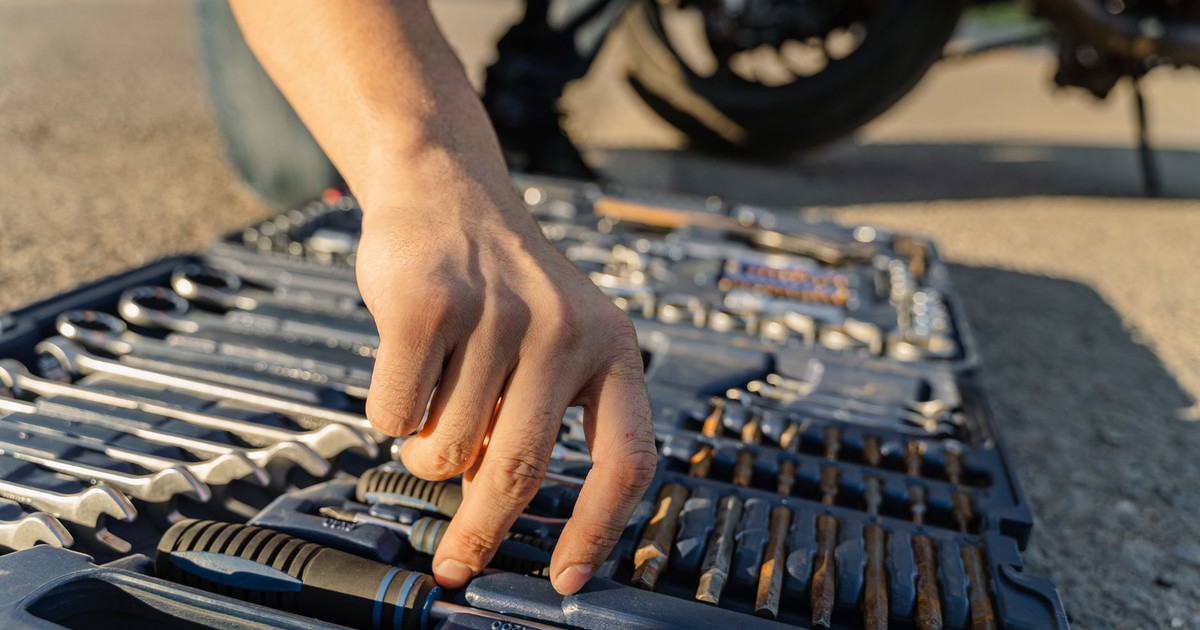
One of the more remarkable signs of a hard life is what a person can do with very little. People who grew up without abundant resources don’t just learn to manage – they learn to create. They fix things instead of replacing them. They know which off-brand version works just as well. They can stretch a bag of groceries across a week in ways that would make a meal planner weep with admiration.
This is not a quirk. It is a skill set built under duress and refined by necessity. The person who knows seventeen uses for white vinegar, who can repair a zipper with a fork, who has never once thrown away a reusable container – that person learned those things because wasting resources was not an option they had. The ingenuity that comes from genuine constraint is its own kind of intelligence, one that tends to outlast the constraint itself.
People who are highly resourceful in this way often don’t recognize it as a skill. They assume everyone knows how to do what they know how to do, because they learned it in an environment where these things were simply required. The revelation that not everyone grew up knowing how to stretch, improvise, and repair tends to arrive slowly, usually through the frank bewilderment of people who didn’t.
6. Difficulty Trusting That Good Things Will Last

Good news, when it arrives, often registers differently for someone who has spent significant time on the other side of it. There is a protective instinct not to fully trust a good thing – a new relationship, a stable job, a run of health – because experience has demonstrated, repeatedly, that good things do not simply stay. They get taken away, interrupted, or complicated in ways that nobody warned you about.
This does not look like pessimism from the inside. It looks like pragmatism. It looks like keeping one hand on the exit, maintaining a low-grade readiness for the reversal that hasn’t come yet. The person who refuses to fully relax into a good stretch is not refusing happiness. They’re applying a risk management strategy that was absolutely warranted in an earlier context and has simply not been updated since.
The real cost of this pattern is a ceiling on joy. Everything pleasant is experienced at arm’s length, held just outside of full belief, because believing it completely and then losing it was something the person already survived once, and they are not particularly interested in doing it again.
7. A Finely Tuned Radar for Other People’s Moods

Walk into a room with someone who grew up in an unpredictable household and watch them read it. They notice the slight change in a voice, the jaw set a little more tightly than usual, the silence that carries weight. Before most people have registered that anything is different, this person has already assessed the threat level and quietly adjusted their behavior accordingly.
This is a survival skill built in environments where reading the adult in the room – accurately and quickly – was genuinely necessary for safety. The child who needed to know whether a parent was in a good mood before asking for anything, or who learned to gauge the atmosphere at the dinner table before deciding whether to speak, becomes an adult with an almost preternatural ability to read social dynamics. They often describe it as “just knowing” what’s going on in a room, without being able to explain exactly how they know.
The trouble is that this radar, so useful in genuinely unpredictable environments, doesn’t idle well in safe ones. It can pick up false signals, read neutrality as threat, and exhaust the person running it – because maintaining that level of social surveillance takes energy, and it never entirely switches off.
8. A Complicated Relationship With Celebration

People who have lived through genuinely hard periods often feel strangely flat at their own milestones. The promotion, the graduation, the pregnancy announcement – these things are objectively wonderful, and the person knows they’re wonderful, but there’s a particular difficulty in actually inhabiting the moment rather than scanning it for what might go wrong next.
There is also a specific flavor of discomfort that comes from celebrating in front of people who have had less. Someone who grew up without resources often finds public triumph uncomfortable in a way that is difficult to articulate. It isn’t false modesty. It’s the memory of what it felt like to be on the other side of someone else’s abundance, and not wanting to be the person who waves it around carelessly.
This can look like deflecting compliments, underplaying achievements, or celebrating wins in private rather than broadcasting them. The person who marks their own promotion with a solo dinner and a good bottle of wine, rather than an announcement, is not incapable of pride. They’ve just learned to hold it in a register that doesn’t leave them exposed.
9. Dark Humor Used as Both Shield and Bridge

People who have survived hard things develop a particular relationship with dark humor – not because they find suffering funny, but because finding something to laugh at in it is one of the few forms of control available when circumstances are otherwise uncontrollable. The joke is not a dismissal of pain. It is frequently the only language that accurately captures how absurd the situation actually was.
This humor tends to be wry, specific, and delivered with an absolute straight face. It is not performed anguish and it is not performed toughness. It is the language of people who have been forced to look directly at things most people prefer not to acknowledge, and who have found that the distance between what is supposed to happen and what actually does happen is, in fact, frequently ridiculous.
The people who don’t get it tend to be people who haven’t needed it. The people who do get it tend to recognize each other immediately, in the small laugh that happens when a joke strikes precisely right – the one that is half funny and half relief that someone else sees it too.
10. Defaulting to Self-Reliance to a Fault

Asking for help is hard. For people whose hard lives taught them that no one was reliably coming, it becomes close to impossible. Self-reliance is the skill set assembled from necessity, and at a certain point it becomes an identity. “I figure things out myself” stops being a preference and becomes a deeply held conviction about who you are and what you are worth.
The cost accumulates in the places where collaboration or support would genuinely improve things and the person doesn’t reach for either. They will suffer through something in silence – an impossible workload, a health issue, a grief they are carrying alone – before they will ask for help in a way that feels like vulnerability. Not because they don’t want support, but because wanting it and not getting it was so thoroughly normalized at some point that wanting it now feels dangerous.
Research from the American Psychiatric Association finds that precarious economic circumstances correlate with increased rates of depression and anxiety, especially among marginalized groups, and one of the more stubborn expressions of that is the person who is drowning and will not put their hand up. The narrative they’ve built – I handle it myself, I always have – is both their greatest strength and one of the places where they most need someone to gently push back.
11. Heightened Guilt Around Rest and Pleasure

Ask someone who has had a genuinely hard life if they ever struggle to relax, and watch them laugh. Not because it’s funny, exactly, but because the question strikes so precisely. Rest is complicated when you grew up in an environment where there wasn’t enough – not enough money, stability, safety, time – because resting always carried the risk that something was being missed, lost, or left unattended.
That same relationship with rest can persist well into a life that has more breathing room in it. Sitting still produces anxiety. A day with no tasks generates guilt. Pleasure that isn’t attached to productivity – a nap for the sake of a nap, an afternoon with a book for no reason – can feel faintly transgressive, like something you haven’t quite earned yet. The person who cannot stop moving, who fills every gap, who finds idleness genuinely uncomfortable – this is often not ambition. It is an old alarm that has not been quieted.
Chronic grief and loss can accelerate this pattern. People carrying sustained loss often throw themselves into busyness as a way of managing the unbearable gaps – which makes perfect emotional sense, and which also makes rest feel less like recovery and more like opening a door they’ve deliberately kept closed.
12. A Specific, Hard-Won Empathy

People who have navigated hard lives tend to develop empathy with texture – not the abstract, theoretical kind, but the specific, experience-adjacent kind that recognizes pain in others before it’s been named out loud. They don’t need the full explanation because they already recognize the shape of it. The person who quietly passes a friend their leftovers without drawing attention to it. The one who never mentions the money they lent. The one who knows exactly what to say to someone who just got bad news, and doesn’t say too much.
This empathy is not sentimental. It has sharp edges. It knows the difference between someone performing struggle and someone actually in it. It is less interested in grand gestures than in reliable presence. And it tends to be most generous toward people who remind them – even slightly – of the version of themselves that needed someone and didn’t find one.
This is possibly the most invisible of the signs of a hard life, because it doesn’t announce itself. It just acts. Years later, people will say of someone like this that they always seemed to “just know” – what you needed, when you needed it, and exactly how to give it without making you feel small for needing it at all.
Read More: 7 Things Unloved Daughters Carry Into Adult Relationships
What This Isn’t, and What It Is
None of these patterns are defects. Every single one of them made sense in the environment that produced it. Hypervigilance is the right response when threats are real. Hoarding food is rational when the cupboard has actually been empty. Refusing to trust good things makes perfect sense if good things have historically had a catch. The problem is not that the response formed – the problem is that responses formed for difficult conditions don’t automatically update when the conditions do.
Recognizing these patterns in yourself is not a diagnosis, and it is not an explanation that lets you off the hook for their costs. But some of these patterns go back further than you’ve traced them. Some of them are so old you genuinely cannot remember life before them. Naming that is usually where the real conversation starts – with yourself, or with someone else who recognizes the shape of what you’re describing, because they have been carrying the same thing.
AI Disclaimer: This article was created with the assistance of AI tools and reviewed by a human editor.