

Most people look at their phones in the checkout line. They study the conveyor belt, or find the middle distance extremely interesting. The ones who break the silence and say something to a stranger – who comment on the absurdity of how long the line is, or notice what’s in someone else’s cart and make it into something – aren’t just being friendly in a surface-level way. Research on social behavior has accumulated enough evidence to suggest these brief, voluntary human moments point to a particular kind of person, one with a specific constellation of small talk personality traits that are genuinely less common than they seem.
Most people don’t do that. They know the option exists. They choose their phones instead. The person who doesn’t, who reaches out into an anonymous moment with another human being for no reason and no reward, tends to share a set of traits with every other person doing the same thing in checkout lines across the country.
These aren’t traits you can fake for long. You can smile at someone once out of obligation, but you can’t consistently, genuinely initiate warmth with strangers over years of grocery runs unless something deeper is actually there. Here’s what that something tends to be.
1. High Agreeableness

Agreeableness is one of the five core personality dimensions in psychology’s Big Five model – it captures warmth, cooperativeness, and genuine interest in other people’s wellbeing. People high in this trait don’t experience other humans as obstacles or background noise. The cashier who has been on her feet for six hours is a person they actually notice.
Humans are predisposed to forming first impressions about the people we encounter, including impressions about their personality traits. Those who make small talk are doing the opposite of forming a transactional impression and moving on. They’re extending the moment, which is fundamentally an agreeable act. It costs them time and a small amount of social risk, and they do it anyway because the other person registers as worth that.
Agreeableness doesn’t mean conflict-averse or pushover. It means you have a baseline orientation of warmth toward other humans that operates automatically, even with strangers. The checkout line just happens to be where it becomes visible.
2. Low Fear of Social Rejection

Most people who stay silent in social situations aren’t indifferent – they’re anxious. They’ve run the math: what if this person doesn’t want to talk? What if the comment goes sideways? What if it’s awkward? The perceived risk of rejection, even when it’s minimal and inconsequential, is enough to keep the silence in place.
People who make small talk have recalibrated that risk assessment. Research published by the APA shows that people often stick to small talk with strangers because they underestimate how much others are interested in their lives and wrongly believe that deeper conversations will be more awkward and less enjoyable than they actually are. The person who opens with a comment about the absurd length of the line has already bypassed that calculation – not because they’re fearless, but because rejection from a stranger simply doesn’t carry much weight for them.
This isn’t arrogance. It’s more like a sensible sense of proportion. A stranger at a register is not your employer, your mother, or anyone whose opinion of you has lasting consequences. People who make small talk have internalized that fact in a way many people haven’t.
3. Genuine Curiosity About Other People

There’s a difference between being sociable and being curious, and the two don’t always travel together. Plenty of sociable people talk because they like having an audience. Curious people talk because they actually want to know what’s on the other end of the conversation.
Research by Nicholas Epley at the University of Chicago, published in the Journal of Personality and Social Psychology, shows that engaging in small talk helps people predict the personality traits of their conversation partner. The person initiating that small talk is, on some level, reading the room and the person in front of them. That’s an act of curiosity. They’re noticing things – the accent, the items on the belt, the expression on someone’s face – and finding them genuinely interesting enough to respond to.
This curiosity also runs through every other part of their lives. These are the people who ask follow-up questions at dinner parties, who remember obscure details about people they met once, who find most humans at least a little bit fascinating. The checkout line is just where it expresses itself in its most stripped-down form.
4. High Extraversion (But Not Always What You’d Expect)

Extraversion is the most obvious trait people associate with small talk, and yes, it’s in play. Extroverts draw energy from social contact rather than spending it, which makes a brief exchange with a stranger feel rewarding rather than depleting.
But the relationship between extraversion and small talk isn’t as simple as “extroverts talk, introverts don’t.” Extroverted individuals may naturally lean toward small talk, but introverted individuals can also benefit and find it leads to more intimate and enjoyable conversations than they expected. What the research actually captures is that people who make small talk tend to be high in social engagement, which is a facet of extraversion – but even people who identify as introverts can develop this habit if their curiosity or warmth overrides their preference for quiet. The checkout-line talker isn’t always the loudest person at the party. Sometimes she’s the one who left the party early and is now having the most interesting conversation of her week with someone buying canned tomatoes.
5. Emotional Attunement

Emotional attunement means being able to read the temperature of a room – or a person – quickly and adjust accordingly. It’s what separates the person who strikes up a cheerful conversation with a visibly harried cashier from the person who wisely compliments the same cashier’s efficient bagging technique and leaves it at that.
People who make small talk well don’t just talk. They read first. They notice when someone is open versus closed off, rushed versus relaxed, in the mood for a joke versus in need of a human moment that doesn’t require anything from them. That’s attunement, and it’s a more sophisticated skill than it looks from the outside. Making a meaningful connection with a stranger requires paying attention to body language cues and engaging in small talk. The person who does this instinctively in a checkout line is doing something emotionally intelligent in real time, with very little information to work from.
6. Comfort With Ambiguity

Every small talk conversation with a stranger is an open loop. You don’t know if they’ll respond. You don’t know where it will go. You don’t know if you’ll ever see them again, and you won’t be there to find out whether what you said stayed with them in any way. People who are uncomfortable with ambiguity find this maddening and avoid it. People who are comfortable with it find it kind of freeing.
Making small talk at checkout is a perfect exercise in letting go of outcome. The conversation isn’t going anywhere. It has no arc. It will not be resolved or followed up. That’s actually the point – it’s human contact for its own sake, with no agenda attached. The ability to engage with interactions like this and find them genuinely satisfying, rather than frustrating, signals a personality that handles ambiguity well. These tend to be the same people who don’t need to know how a trip will go before they book it, and who can sit with an unanswered question without it keeping them up at night.
7. A High Sense of Social Responsibility

People who make small talk tend to operate with an implicit understanding that they are participants in a shared social fabric, not just users of it. The checkout line isn’t just a transaction to get through – it’s a tiny, repeated moment of contact between humans who are all just trying to get through their Tuesday.
Engaging in small talk with both strangers and guests helps create social comfort and happiness in daily interactions. The person who does this regularly has internalized, consciously or not, that they have a small role to play in making public life more human. It’s civic in a way that has nothing to do with politics. It’s closer to the understood responsibility you feel toward the people around you in a shared space – which is something a lot of people think about and relatively few people act on.
8. Resilience and Emotional Stability

Talking to a stranger risks nothing catastrophic, but it does require a certain amount of equanimity – the baseline confidence that you can handle whatever comes back at you. A cold response, a non-response, a weird look: none of these will derail the person who initiated. They absorb it, register it as mildly awkward at most, and move on.
This emotional stability connects to what psychologists call low neuroticism: less reactivity, less rumination, less tendency to replay social moments looking for evidence that you said something wrong. People high in neuroticism tend to avoid the checkout line conversation specifically because the downside scenarios loom too large. People low in neuroticism take the small social risk because the downside, realistically, is negligible. The resilience required is modest but genuine.
9. Optimism About Human Nature

You cannot make small talk regularly with strangers unless, somewhere underneath your behavior, you believe that most people are basically decent and mostly worth a moment of your time. This is not naivety. It’s a working assumption about humanity that the research actually supports – most people, when approached warmly, respond warmly.
A 2021 study published by the American Psychological Association found that people often overestimate awkwardness and underestimate the amount of joy that can come from meaningful discussions with strangers. The regular small talker has intuited this empirically, through years of interactions that mostly went fine. Their optimism about people isn’t a philosophy they’ve adopted. It’s something they’ve observed.
10. Conversational Generosity

Conversational generosity is the willingness to carry a little more than your share of the social load – to make the first move, to ask the question that opens a door, to laugh at something that gives the other person room to laugh too. It’s distinct from chattiness or dominating conversations. It’s closer to a form of social hospitality.
The person who comments on the length of the line or compliments the cashier’s speed isn’t fishing for a response. She’s offering an opening. Whether the other person takes it or not, the gesture was generous. This trait runs consistently across relationships – the friend who texts first, who remembers to follow up, who notices when someone in the group is quieter than usual and asks about it. The checkout line is just the lowest-stakes expression of a habit that runs much deeper.
11. Present-Moment Awareness

In a world where the default behavior at any moment of waiting is to look at a phone, making eye contact with a human being and saying something to them requires being genuinely present. That’s rarer than it sounds. Most people are somewhere else mentally even when they’re standing still – in the errands they still have to run, the email they’re composing in their heads, the argument they’re replaying from three days ago.
The person who makes small talk in the checkout line is actually there. They noticed the world around them enough to respond to it. Present-moment awareness isn’t just a wellness concept – it’s a cognitive orientation toward what’s actually happening right now, and people who have it tend to move through life differently. They remember more of it. They find more of it interesting. And they’re far more likely to strike up a conversation about the seasonal candle display than the rest of us.
12. Adaptability

No two checkout line conversations are the same. One time it’s a shared eye-roll about the self-checkout machines. The next it’s a brief, unexpected exchange about a recipe after someone notices what’s in your cart. The time after that, you say something and the other person is clearly not interested, and you gracefully let it go. People who make small talk well are adapting constantly – reading social cues, adjusting tone, knowing when to lean in and when to back off.
This adaptability is a genuine cognitive and social skill. It requires processing multiple streams of information simultaneously – facial expression, body language, context, timing – and making real-time adjustments. By observing body language cues and the content of the small talk, participants can gauge comfort levels and avoid potential awkwardness. The person doing this fluently in a grocery store line has a more finely tuned social instrument than most people realize.
13. Warmth as a Default Setting, Not a Performance
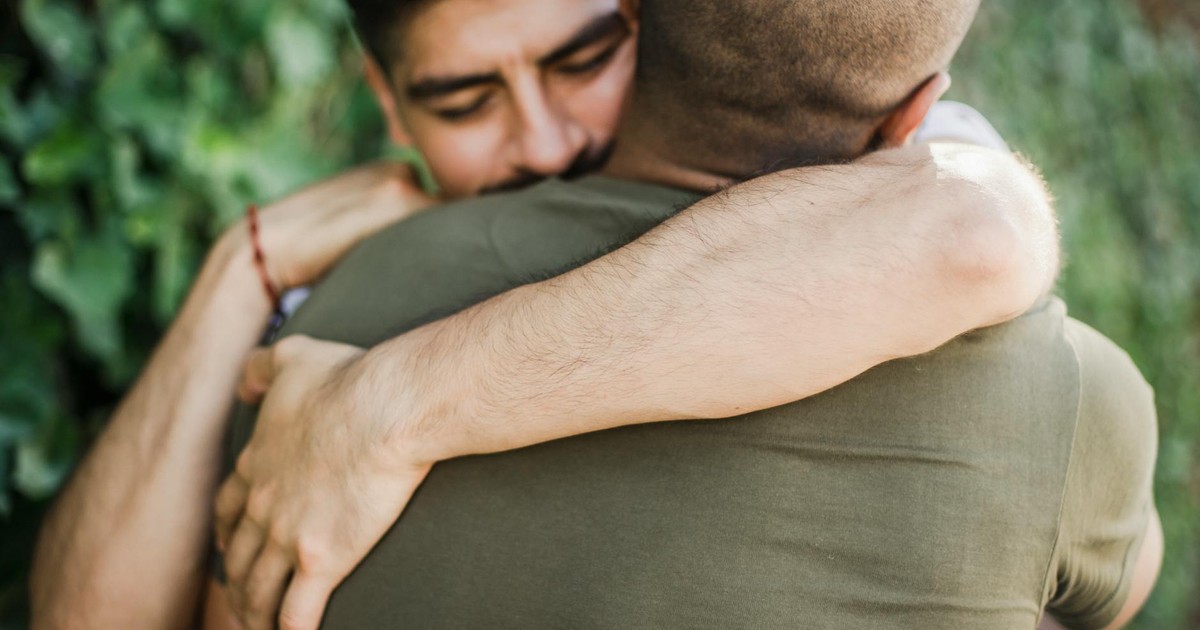
Some people are warm when they want something, warm when they’re being watched, warm at events where warmth is expected. People who make small talk at checkout are warm for no reason. There’s no audience. There’s no upside. The cashier will not remember their name. The person behind them will not report back to anyone about what a warm human being they were. The warmth is just the baseline.
This is actually unusual. Most social warmth is contextual – it goes up when there are stakes and down when there aren’t. The person who is consistently warm in low-stakes, anonymous moments is operating from character rather than calculation. And character, unlike performance, holds across every area of a person’s life.
14. A High Tolerance for Vulnerability

Every small talk conversation involves a small, real moment of vulnerability. You say something into a social space that you do not control, and you wait to see what comes back. It is tiny vulnerability, but it is real. The person who does it regularly has a high enough tolerance for that feeling to not let it stop them.
Research by social psychologist Gillian Sandstrom found that a week-long intervention aimed at talking to strangers reduced fear of rejection and increased conversational ability in participants. The people who are already doing this naturally, without an intervention, have effectively given themselves that intervention every time they go to the store. Their tolerance for social vulnerability isn’t incidental – it’s something they’ve built, probably without realizing it, over years of reaching out to strangers who mostly reached back.
15. An Intuitive Understanding That Connection Is a Practice
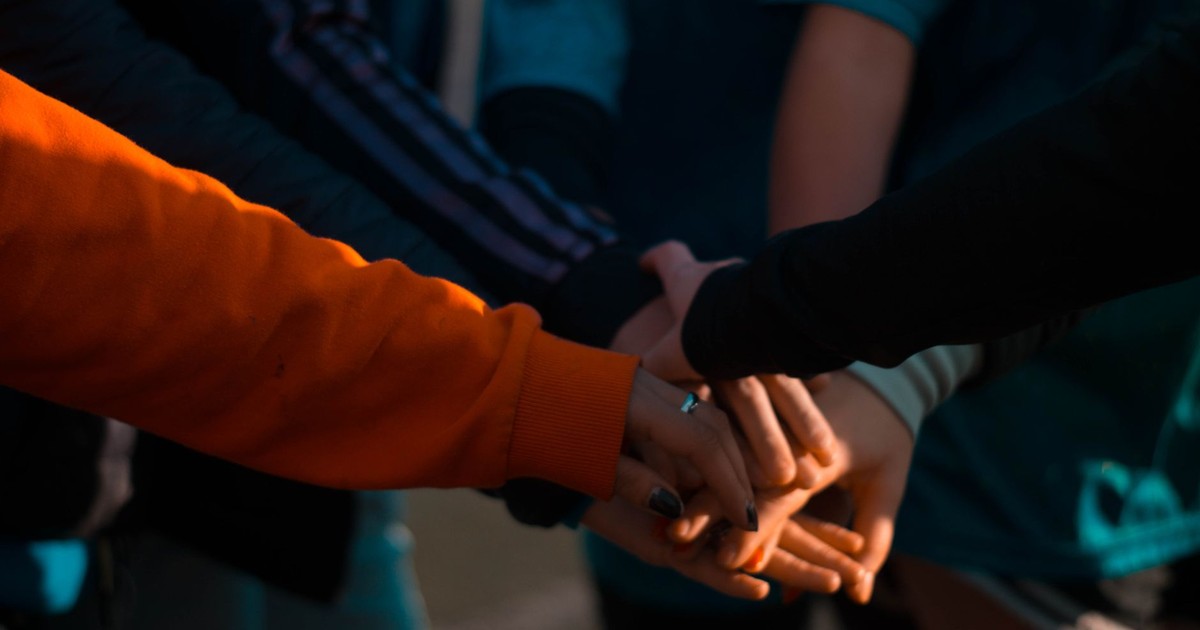
People who make small talk at checkout have figured something out that a lot of people spend years trying to articulate: connection is not a feeling that happens to you. It’s something you make, repeatedly and imperfectly, in the ordinary minutes of ordinary days. The grocery store line. The elevator. The waiting room. The six minutes you spend standing at the coffee counter.
In daily life, small talk with strangers can lead to benefits such as increased well-being and happiness, and while small talk may appear superficial, it actually opens the door to more substantive and intimate connections between people. The person who has internalized this doesn’t wait for the conditions to be right or the conversation to be deep enough to count. They understand that the thirty-second exchange about the rotisserie chicken is also how you stay fluent in human connection – the same way you stay fluent in any language, which is by speaking it even when you don’t have anything particularly important to say.
Read More: Experts Say, People Who Walk Fast Usually Have These 7 Interesting Personality Traits
What All of This Is Really About

The list above describes someone who sounds almost suspiciously well-adjusted. Nobody has all fifteen of these traits fully developed at all times, and the person who strikes up easy conversations in checkout lines probably has their own rooms in their own life that are considerably less tidy. These traits don’t require that you have everything sorted. They require only that you’re genuinely open to the other humans around you, for the thirty seconds you’re standing next to them.
What deserves acknowledging – and this is easy to miss – is that the small talk personality traits that make these brief exchanges possible aren’t trivial. They describe someone who has decided, consciously or not, that other people are worth the risk of being ignored. Someone who finds strangers more interesting than their phone. Someone who understands, in their bones, that the thin connective tissue of daily life is made of small moments like this one. That’s not nothing. That’s, arguably, a lot.
AI Disclaimer: This article was created with the assistance of AI tools and reviewed by a human editor.