

Faith has a way of feeling most real exactly when it costs the most. Not during the easy seasons – the answered prayers, the cleared paths, the moments when everything lines up and you walk away thinking, of course God is good. It’s the harder stretches, the ones where the ground cracks and gives way beneath you, that do the actual work of forming a person. Most Christians sense this somewhere in their bones, even if they’ve never had language for it.
The Bible is remarkably direct about this. From Abraham waiting decades for a promised son, to Joseph sitting in an Egyptian prison for something he didn’t do, to Jesus himself being led into the desert to be tested before he ever began his public ministry, the pattern is consistent: faith is not merely given; it is forged. The spiritual tests Christians encounter across a lifetime are not punishments or signs of divine indifference. They are, according to the oldest texts in the Christian tradition, the very furnace in which character is shaped.
What follows is a look at twelve of those tests – the ones nearly every Christian will recognize, because they are the ones the faith has been wrestling with for two thousand years. Some of them will be familiar. Some will name something you’ve been carrying without quite knowing what to call it.
1. The Test of Doubt

Almost every serious Christian reaches a season where the faith they grew up with suddenly feels fragile. The doubts aren’t always dramatic. Sometimes it’s a slow erosion: the prayer that went unanswered for years, a death that made no sense, a question raised in a college classroom that nobody in the church seemed equipped to answer. The doubter who keeps coming back anyway – who keeps asking, who refuses to resolve the tension by simply walking away – is doing something that looks a great deal like courage.
The 2025 data from the Lifeway Research State of Theology report makes clear just how widespread this tension is: Americans’ perspectives on the Bible are deeply divided, with around half believing it is 100 percent accurate in all it teaches, while nearly the same proportion view it as containing helpful ancient accounts that are not literally true. Doubt, in other words, is not a fringe experience. It sits right in the middle of the congregation.
Scripture’s most honest characters doubted – Job questioned God at length, Thomas refused to believe until he had proof, and the Psalms are full of writers who demanded God explain himself. The test is not to perform certainty you don’t have. The test is whether doubt becomes the end of the conversation or the beginning of a deeper one.
2. The Test of Temptation

Every Christian tradition teaches that temptation is not sin – the encounter with it is. Jesus was tempted, according to the gospel accounts, and the letter to the Hebrews makes this explicit precisely because it carries real weight: a faith that has never been tested by real desire is not yet faith in any meaningful sense. The test of temptation is less about the specific thing being desired and more about what you discover about yourself in the wanting.
Paul’s framing in 1 Corinthians 10:13 has been a touchstone here for centuries – the idea that no temptation is entirely unique to the person facing it, and that there is always a way through. The harder pastoral truth, though, is that the way through is rarely a dramatic moment of divine intervention. It is usually a long accumulation of small choices, made in private, that either compound or erode a person’s integrity.
The practical shape of this test often involves the gap between a person’s public identity and private life. Social media has made this particular gap considerably wider and more visible, offering constant, low-grade temptations toward comparison, resentment, performance, and fantasy – none of which look like capital-T Temptation, but all of which quietly reshape what a person actually loves.
3. The Test of Waiting

Abraham waited roughly twenty-five years between God’s promise of a son and the birth of Isaac. Joseph spent at least two years in prison after correctly interpreting the cupbearer’s dream, only to be promptly forgotten. The biblical narrative treats waiting not as a gap between the real moments of faith, but as one of the primary arenas in which faith is developed.
God’s goal, according to pastor and author Rick Warren writing for Pastors.com, is not primarily that we be happy, but that we grow in spiritual maturity – and right now, we are in the growing stage. God is far more interested in our character than our comfort. Waiting is where that character is either built or abandoned. There is no shortcut through it.
The waiting test is particularly sharp for people in their thirties and forties, because by then they have usually been waiting long enough for the original hope to have gone cold. The house they prayed for, the marriage they asked for, the child, the healing, the reconciliation with the sibling who stopped speaking to them – some of these prayers have been sitting unresolved for a decade or more. The question the test asks is whether the person will remain open to God while holding grief about what hasn’t arrived.
4. The Test of Suffering

This is the one the book of Job exists to address, and the book of Job pointedly refuses to resolve it neatly. Job’s comforters try every theological explanation available – sin must be the cause, faith must be the cure – and God, at the end of the book, specifically rebukes them for speaking falsely. The honest answer offered by Scripture is not that suffering always makes sense, but that it can be endured without destroying the relationship with God.
Hebrews 11:24-26 tells us that Moses endured all kinds of suffering – conflict, criticism, and pain – to pursue what God wanted to do through his life, asking at times “how long, Lord?” He didn’t choose what felt right; the text says “he thought it was better to suffer for the sake of Christ than to own the treasures of Egypt, for he was looking ahead to his great reward.” The test of suffering asks whether a person’s faith is conditional. Whether it requires God to be comprehensible, or whether it can hold on even when God is not.
This test is not separate from the others – it runs through almost all of them. The waiting test is a form of suffering. So is the test of loss. The specific shape of the suffering test, though, involves chronic pain: the illness that doesn’t resolve, the disability that doesn’t lift, the grief that doesn’t recede on any predictable schedule.
5. The Test of Obedience
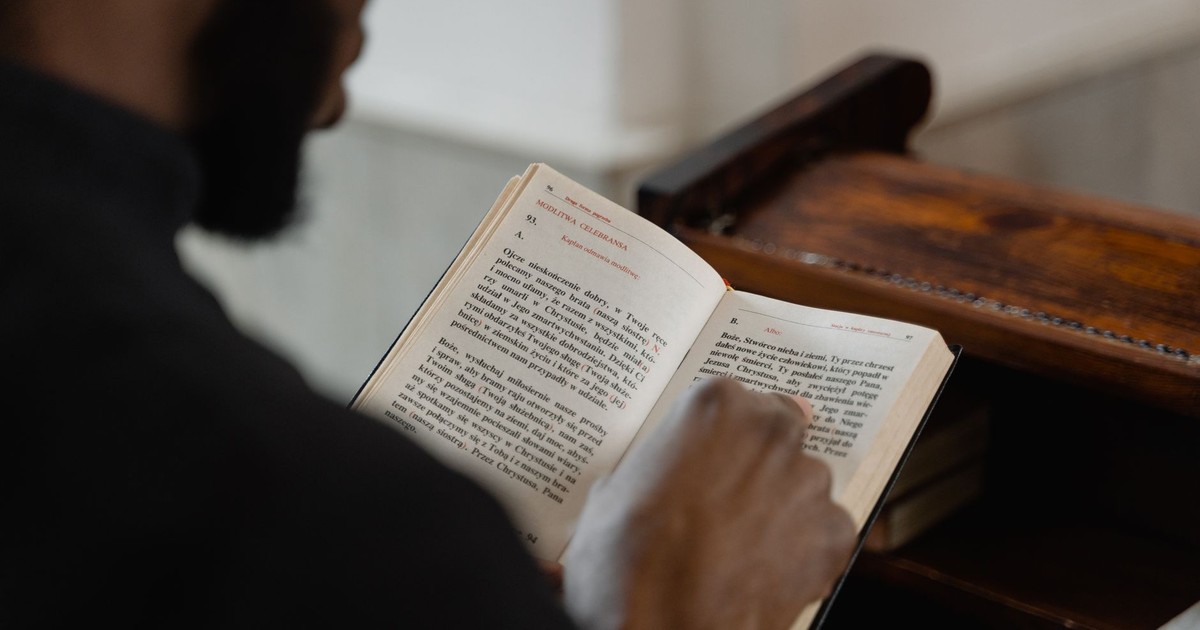
The test of obedience is almost always about doing something inconvenient. Forgiving someone who hasn’t asked for forgiveness and shows no sign of changing. Giving money away at the exact moment it feels most dangerous to do so. Telling the truth when the comfortable lie is right there. Abraham’s obedience in Genesis 22 – walking up the mountain with his son – is the most extreme example in the entire biblical narrative, and the text is not interested in making it look easy.
The pattern that recurs across Scripture is that obedience almost always precedes understanding. The person is asked to act before they are given the full picture. Ruth followed Naomi back to Bethlehem without knowing how things would turn out. The disciples left their boats before Jesus explained where they were going. This is precisely what makes obedience a test rather than a transaction: if the outcome were guaranteed and comprehensible in advance, compliance would require no faith at all.
The modern version of this test often involves obedience that costs social standing. Being honest in a professional environment that rewards spin. Staying committed to a marriage during a season when leaving would be socially accepted and possibly even applauded. Choosing the slower, harder path because it is the one that aligns with what you actually believe.
6. The Test of Forgiveness

Forgiveness is the point where most people discover what they actually believe about grace, as opposed to what they say they believe about it. Believing in grace in the abstract is easy. Extending it to the specific person who caused the specific harm – the parent who didn’t protect you, the spouse who betrayed you, the friend who told the secret – is one of the most difficult things the Christian faith asks of anyone.
Scripture does not soften this. Matthew 6:14-15 makes the connection between receiving forgiveness and extending it uncomfortably explicit. And Jesus’ parable of the unforgiving servant in Matthew 18 takes the logic further, depicting someone who has been forgiven an enormous debt immediately turning to demand repayment of a small one. The test of forgiveness is not about feeling warmly toward the person who wronged you. It is about releasing the debt, which is a different and considerably harder action.
The pastoral literature on this topic is careful to distinguish forgiveness from reconciliation: forgiveness can happen without the other person’s participation or acknowledgment; reconciliation cannot. This is not a loophole but a genuine distinction that makes the test workable for people whose wrongdoer is absent, unrepentant, or dangerous.
7. The Test of Comparison

The comparison trap has probably existed as long as human community has, but the age of social media has given it a new delivery channel that runs twenty-four hours a day. The test is not new. The story of Rachel and Leah in Genesis is essentially a study in comparison-fueled misery. The disciples argued about which of them was the greatest. The older brother in the parable of the prodigal son could not celebrate his brother’s return because he was too consumed by the accounting of what he’d received versus what his brother had received.
Barna Group data, drawn from interviews with more than 12,000 adults, found that Bible reading has been climbing – reaching 42 percent of U.S. adults reading weekly in 2025, with the rate among self-identified Christians reaching 50 percent, the highest level in over a decade. Even in that encouraging statistic, there’s a comparison waiting to happen – the person who reads the number and concludes they are either ahead of or behind everyone else.
The spiritual test here asks whether a person can receive their own life as sufficient – as actually given to them – without perpetually measuring it against someone else’s. This is not the same as being content with injustice. It is the much more personal work of resisting the belief that someone else’s blessing diminishes your own.
8. The Test of Fear

The command “do not be afraid” appears more times in the Bible than almost any other single instruction. Which is either comforting or telling, depending on how you look at it. The frequency of the command suggests that fear is not treated as a character flaw requiring rebuke; it is treated as a constant of the human condition requiring constant address.
The test of fear is distinct from courage, which is what happens after fear. The test itself is whether the fear – of failure, of loss, of death, of change, of being truly known – will determine a person’s actions. Peter walked on water until he looked down. The disciples locked themselves in a room after the crucifixion. Gideon needed three separate signs from God before he would lead the army he’d been called to lead. None of these people failed the faith; all of them were simply, recognizably human, and the text treats them that way.
The modern shape of this test often has nothing to do with physical danger. It looks like the email that doesn’t get sent because the reply might hurt the relationship. The conversation that gets postponed indefinitely. The calling that gets quietly buried because pursuing it might result in failure.
9. The Test of Pride
Pride is the one sin the Christian tradition has historically treated as the root of all the others, the thing underneath the thing. C.S. Lewis, in Mere Christianity, described it as the complete anti-God state of mind, the one that turns a person inward and makes even genuine virtue into an occasion for self-congratulation. The test is made harder by the fact that pride disguises itself so effectively. It hides in humility – the person who performs humility in order to be noticed for it – and in service, and in doctrinal correctness.
The Pharisee in Luke 18 is the clearest biblical portrait of this test. He prays, he fasts, he tithes – and he is described by Jesus as going home from prayer unjustified, precisely because his prayer was fundamentally a comparison between himself and the tax collector beside him. The test of pride asks whether a person can receive grace, which requires acknowledging that they need it, which is the one thing pride will not permit.
This test tends to arrive in disguise. It comes wrapped in zeal for truth, in the sense of being the only person in the room who truly understands what’s at stake, in the exhausting need to be right in every conversation about theology or politics or anything else of consequence.
10. The Test of Provision
At some point, almost every person of faith will face a season where they do not know how the rent will be paid, the medical bill will be covered, or the family will eat next week. The test of provision is one of the oldest in the tradition. The Israelites were brought into the wilderness, where there was no food, and then fed with manna – bread that appeared each morning and could not be stored beyond one day. The structure of the test was built into the structure of the provision: it required daily trust.
Jesus’ instruction in Matthew 6 to not be anxious about tomorrow because “today’s trouble is sufficient for today” is not a dismissal of financial reality. It is an invitation into a particular posture toward uncertainty. The test is whether a person can hold genuine financial uncertainty without it consuming their relationship with God – without the anxiety about money becoming a more fundamental orientation than faith.
This test is not respectful of income brackets. Lifeway Research found that many Americans affirm foundational Christian doctrines; yet the State of Theology research reveals “persistent misunderstandings and areas where biblical teaching is often overlooked,” according to executive director Scott McConnell. Stewardship and trust in God’s provision rank among those consistently undertaught areas, in congregations across economic spectrums.
11. The Test of Spiritual Fatigue

There is a specific flavor of exhaustion that comes from years of faithful, unspectacular effort in the Christian life. The person who has served in the same volunteer role at the same church for fifteen years and now finds the drive there on Sunday mornings requires something it didn’t used to require. The woman who has prayed the same prayer for her adult child every day for a decade and wonders whether she even believes the words anymore. The father who has done everything right, by any reasonable measure, and is simply tired.
James describes it this way: “When troubles of any kind come your way, consider it an opportunity for great joy. For you know that when your faith is tested, your endurance has a chance to grow. So let it grow, for when your endurance is fully developed, you will be perfect and complete, needing nothing” (James 1:2-4 NLT). The encouragement is genuine, but anyone who has been in the middle of spiritual fatigue knows that it does not immediately feel like joy. The test is holding on through the gap between the promise and the feeling.
The prophet Elijah, after his greatest victory on Mount Carmel, immediately ran into the desert and asked God to let him die. He wasn’t being dramatic; he was depleted. God’s response was not a rebuke. It was food, water, and rest. This is perhaps the most underappreciated pastoral detail in the entire Old Testament.
12. The Test of Loss

Every other test on this list eventually opens into this one. Loss is the final examination – the one that makes every other form of faith either real or hollow. The loss of a parent, a marriage, a child, a friendship that was irreplaceable, a career that defined you, a version of yourself that you thought was permanent. As Barna Group CEO David Kinnaman observed in 2025, “Christian faith and practice are experiencing a reset moment” – a recognition that signs of spiritual renewal often emerge precisely from the most disorienting seasons.
The test of loss asks whether the foundation holds when everything built on top of it has been removed. It is the question underneath all the other questions: Is God enough? Not enough alongside all the other good things, but enough on their own, when the other things are gone.
Lamentations exists in the Bible because the community of faith needed a book that did not rush past grief, did not offer resolution before the grief had been fully inhabited. The book ends without a tidy conclusion, which is either frustrating or honest depending on where you’re standing. For anyone in the middle of a genuine loss, the honesty is usually more useful than the resolution would have been.
What These Tests Are Really For

No one with any sense wants to fail them. But the more honest prayer might be for what the tests are actually designed to produce: a faith that is genuinely yours, not inherited, not theoretical, not performed for an audience. The kind that holds weight because it has been tested and has not broken.
The twelve spiritual tests Christians face in a lifetime are not twelve distinct events. They overlap. They recur. The test you passed at thirty-two may come around again at fifty-one in a form you don’t immediately recognize, because you’ve changed and the test has adapted accordingly. The archive of what you’ve survived keeps growing, and so, usually, does the capacity to carry the next thing.
None of this means the hard seasons make sense in the moment, or that there are easy answers waiting on the other side of them. Some things remain unresolved. Some prayers get answered in ways that don’t resemble what was asked. The faith that comes through on the other side of these tests isn’t a faith that has all the answers – it’s a faith that has decided it can live without all the answers, and has found that to be enough.
AI Disclaimer: This article was created with the assistance of AI tools and reviewed by a human editor.