

You pull up to the gas station on a Tuesday morning, kids in the backseat, running ten minutes behind schedule. The price on the sign makes you do a small, involuntary wince. Not a dramatic reaction – just a quiet recalculation happening in your head. That’s one fewer takeout order this week. Maybe two.
Most of us accept the price at the pump the way we accept the weather. It changes, it’s annoying, and there’s not much you can do about it. But there’s actually a surprisingly logical reason why the number on that sign looks so different depending on which state you’re filling up in. Families in Oklahoma, Texas, Louisiana, and Mississippi regularly pay a dollar or more per gallon less than families in California or Hawaii. That’s not a coincidence. It’s geography, infrastructure, taxes, and a handful of other factors all stacking up on top of each other – and the story behind it is more interesting than it looks.
Here’s the full breakdown of why Gulf Coast gas prices stay so reliably low, what the latest data actually shows, and what it means for anyone trying to manage a household budget in 2026.
What the Data Shows About Gulf Coast Gas Prices
Two organizations track gas prices more closely than anyone else in the country. The first is AAA (formerly the American Automobile Association), which updates average national, state, and local prices for gasoline, diesel, and E-85 daily through the Oil Price Information Service (OPIS). Every day, up to 130,000 stations are surveyed based on credit card swipes and direct feeds for statistical reliability. The second is the U.S. Energy Information Administration, which publishes detailed regional fuel reports and multi-year forecasts. Together, their numbers tell a very consistent story about which states pay less and why.
Areas with lower taxes and proximity to refineries post the lowest gas prices in the US, beating the national gas price average. Regional averages show the Gulf Coast offering the nation’s most affordable fuel due to proximity to refineries, while the West Coast faces elevated costs from specialized environmental regulations and limited pipeline infrastructure.
According to AAA and EIA data on Gulf Coast gas prices, by the end of 2025, the cheapest gasoline markets in the country were Oklahoma ($2.34 per gallon), Arkansas ($2.46), Iowa ($2.47), Colorado ($2.49), Wisconsin ($2.51), Texas ($2.51), Mississippi ($2.52), Louisiana ($2.52), Kansas ($2.52), and Tennessee ($2.52) – with Gulf Coast and South-Central states dominating the bottom of that list. Meanwhile, the most expensive markets were Hawaii ($4.43 per gallon), California ($4.33), Washington ($3.96), Alaska ($3.59), and Oregon ($3.57).
That’s a difference of more than $2.00 per gallon between the cheapest and most expensive states, on the same day, in the same country.
Why Gas Is Cheaper in Gulf Coast States
The single biggest reason why Gulf Coast states pay less for gas comes down to refining capacity. In the U.S., refining capacity is unevenly distributed. More than half of U.S. refining capacity is situated at the Gulf Coast, but the region’s consumption of fuel is less than one-third of its production. That surplus matters. It means there’s more supply than demand, which keeps prices down.
According to the U.S. Energy Information Administration (EIA) (2025), Gulf Coast states are home to more than half of U.S. refining capacity, produce more gasoline than the region consumes, and have lower gasoline taxes than the national average – factors that make Gulf Coast prices consistently the lowest of any U.S. region.
Proximity to refineries also reduces transportation costs significantly. Retail gasoline prices tend to be higher the further gasoline must be transported to the point of sale because transportation costs are higher. Once gasoline leaves a refinery, it travels by pipeline to storage and blending terminals, and finally by truck to individual gas stations. States near Gulf Coast refining infrastructure, like Oklahoma, Texas, Louisiana, and Mississippi, pay less simply because fuel doesn’t have to travel as far.
Louisiana sits right at the heart of this. Louisiana’s average price reflects the state’s position at the heart of America’s refining industry, processing crude oil from both domestic and international sources. Texas benefits for similar reasons. Texas maintains affordability despite being the nation’s largest fuel consumer, because it benefits from its dominant position in domestic oil production and refining operations. The state’s extensive refinery network along the Gulf Coast processes millions of barrels daily, keeping local supplies abundant.
The Tax Factor Is Bigger Than You’d Think
Even if a state has great refinery access, a high gas tax can still push prices up fast. Every state adds its own tax on top of the federal excise tax to pay for road maintenance and infrastructure. The gap between the highest and lowest state gas taxes is enormous.
According to the U.S. Energy Information Administration (EIA) (2026), state taxes and fees on gasoline as of January 1, 2026, ranged from a high of 70.9 cents per gallon in California to a low of 9.0 cents per gallon in Alaska. The national average state gas tax sat at 33.3 cents per gallon. The same three states had the lowest gasoline taxes: Alaska (both at $0.0895/gal), Mississippi (both at $0.1840/gal), and Hawaii (both at $0.1850/gal).
It’s worth pausing on Mississippi here, because its tax rate is part of why it’s so often at the top of the cheapest-gas list. A major reason for Mississippi’s low fuel prices is its low taxes. Mississippi’s fuel taxes are the second lowest in the country, at around $0.18 per gallon. Combine that with physical proximity to refineries in Louisiana and Texas, and the result is some of the lowest pump prices in the entire country.
Texas is also in the low-tax camp. You can pay low taxes when you fill up in Texas. At just $0.20 per gallon of gasoline and diesel fuel, driving across the Lone Star State can feel less costly.
Contrast all of that with California, where California levies the highest tax on gasoline at 70.9 cents per gallon, followed by Illinois at 66.4 cents and Washington at 59.0 cents. And that’s before California’s environmental programs are factored in – which we’ll get to shortly.
What AAA and EIA Data Say About the West Coast
If the Gulf Coast represents the low end of the spectrum, the West Coast is firmly at the other end. Consumers in California often pay among the highest prices for gasoline in the United States. In addition to excise taxes and other fees, California requires a special blend of gasoline that requires more processing steps and more expensive blending components but is intended to alleviate air quality concerns.
The U.S. Energy Information Administration (EIA) (2026) confirms the West Coast typically has the highest gasoline prices in the country and expects that trend to continue through 2027, while the Gulf Coast is expected to maintain the lowest gasoline prices through the same forecast period, followed by the Midwest.
California’s situation is in a class of its own. The state’s unique gasoline formulation requirements mean that few refineries outside the state can produce the specific blend it uses. California refineries need to run at near-full capacity to meet the state’s gasoline demand. If more than one of its refineries experiences operating problems, California’s gasoline prices can increase substantially. Even when supplies are available from other West Coast refineries, U.S. Gulf Coast refineries, or from foreign refineries, they can still take a relatively long time to arrive in California.
Including the impact of state environmental programs on total gas tax burden widens the range of gas taxes across the country. Environmental programs have the largest effect in California, where the Legislative Analyst’s Office estimates the cap-and-trade program increases gas prices by about 23 cents per gallon.
This is also why California’s gas prices are so volatile. A single refinery having maintenance issues can cause the kind of spike that wouldn’t affect Texas at all. The supply chain in California is tighter, the formulation requirements are stricter, and there are fewer backup options when something goes wrong.
How the Rocky Mountain and Midwest Regions Fit In
The regions between the coasts don’t follow a simple pattern. The Midwest benefits from relatively good pipeline connections to Gulf Coast refineries, which helps keep prices competitive. The Midwest benefits from proximity to both Gulf Coast refineries and domestic crude oil production, while the Gulf Coast’s average represents the nation’s lowest regional price.

The Rocky Mountain states are a different story. Major pipelines don’t cross the Rocky Mountains, and ships obviously don’t deliver fuel to landlocked states. That limits options and pushes prices higher for states in that corridor. States closer to the Gulf Coast tend to see lower gas prices, whereas states that have to import fuel by tanker or long pipeline pay more.
Oklahoma is an interesting outlier worth mentioning separately. Geographically it sits close to major oil production areas and has an extensive pipeline network. The state benefits from a well-developed pipeline network connecting it directly to Gulf Coast refineries, reducing the logistical costs that drive prices up in more isolated states. That’s why it consistently appears at or near the top of the cheapest-gas lists, even though it’s not technically a coastal Gulf state.
Read More: Smart Ways to Stretch Your Family Budget When Costs Keep Rising
Why Crude Oil Prices Affect Everyone, Not Just Expensive States
One important thing to understand is that global crude oil prices affect pump prices in every state, even those with the cheapest gas. The difference is that when prices rise nationally, the cheapest states still tend to rise from a lower baseline, so the savings hold. But no state is immune from global market shifts.
Crude oil is the single biggest cost input for gasoline. As a rough rule, every $10 change in the price of a barrel of crude oil translates to roughly 25 cents at the pump over the following weeks. According to the EIA (2026), in 2026 and 2027, crude oil’s share of the retail average gasoline price is expected to fall below 45 percent on an annual average basis, down from slightly more than 50 percent on average over the previous ten years. That means other factors – taxes, transportation, and environmental compliance – are actually making up a growing slice of the price you pay.
Seasonal changes also matter. Two things happen every spring. First, demand rises as warmer weather brings more driving. Second, refineries are required to switch to a more expensive summer-grade gasoline blend that evaporates less easily, reducing smog in hot weather. This means that spring and summer almost always bring higher prices, nationwide. Even in Oklahoma.
What Regional Gas Price Differences in 2024 Tell Us
For the full year 2024, which is the most recent complete year of EIA fuel price data, the pattern was consistent with every other recent year. The lowest gas price states in 2025 clustered predominantly in the Southeast and South-Central regions, with Oklahoma claiming the top spot, benefiting from proximity to major oil production areas, extensive pipeline infrastructure, and relatively low state fuel taxes.
And looking back at the pre-Labor Day period in 2025, EIA data showed that the U.S. retail average for regular gasoline was $3.15 per gallon as of late August – 5 percent, or 17 cents per gallon, lower than the same date in 2024, according to the U.S. Energy Information Administration (EIA) (2025).
The consistency of these regional differences is actually the most striking thing about all the data. Southern and Gulf Coast states consistently hold the lowest prices due to proximity to major refineries, lower state fuel taxes, and shorter transportation routes. It’s not a fluke of one particularly cheap week. It’s structural, and it’s been this way for years.
What This Means for Your Family Budget
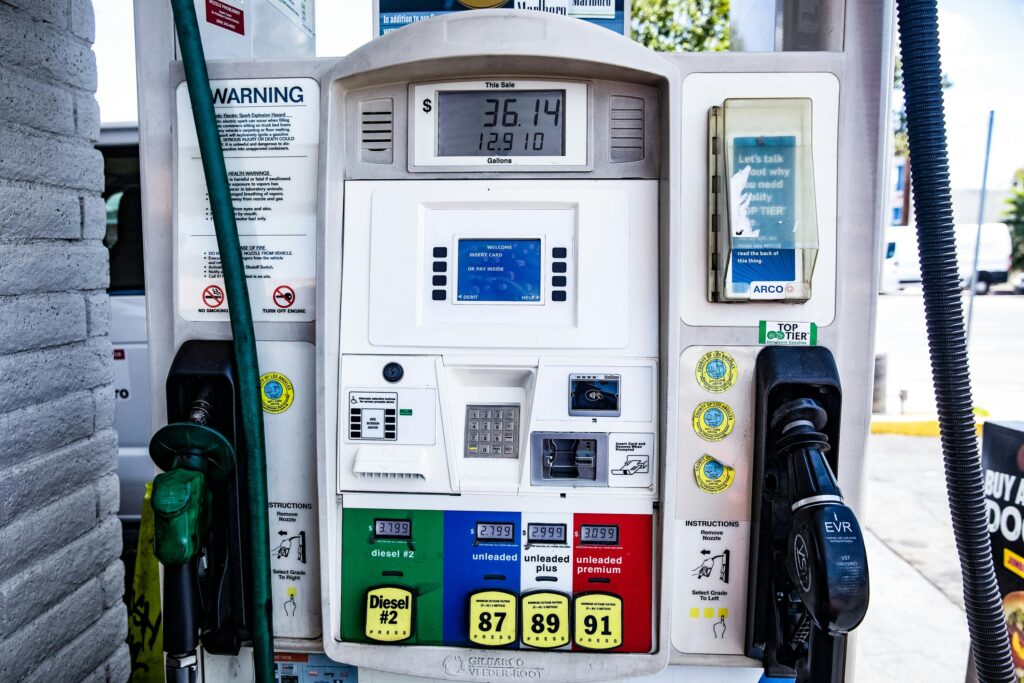
For busy parents managing a household, these price differences are not abstract. Gas price increases function as a regressive cost. When prices rise, the budget strain falls hardest on households with the least financial flexibility. And gas spending peaks in middle age and declines on either end of the age range. Households headed by those aged 45 to 54 spent $3,379 on gas in 2024, the highest of any age group. That’s the exact demographic reading this right now.
If you live in a Gulf Coast or South-Central state, you’re already benefiting from lower prices structurally – your state’s tax policy and its closeness to refinery infrastructure are quietly saving you money every time you fill up. The average price difference of $0.50 per gallon compared to the national average represents annual savings of approximately $250 to $300 for typical drivers in these states.
If you live somewhere with higher gas prices, understanding why those prices are high actually helps. California’s premium comes from state taxes, environmental program costs, strict fuel blend requirements, and geographic isolation from major refineries. Washington and Oregon face similar pressures. Alaska pays less in state tax but a lot more in transportation costs because of where it sits physically. None of this is going to change overnight, and knowing the structural reasons behind it means you can stop wondering if you’re somehow being singled out – because you’re not. It’s geography and policy, stacked on top of each other.
What you can control is how you plan around it. Summer-blend fuel is less volatile to reduce evaporation and smog in heat, but it’s costlier to produce due to more complex refining and additives – so if you have a big road trip planned, filling up before the late spring switch to summer blends can save a few dollars. Apps like the AAA Gas Price Finder let you check station-by-station prices before you pull in. And if you’re crossing state lines, filling up on the cheaper side of the border is sometimes genuinely worth a small detour. The gap between neighboring states can be 30 to 50 cents per gallon – that adds up fast over a 15-gallon tank.
The bigger picture here is that pump prices in 2026 are the result of a whole chain of decisions – where refineries were built, how pipelines were routed, what each state chose to tax, and how strictly local air quality rules are enforced. Families in Texas and Louisiana didn’t do anything special to earn their lower prices. They just happen to live closer to where the gas gets made. And families in California and Washington aren’t being penalized without reason – they’re paying for cleaner air and a more complex supply chain. Whether that trade-off feels worth it is a whole other conversation. But at least now you know exactly why the number on that sign looks the way it does.
Disclaimer: This article was written by the author with the assistance of AI and reviewed by an editor for accuracy and clarity.