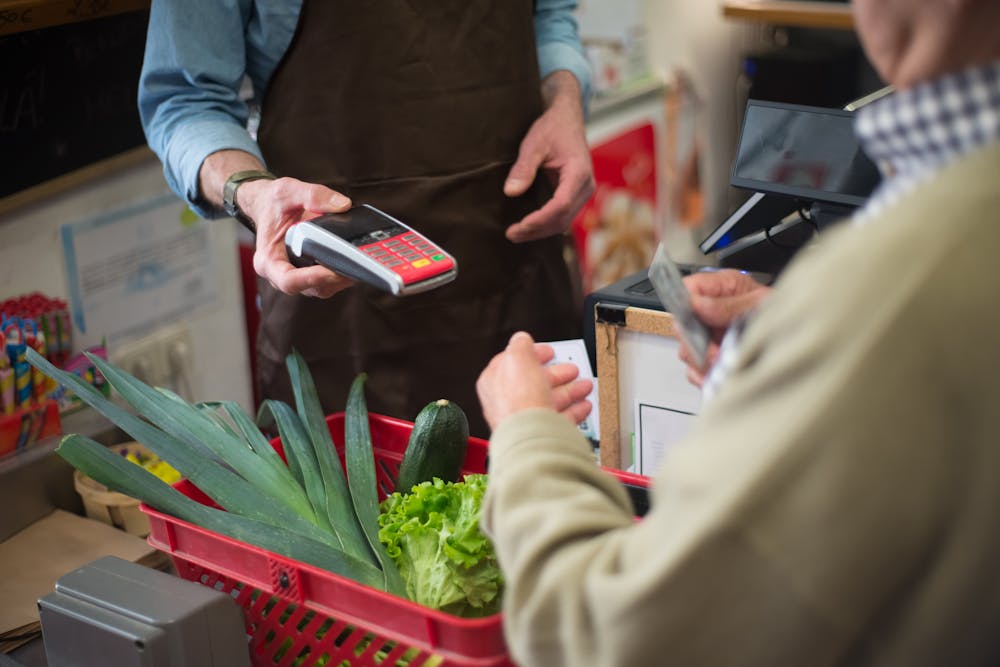

Every week, the grocery run feels a little more like a mental workout. You scan the shelves, do the math in your head, and quietly wonder if you somehow missed something on the receipt. The prices haven’t collapsed the way everyone kept saying they would. They’ve just stayed stubbornly, relentlessly high. And while shoppers have been adjusting – clipping digital coupons, switching stores, checking apps before they ever set foot through the door – America’s biggest traditional supermarket chain has been quietly watching it all and mapping out its next move.
That chain is Kroger. And what it’s planning could reshape supermarket price competition in a way that directly affects your weekly grocery bill. The new CEO took over just months ago, and he’s not wasting time. His ambitions are big, his background is remarkable, and his very first public statement about Kroger’s direction made stock prices move. For anyone who shops for groceries – which is everyone – this is worth paying attention to.
The question isn’t just whether Kroger can cut prices. The real question is whether a company this size can genuinely compete with the retailers who’ve spent years winning on value, and what that means for the rest of us the next time we push a cart through an aisle.
The Man Behind the Plan
Kroger’s new CEO, Greg Foran, is a New Zealand native who previously ran Walmart’s U.S. division before leading Air New Zealand. That sequence of roles is unusual enough to make you pause. After taking the helm at Kroger in February 2026, Foran is now focusing on plowing savings from tighter sourcing, simpler operations, and cost cuts into lower prices and better service.
Before leaving the grocery world for the airline sector, Foran held a senior leadership role at Walmart – a company that has since become one of Kroger’s most formidable competitors. His tenure at Walmart wasn’t just a line on a resume. Foran is a New Zealand native credited with turning around Walmart’s US business in the mid-to-late 2010s, making stores cleaner and friendlier, lowering prices, and raising pay for employees, according to reporting from Yahoo Finance. His background leading more than 4,600 Walmart stores and one million associates could support tighter execution in pricing, assortment, and store standards, analysts at Yahoo Finance noted. That track record is precisely why Kroger’s board went looking for him.
His appointment came after a turbulent stretch for the company. Kroger replaced CEO Rodney McMullen following an investigation into his personal conduct, which came after a failed $24.6 billion merger with Albertsons that was blocked on antitrust grounds. Foran is the company’s first external CEO, a notable shift for an organization that has long promoted from within.
What Kroger Is Actually Planning
Kroger is preparing significant price reductions across its stores as new CEO Greg Foran seeks to regain market share from rivals including his former employer, Walmart. The largest US grocery company, which owns 21 chains including City Market and Fred Meyer, is laying the groundwork for lower prices across product categories, Foran told Bloomberg News in his first interview since taking the role in February. That measured rollout is deliberate. Testing before scaling is how you avoid expensive mistakes.
To fund those cuts without hurting margins, Foran outlined plans to cut costs by importing merchandise directly and using technology more effectively to offset the price cuts he plans. Direct importing strips out the middlemen who add cost without adding value. When a retailer sources product directly from manufacturers or producers overseas, it can capture that margin and pass it along at checkout instead.
Foran said plainly, “The reality is, the basket has to come down,” noting that Kroger customers’ “baskets” are down – industry shorthand for shoppers buying cheaper and fewer items amid rising costs and economic uncertainty. He noted that rivals such as Walmart, Costco, Trader Joe’s, Aldi, and Amazon have won more customers by emphasizing lower costs. Using a Formula One analogy to describe the competitive situation, he said: “I think about our business a bit like a Formula One race. There’s a lead group of cars that are doing a very good job,” adding that Kroger’s objective is “to get out of the midfield and start lapping faster, make up the gap on the first-group cars and then ideally pass them.”
The Backdrop: Grocery Prices Are Still Climbing
Understanding why this moment matters requires a clear-eyed look at where grocery costs actually stand. The food-at-home index – the measure tracking what Americans pay at the grocery store – increased 0.7% in April, while the overall food index was 3.2% higher than a year earlier, according to data published in May 2026 by the U.S. Bureau of Labor Statistics. That sounds modest until you layer it on top of years of cumulative increases. The fruits and vegetables index alone jumped 1.8% in April, a single-month move that shoppers in the produce aisle felt immediately.
Economists aren’t projecting relief anytime soon. By the end of the year, grocery prices could increase closer to 4% to 4.5% compared to the previous year, warned Richard Volpe, a former USDA economist and California Polytechnic State University professor. Volpe, who spent four years at the USDA Economic Research Service forecasting national food price inflation before joining Cal Poly’s agribusiness faculty, points to tariffs, energy costs, and weather volatility as factors that haven’t finished pushing through the supply chain yet.
Shoppers are responding by comparing prices more carefully, switching stores, and hunting for discounts before making everyday purchases. That shift in behavior is exactly what’s driving supermarket price competition to a new level of urgency. Shoppers who once picked a store out of habit are now making decisions based on which chain offers the best deal on the items they actually buy. If rising food prices are pushing you to rethink how you shop, focusing on healthy affordable foods can help you protect your nutrition budget without defaulting to cheaper processed options.
How Walmart Is Already Playing This Game
An April pricing study from Bank of America Research found that the price gap between Kroger and Walmart has decreased from 14% in 2025 to 10% in 2026. The widest gaps between the two chains exist in categories like meat (25%), dairy (14%), and produce (7%), while center-of-store items sit at just a 2% difference. Low prices, in other words, are working for Walmart – and they’re drawing shoppers across income levels.
That success is exactly what Foran is watching closely. He spent years inside Walmart. He knows what the playbook looks like, and he knows how effective it can be. The challenge for Kroger is that it’s trying to close the gap with a competitor that has a multi-year head start on this particular strategy, a larger physical footprint, and a supply chain that took decades to build. Kroger isn’t waiting.
The Albertsons Collapse and What Came After
To understand Kroger’s current pivot, you have to understand the deal that didn’t happen. A federal court blocked Kroger’s proposed $24.6 billion merger with Albertsons on antitrust grounds, ending the company’s ambition to grow through acquisition – at least for now. The company had staked its competitive future on getting bigger. When that path closed, it had to find a different route. The answer Foran is pursuing is organic growth: sharper prices, better stores, and more locations.
Kroger is accelerating expansion, planning to open 70 to 80 new stores in 2027, doubling the 2026 rate of openings. Some of those new locations could include the Northeast, where Kroger currently lacks a meaningful presence, as well as high-growth markets including Texas, the Carolinas, and parts of Florida.
That last point is telling. Cincinnati-based Kroger operates 21 chains and serves millions of customers daily through e-commerce and store operations under a variety of banner names. The Northeast, by contrast, remains a significant blind spot. Expansion there would mean direct competition with established regional players – and likely more price pressure for shoppers in those markets.
The Scale of What Kroger Operates
It’s easy to think of Kroger as just one chain, but the reality is much bigger. Kroger owns 21 chains including City Market and Fred Meyer, and any price initiative carries enormous reach across all of them. The diversity of its banners matters for the price-cut strategy. When Kroger says it’s cutting prices across its grocery chains, it means customers at Fred Meyer in the Pacific Northwest and Harris Teeter in the Southeast could all see the same changes reflected on shelves.
Customers will notice the change across all 21 of its grocery chains, with Foran telling Bloomberg: “Our objective is to execute what we think is a very clear, sensible plan. We want to be America’s best grocer.” That kind of coordinated, multi-banner reduction is hard to pull off operationally – which is probably why Foran is testing first and scaling second. Grocery chains typically operate on razor-thin margins, so lowering prices for consumers while keeping their own bottom lines healthy can be a difficult balancing act.
What to Do With This Information
The honest answer is: change won’t come immediately. Foran has been clear that price cuts will be phased in, not dropped all at once. Testing comes first. What shoppers can reasonably expect is gradual movement at Kroger-affiliated stores over the coming months, with prices in specific categories dropping as the strategy rolls out.
What matters more right now is the competitive dynamic this creates. When America’s largest traditional supermarket signals that it’s going to compete harder on price, every rival has to respond or lose customers. Walmart has already made price leadership central to its grocery strategy. Aldi and Trader Joe’s have been built around value from the beginning. Now Kroger is moving in the same direction, which puts all of them in a position where lowering prices isn’t just strategic – it’s defensive.
Tariffs, energy costs, and other supply chain pressures give weight to predictions that grocery inflation will continue to rise through 2026 and could quickly surpass the rolling 20-year average. Against that backdrop, any genuine pressure on retailers to compete for shoppers by lowering prices is a real and tangible benefit – even if the results take months to show up in your weekly total.
The practical takeaway is straightforward. Kroger’s coming price cuts, when they arrive, will most likely be concentrated in specific product categories, tested in certain markets first. Paying attention to which stores in your area start showing shifts in unit pricing is the best way to spot where the changes are landing. Loyalty apps and store cards will also likely be where the most immediate discounts surface, since retailers tend to roll out competitive pricing through those channels before moving it to the broader shelf. Stay enrolled, stay flexible, and keep comparing – because right now, the competition for your grocery dollar is genuinely heating up.
Disclaimer: This article was created with AI assistance and edited by a human for accuracy and clarity.