
The Yellowstone River near Greycliff, Montana doesn’t forgive mistakes. It runs fast through Sweet Grass County, and if something goes wrong out there, the window for fixing it is measured in seconds, not minutes. On July 5, 2026, one man found that out the hard way, drifting downstream and clinging to a cooler while the current pulled him farther from shore. What happened next required exactly the right person, in exactly the right place, holding exactly the right piece of equipment. A 14-year-old ranch kid was all three.
Jory Thomas wasn’t supposed to have his lasso with him that day. He’d come out to visit his grandparents at their campground along the river, the same trip he’d taken plenty of times before. His grandmother, Sandy Thomas, said the family had visited that spot many times over many years, and Jory had never once brought a lariat with him before. That afternoon, for no particular reason, he did. He was just out there flipping loops with the rope, the way you do when you’ve been practicing a skill long enough that your hands want to keep moving even when there’s nowhere to be and nothing to catch. Then the screaming started.
Instinct is just training you haven’t had to think about yet.
A Raft, a Bridge Pillar, and One Man Nobody Could Reach

A floating raft and paddleboard struck a bridge pillar, throwing four people into the Yellowstone River, KTVQ reported. Three made it to shore, but one man continued drifting downstream while clinging to a cooler. He wasn’t calling out. Jory heard the cries for help and could see what was happening: “There’s two or three people floating down the river, one hanging on to the cooler, and he wasn’t saying anything.” A man clinging to a cooler and going silent is not a good sign. The Yellowstone had him, and it wasn’t giving him time.
Watching the river from shore, Jory’s father knew that stretch well enough to understand the stakes. Just downstream, swift current, deep holes, and logjams create conditions that have nothing forgiving in them. According to Cowboy State Daily, Jory’s father, who has spent three decades on the Big Timber Volunteer Fire Department, called 911 immediately. His son didn’t wait for anyone to arrive.
Pockets Empty, Rope in Hand
Jory emptied his pockets, ran through a waist-deep side channel, and sprinted along the riverbank to keep pace with the drifting man. He didn’t stand on the bank calculating risk. He didn’t look around for an adult to take over. He emptied his pockets so he could move faster, crossed a channel chest-deep in river water, and ran to get ahead of a grown man being carried downstream. He was 14.
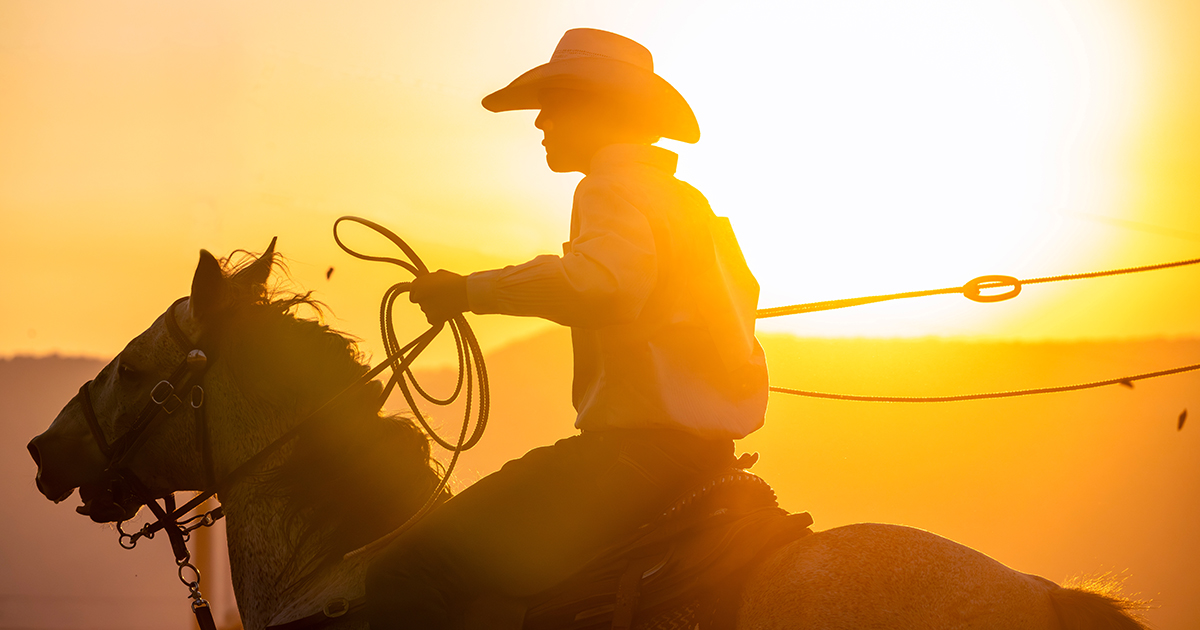
Jory took his 12-foot lariat in hand and threw his loop toward the drowning man. “First instinct I thought was try and rope him and drag him out before he gets too far down the river,” he said. “Luckily, I caught him first try.” He then slowly pulled the man through chest-deep water toward shore until first responders arrived.
One throw. One catch. On a moving target, in a fast current, at 14 years old, with a rope he’d only been practicing with for about a year.
The July 5 rescue unfolded so quickly that by the time the first Sweet Grass County Sheriff’s Office deputy arrived, just three minutes after Jory’s father called 911, everyone was already safely on shore. “My opinion, Jory saved the individual’s life, 100%,” Sweet Grass County Sheriff Alan Ronneberg told Cowboy State Daily. “Jory saw another in trouble and acted, not for himself but for another,” Ronneberg added. “He didn’t pull out a phone, but a lariat. He didn’t watch what was happening but intervened.”
A Year of Afternoons on the Ranch
Jory had only been actively practicing with a lariat for about a year. According to Charisma Magazine, he described the process plainly: “I went to brandings and started roping cattle then, and I started getting better. Every afternoon when it cools off, I go out and rope the roping dummy.” That’s what building a skill actually looks like: afternoon after afternoon, in the heat, roping a practice dummy, not because a dramatic moment was coming, but because ranching is just what you do and you want to get better at it.
As Unofficial Networks noted, Jory comes from a family with deep ties to emergency response, with his father and brothers serving on the local fire department. There’s something in that lineage that probably doesn’t just teach you how to act when something goes wrong – it teaches you to expect that something eventually will, and to think about what you’d do before you need to. Jory recognized, without anyone telling him, that waiting for help was not the available option.
The teen rescues drowning man stories that go viral usually have some element of luck, and this one does too. But luck here was mostly that a kid who had been practicing the same rope throw every single afternoon happened to bring his lariat on a day he’d never brought it before. His grandmother told reporters: “We come down to this campground a couple times during the summer. Jory comes over quite frequently and has never, ever brought his lariat with him before.” And that day he did.
What His Family Already Knew

To the people who know Jory, none of this was surprising. His family wasn’t shocked that he jumped in. They were proud, and also apparently not remotely astonished that this was how he responded to someone being in danger.
His grandmother Sandy put it plainly: “His first instinct always is to help other people. He’s always been that way. The whole community is proud of him. We’ve had a lot of feedback, but that’s Jory. He’s always there to help somebody else.” His father described a pattern that had nothing to do with rivers or ropes: if they’re at the grocery store and an elderly person can’t carry their bags, Jory goes over and carries them without being asked, without saying anything, just does it and moves on. That’s the baseline character. The lasso was just the tool the moment required.
When Jory came back to shore after the rescue and processed what had just happened, he was understated. “I felt pretty good afterwards that I knew he was okay and was out of the water,” he said. His grandmother Sandy recalled: “He comes up, and he said, ‘I think I just saved a life.'” She told him: “Yeah, you did.”
When asked afterward to reflect on the whole thing, Jory said something that probably would have gotten written off as bravado if the evidence wasn’t right there on the riverbank. He told reporters: “I just thought I could help with cattle. Not really helping humans and stuff like that.” But he was glad he was there.
The Kid Who Brought the Rope
There is a specific type of person who acts the way Jory Thomas acted on July 5. It isn’t necessarily the fastest, the strongest, or the most trained. It’s the one who has practiced something long enough that their hands know what to do before their brain finishes the question, and who genuinely does not pause to wonder whether helping is their job. For Jory, it clearly wasn’t even a question. The man was in the water. Jory had a rope. The math was simple.
Sheriff Ronneberg said the rescue is a reminder that courage often appears in ordinary moments. “Jory saw another in trouble and acted, not for himself but for another.” That’s a line worth holding on to, because it applies to a 14-year-old ranch kid on the Yellowstone just as easily as it applies to anyone deciding, in a much smaller moment, whether to bother.
Jory Thomas went back to roping his dummy after the camping trip ended. He’s back in Sweet Grass County, going to brandings, practicing every afternoon when the heat breaks. The rope is probably already back in its usual spot. Nothing about his daily life has changed, except that somewhere downstream, a man went home to his family, and the river didn’t get to keep him.
Read More: Five-Year-Old Boy Rescues Sister from a Burning House and Goes Back In to Save the Dog
What This Is Really About
The story travels fast because it has everything a shareable moment needs: a kid, a rope, a river, and a man who almost didn’t make it home. But the part that actually sticks, once the adrenaline of the headline fades, is the detail about the grocery store. Jory carries bags for elderly strangers without being asked. He doesn’t announce it. He just sees something that needs doing and does it. The lasso was dramatic because the situation was dramatic. The character behind it was already there, built from something much quieter than a rescue on the Yellowstone.
Most of what shapes a kid into the kind of person who empties his pockets and runs toward a crisis instead of away from it happens long before the crisis arrives. It happens in the accumulation of small decisions, in who models what helping looks like, in a family where showing up for strangers is just the baseline, not a heroic exception. Sandy Thomas already knew what her grandson would do. She just hadn’t seen the river version of it yet.
Disclaimer: This information is not intended to be a substitute for professional medical advice, diagnosis, or treatment and is for information only. Always seek the advice of your physician or another qualified health provider with any questions about your medical condition and/or current medication. Do not disregard professional medical advice or delay seeking advice or treatment because of something you have read here.
AI Disclaimer: This article was created with the assistance of AI tools and reviewed by a human editor.