

Nobody warns you that 70 might feel like putting down a bag you didn’t realize you’d been carrying for five decades. The grudges, the outfit anxiety, the rehearsed explanations for choices you made in 1987 – somewhere around the seventh decade of life, a lot of people simply stop. Not out of resignation. Out of something closer to clarity.
There’s a well-documented phenomenon in psychology called socioemotional selectivity theory, developed by Stanford psychologist Laura Carstensen, which maintains that as time horizons shrink, as they typically do with age, people become increasingly selective, investing greater resources in emotionally meaningful goals and activities. In plain English: the things that used to keep you up at night start to look a lot smaller once you’ve had enough nights to compare them against. The fretting doesn’t disappear entirely – but the list of things worth fretting about gets shorter, and that editing process turns out to be one of the better gifts aging has to offer.
None of the 14 things on this list are trivial. Most of them consumed real years. That’s part of what makes letting them go feel less like giving up and more like finally getting around to something you should have done much earlier. Here’s what a lot of people stop caring about after 70, and why it tends to feel like liberation rather than loss.
1. Other People’s Opinions of Their Choices

There is a particular kind of mental labor that goes into managing what everyone else thinks of your decisions – the house you chose, the career you left, the person you married or divorced, the way you raised your kids. For most of your adult life, that labor runs in the background like an app you never fully close.
After 70, many people describe a moment when that app finally closes. Not through effort, not through therapy (though therapy may have helped), but through the accumulated weight of having lived enough life to know that most people are too busy managing their own background noise to spend much time on yours. The audience you were performing for was never as attentive as you thought.
Aging is associated with a relative preference for positive over negative information, and this selective narrowing of social interaction maximizes positive emotional experiences and minimizes emotional risks as individuals grow older. That includes the emotional risk of caring deeply what a distant relative thinks of your retirement plan.
2. Keeping Up With the Latest Everything

The pressure to be current – to have seen the new show, listened to the new artist, understood the new app – is something many people carry well past the point where it makes any sense. Somewhere in the fifth and sixth decades of life, the updates arrive faster than the capacity to absorb them, and the gap between “what’s happening” and “what I actually enjoy” becomes impossible to ignore.
By 70, a lot of people have made a quiet decision: they know what they like. They have their music, their books, their routines. The obligation to be culturally up-to-the-minute simply stops feeling obligatory. This isn’t the same as becoming closed-minded – it’s closer to having done enough sampling that you’re comfortable with your preferences without needing to defend them.
The freedom here is real. Recommending a film from 2003 without apologizing for it. Not knowing who the top-streamed artist is this week and finding that you genuinely cannot locate the part of yourself that cares.
3. Wearing Uncomfortable Clothes

Fashion spent decades telling people that discomfort was the price of looking put together. The shoes that worked architecturally but were designed by someone who had apparently never walked in them. The waistbands that required constant adjustment. The entire category of “dress for the job you want” that implied the job required some mild form of physical suffering.
After 70, comfort is no longer the consolation prize. Many people move toward comfort and self-expression with genuine conviction – you see it in shoes, hair, hobbies, and the way someone laughs a little louder in public than they would have at 45. That move is not an abandonment of style; it’s a redefinition of what style is supposed to be for.
There’s also something to be said for the practical wisdom embedded here. Bodies in their seventh decade and beyond deserve footwear that supports them. Choosing comfortable clothes is not settling – it’s knowing what the clothes are actually for.
4. Performing Productivity

The idea that your worth is proportional to how much you produce does enormous damage across all of adult life, but it tends to be felt most acutely during the years when a career is the primary axis of identity. By 70, many people have retired or stepped back from work, and the scaffolding that kept the productivity performance running has been removed.
What some people discover, once the structure is gone, is that the pressure was largely self-generated. The world did not, in fact, collapse when they stopped being the most efficient person in the room. Afternoons do not need to be filled. A slow morning is not a moral failing.
Socioemotional Selectivity Theory suggests that as people age, their priorities and goals change due to a recalibration in their perception of time – when people perceive time as limited, they tend to focus on emotionally meaningful goals and relationships, rather than information acquisition and exploration. Resting because you want to rest, reading because you feel like reading, cooking an elaborate lunch on a Tuesday – these stop requiring justification.
5. Apologizing for Their Personality

The apologetic qualifiers that people add to their preferences – “I know it’s not everyone’s thing, but…” or “I hope this isn’t too much…” – are social lubricant that, after enough decades, starts to feel unnecessary. The personality you have at 70 has been in testing for a very long time. It’s been through marriage and loss and work and difficult relatives and more than a few Christmases that tested it severely. It’s been refined.
There is a particular confidence that comes not from believing yourself to be perfect, but from having lived with yourself long enough to know what you are. The apologetic hedges were protection against rejection when you were still figuring out whether the version of yourself you were presenting was the real one. By 70, most people know. The protection becomes unnecessary.
This doesn’t arrive as arrogance – it tends to arrive as ease. Less qualifying, less over-explaining, less pre-emptive apology for the existence of preferences.
6. Grudges That Have Lost Their Point

Grudges are expensive. They require maintenance: remembering the details, rehearsing the argument, keeping the emotion charged enough to justify the ongoing investment. For most of adult life, people carry them anyway, because putting a grudge down feels like letting the other person win.
Grudges take up storage space in your head – they replay scenes, rerun conversations, and keep you tied to moments you would rather outgrow. As people age, many become more selective about what they keep. The internal arithmetic changes. Winning the argument in your own head matters less than having the space back.
This is not the same as forgetting or pretending nothing happened. It’s more like deciding that the event, whatever it was, doesn’t get to keep taking up real estate in your present life. The archive never disappears, but you stop having to consult it daily.
7. The Obligation to Explain Past Decisions

Every adult accumulates a set of choices that, in hindsight, require some explaining – or at least feel like they do. The career that didn’t pan out. The place you lived for five years that, yes, you knew at the time wasn’t quite right. The relationship you stayed in too long. The one you left too quickly.
By 70, most people have made enough decisions – many of them reasonable given the information available at the time, some of them genuinely questionable – to know that retrospective explanation is a losing game. You can spend a lot of energy constructing defenses for choices that nobody is actually prosecuting.
What tends to replace the explaining is a kind of retrospective peace. The decisions that seemed like detours mostly deposited you somewhere that made sense. And for the ones that genuinely didn’t? Explaining them wouldn’t help either. The energy goes elsewhere.
8. The Fear of Being Ordinary

Somewhere in early adulthood, the idea takes hold that the goal is to be remarkable. To leave a mark, to stand out, to be remembered for something distinct. This is not an unreasonable aspiration, but it turns into a persistent low-level anxiety for many people – the sense that their life isn’t big enough, impressive enough, or original enough.
After 70, many people describe something that sounds almost like relief when they let that go. The ordinary textures of a good life – the relationships that held, the small traditions that accumulated, the particular way a morning feels when you’re in a place you chose and with people you chose – stop seeming inadequate by comparison to some grander imagined version.
Extensive survey research shows that people get happier as they age, and older people adopt a variety of skills to maintain their positive outlook – aging itself seems to contribute to happiness. Part of that happiness comes from accepting that an ordinary life, lived well, is not a consolation prize.
9. Justifying How They Spend Their Time

“What have you been up to?” used to produce a semi-automatic inventory: projects completed, plans in motion, visible evidence of purposeful activity. The question felt like an audit.
By 70, the answer is more likely to be honest, and the honesty is more likely to be offered without apology. Spent a week reading. Went for walks. Had lunch with someone who makes me laugh. Watched a documentary about seabirds. The justification apparatus – the one that required hobbies to also be achievements and rest to have a productive rationale – gets retired alongside whatever career or schedule was running it.
By this phase of life, most people have gathered decades of wisdom, stories, and life experiences, and tend to see a clear picture of the things that matter most to them. That clarity makes the time-audit feel both unnecessary and faintly absurd.
10. Maintaining Relationships That Take More Than They Give
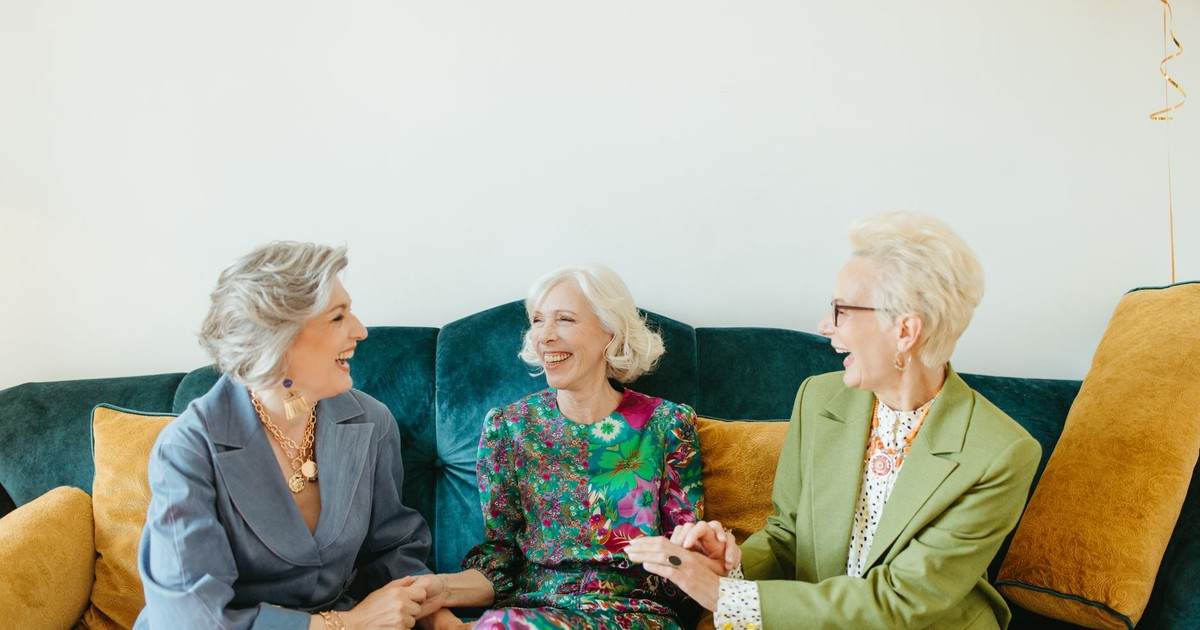
Not every relationship that feels obligatory is actually obligatory. The distinction between “this person is genuinely important to me” and “I have invested so many years in maintaining this that stopping feels impossible” becomes clearer with distance and age.
By 70, many people have started applying a much more direct test to relationships: does this leave me feeling better or worse? Not every interaction, because all relationships have friction – but in the general accounting, does this connection add to your life or mostly drain it? According to socioemotional selectivity theory, older adults systematically hone their social networks so that available social partners satisfy their emotional needs.
Letting a draining relationship lapse is not cruelty. It’s what people do, quietly, once they stop believing that every connection formed at any point in their history is owed indefinite maintenance.
11. Dressing or Acting Their Age

“Age-appropriate” is one of the stranger social concepts – a set of expectations about how people should present themselves that mutates with every decade and is applied most aggressively to women. After 70, many people discover that they have finally stopped accepting the memo.
The bright lipstick. The non-neutral hair color. The genuine enthusiasm for something that is supposedly the domain of people thirty years younger. The decision to take up a new instrument or learn a new language or go somewhere they’ve never been, without worrying about whether 71-year-olds are supposed to do that sort of thing.
Your 70s can be one of the most fulfilling times of your life, and as you age, you may become more confident in who you are and more committed to living life as you see fit. “Acting your age” is advice that works primarily for the people giving it, not the people receiving it.
12. Perfect Parenting in Retrospect

Parents of adult children carry a particular kind of retrospective scrutiny – a mental audit of every decision made when the children were young, measured against everything that has been written about parenting since. The result is a fairly continuous source of low-grade regret, even for parents who, by any reasonable measure, did a good job.
By 70, with children who are themselves 40 or 50, many parents arrive at a different vantage point. They did what they knew with what they had. The children are adults with their own lives and their own capacity to work through whatever needs working through. The parent’s role is not to keep relitigating the 1980s.
This is not the same as refusing accountability. It’s closer to recognizing that the job of parenting, especially when the children are now middle-aged themselves, does not require permanent self-prosecution. You raised people who exist in the world. They are continuing to exist. That’s something.
13. The Anti-Aging Scramble

The beauty and wellness industry makes its money on the anxiety that aging is a problem to be solved – something to reverse, conceal, and apologize for. That anxiety is not accidental. It has been carefully cultivated and is most profitably directed at women.
After 70, something interesting happens for a lot of people: the gap between who they see in the mirror and who they feel themselves to be stops being a source of distress and starts being less interesting altogether. According to the WHO, by 2030 one in six people in the world will be aged 60 years or over – a demographic large enough to have collectively noticed that the dread of aging tends to be loudest before the thing arrives, much quieter once it does.
This doesn’t mean ignoring health. It means letting go of the specific project of looking younger, which is different from the project of feeling well. One is about managing other people’s perception. The other is about your actual body.
14. Having Everything Figured Out

Midlife carries a continuous background pressure to be sorted: to have a clear sense of who you are, what you believe, where you stand. The pressure comes from inside and outside in roughly equal measure. Uncertainty, at 45, feels like a problem to solve.
By 70, many people have made a different kind of peace with not having everything figured out. They’ve held strong convictions that later softened. They’ve changed their minds about things they once considered settled. And they’ve found that the world didn’t end when they did. The Socioemotional Selectivity Theory predicts that older adults experience increased emotional well-being due to their focus on emotionally meaningful goals and relationships, because they tend to prioritize social interactions that are positive and meaningful – leading to increased life satisfaction.
What replaces the pressure to have it figured out is, for many people, a genuine curiosity. Questions are interesting again. Uncertainty is information rather than a personal failing. The things you don’t know stop being threats and start being reasons to stay interested.
Read More: 21 Reasons Why Older Women Are Now Saying They’d Rather Be Alone
What This Actually Looks Like

Not all of these changes happen all at once, and not everyone at 70 has made the same peace with the same things. Some people reach 80 still losing sleep over the same grudge they were nursing at 45, still apologizing for preferences they’ve held for forty years, still performing productivity for an audience that stopped watching decades ago. The letting go is not automatic.
But the research, and the testimony of people who describe their 70s as one of the most unexpectedly free periods of their lives, points in a clear direction. Across survey data, happiness dips in midlife and begins rising again, peaking around age 70. The things you stop caring about aren’t losses – they’re reductions in load. And the thing about putting down something heavy is that you only really notice the weight of it once it’s gone.
Some of what gets released after 70 took fifty years to accumulate. That’s not a regret, necessarily. Some of it needed that long to become clearly unnecessary. But if there’s one argument for doing the mental inventory earlier, it’s this: the things you stop caring about after 70 are, for the most part, things that were never worth what you were paying for them. The list doesn’t shrink because life runs out of things to offer. It shrinks because you finally know the difference between what costs you something and what gives you something back.
AI Disclaimer: This article was created with the assistance of AI tools and reviewed by a human editor.