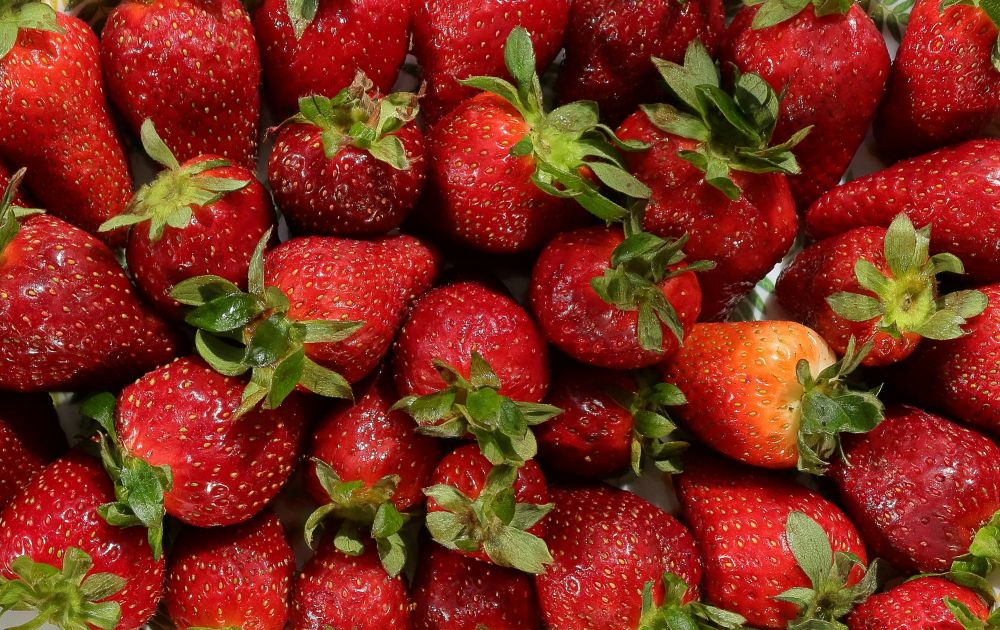

If you reached into a bowl of freshly washed strawberries today and noticed a tiny white worm crawling out, you would not be alone in your reaction. Videos of this happening went viral online, sending people straight to their search bars in a mix of disgust and concern. The good news is that those tiny larvae are not a sign of contaminated produce or a new food safety crisis. The insects responsible – known as spotted-wing drosophila (SWD) – have been present in US berry crops since 2008, and health authorities confirm they pose no known risk to human health. What the larvae do represent, however, is a genuinely interesting story about an invasive species and how it has quietly reshaped American fruit farming over the past 16 years.
These little wriggly worms come from a small invasive fruit fly originally from East Asia. Unlike common fruit flies, which only target fruit that is already damaged or rotting, SWD is an invasive vinegar fly that was first detected in the United States in 2008 and, unlike other vinegar flies that only exploit overripe and rotten fruit, females can lay eggs in immature and ripe fruit – meaning their larvae can be present in otherwise marketable fruit. That single distinction is what makes this particular fly such a headache for growers, and why consumers occasionally find white larvae in fruit that looks perfectly fine from the outside.
The US National Invasive Species Information Center tracks them as one of the most economically damaging invasive pests in the country. Before getting into what to look for and how to handle this, it helps to understand exactly how this fly got here, where it spread, and what it actually does inside your strawberries.
How Spotted-Wing Drosophila Arrived in the US and Spread Across the Country
This small insect has been in Hawaii since the 1980s, was detected in California in 2008, spread through the West Coast in 2009, and was detected in Florida, Utah, the Carolinas, Wisconsin, and Michigan for the first time in 2010. Nobody shipped it here intentionally. Researchers believe it likely arrived in imported fruit.
In 2008, the invasive fly was discovered in strawberry fields in Santa Cruz County, California, before being detected elsewhere in the state and eventually across North America. From that single point of entry, it fanned out across the continent with remarkable speed. It was first found on the West Coast in 2008 but rapidly colonized most fruit-producing regions of the country. It was found in New England in late summer 2011, shortly after Hurricane Irene. By 2012, it had reached states like Minnesota and Kentucky as well.
By 2013, it had spread throughout the Pacific Northwest, including eastern Washington, and is now found across much of the US, Europe, and South America. In other words, there is virtually nowhere in the continental United States where a berry grower can assume they are safe from this pest. It has become a permanent fixture of North American agriculture.
What Makes SWD Different From Common Fruit Flies
This is where the biology gets worth knowing. Ordinary fruit flies – the ones hovering over your overripe bananas – have a weak egg-laying organ that can only penetrate soft, already-breaking-down fruit. Unlike other vinegar flies that occur in California, SWD attacks healthy ripening fruit as well as damaged or rotting fruit. The female’s serrated ovipositor (egg-laying organ) is strong enough to penetrate the skin of soft-skinned fruit and lay eggs just under the skin, creating a small depression on the fruit surface.
SWD eggs are tiny and white, and larvae are cream-colored, legless maggots up to 1/8 inch long. That small size is part of why they are so hard to spot. The damage from these tiny white worms can be hard to detect because some fruits that are infested with eggs and young larvae can still look healthy and edible. A strawberry can look supermarket-perfect on the outside while harboring larvae inside. That is not a sign that food safety has broken down. It is simply how this particular insect behaves.
Adult larva live for about two weeks, and females can lay more than 300 eggs during this time. Females lay one to three eggs per fruit, and several females can lay eggs in a single fruit. Eggs hatch in as little as one to three days. That reproductive speed is what allows infestations to build quickly if left unmanaged.
What Is Spotted-Wing Drosophila and Why Is It a Problem for Strawberry Growers?
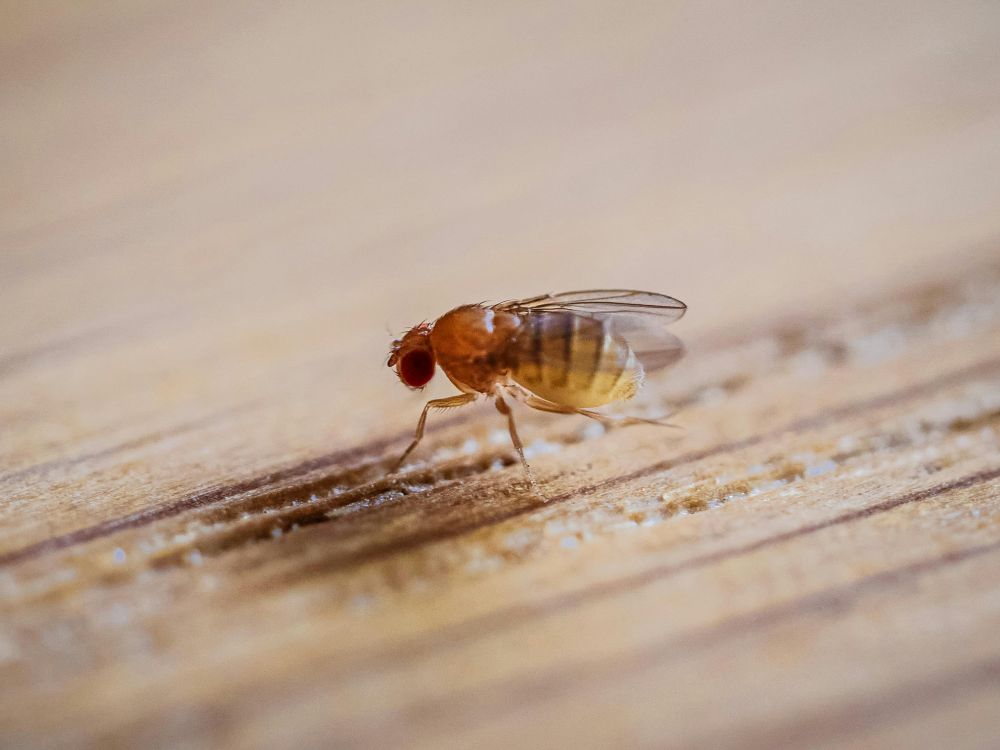
These tiny white worms known scientifically as Drosophila suzukii, is considered a major agricultural threat in the United States. In the United States, SWD severely threatens the viability of berry production, most significantly impacting caneberries (raspberries and blackberries), blueberries, and strawberries, as well as cherries.
The economic picture is significant. Research in California has shown losses as high as 40 percent for blueberries and between 20 and 50 percent losses in strawberries and raspberries, respectively. Across the western US, these bugs can cost growers a fortune and totally destroy late-season crops like blueberries or fall raspberries. In the western US alone, crop losses due to this pest have been estimated to reach as much as $500 million a year.
There is currently a zero tolerance threshold for SWD larvae in fresh market fruit sold in the United States, and a single infested fruit can result in the rejection of an entire shipment. That commercial standard is strict for good reason – even if the larvae are harmless to eat, consumers reasonably do not want to find them in their food. For small and mid-sized berry farms, an infestation can mean losing an entire harvest or having a truckload of produce rejected at the processing facility.
It is worth being clear about what “harmless to eat” actually means here. Infested fruits are safe to eat, and there is no known risk to human health posed by ingesting them. Multiple university extension programs, including Iowa State University’s Yard and Garden resource and the University of Kentucky College of Agriculture, have confirmed this. The larvae are simply fly larvae – the same basic organism as the maggots that have been present in fermented foods like cheese and certain cured meats for centuries. Unpleasant to think about, yes. A health hazard, no.
How to Tell If Your Strawberries Have Tiny White Worms in Them
This is one of the most practical questions to answer, and the honest answer is that it can be difficult without a close inspection. Early infestations leave almost no visible trace on the outside of the fruit.
Initial symptoms of an infestation are small scars or slits left by females during egg-laying on intact fruits. Soft, sunken spots appear around the scars as larvae begin to feed. Fruits soon collapse and become gooey. If you pick up a strawberry and it feels unusually soft near the cap, or it collapses when you press it gently, larvae may already be present inside.
If a berry is very soft, collapsing on itself, or is watery near the cap of the fruit, the larvae are most likely present. You can also look for tiny, pinprick-sized holes near the surface of the fruit, which is where the female used her serrated ovipositor to insert her eggs. This sign is subtle and easy to miss if you are not specifically looking for it.
For a more reliable check, you can use a simple home flotation test. Use a floatation method: place about a dozen ripe, apparently undamaged fruit into a gallon bag, add a cup of sugar syrup (a mixture of half a cup of sugar mixed into one quart of water) to the bag, and seal it. Thoroughly mash the berries, then let the berries settle to the bottom of the bag – any small, white larvae present should float to the top. This is a variation of the method used by agricultural researchers to monitor crop infestations.
The viral “worm test” that has circulated online – soaking strawberries in salt water or vinegar to draw out tiny white worms- is based on the same principle. Lab researchers do use saline float methods for detection. But a short kitchen soak is not a guaranteed removal method. The FDA’s produce safety guidelines are clear that the best routine for consumers is to rinse produce thoroughly under cold running water before eating. Washing fresh strawberries can dislodge surface larvae, but it will not eliminate larvae that have already burrowed deeper inside the fruit.
Storing Berries to Minimize Risk
Refrigeration is the most effective tool available to home consumers. Placing the berries in the refrigerator will stop the development of the SWD if they are present, both hatched and unhatched. Freezing berries will completely wipe them out, and holding berries at 34°F for 72 hours will eradicate anything in the fruit.
This is practical advice for everyday berry buying. Get your strawberries cold quickly after purchase, and do not leave them sitting at room temperature on the kitchen counter. If berries are stored at room temperature, larvae can hatch after the fruit has been picked. Fruit that was normal may be soft and maggot-infested a day or two later. The fridge is your friend here, not just for freshness, but for halting any potential larval development before it starts.
You can also look at food storage habits that help reduce spoilage and pests more broadly, which applies to fresh produce across the board.
Are Strawberries Safe to Eat With Tiny White Worms Inside?
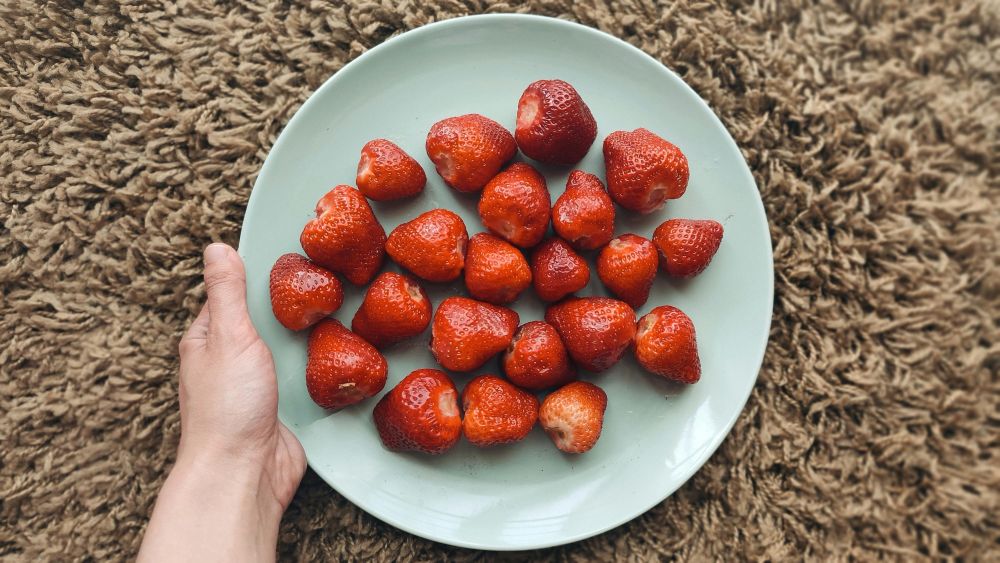
Yes – and the answer comes directly from university extension programs, state agriculture departments, and USDA-affiliated researchers, not just a general reassurance. The Minnesota Department of Agriculture’s official SWD page states plainly that although not harmful to eat, raspberries, blackberries, and other soft fruit with spotted wing drosophila larvae inside are not marketable for commercial fruit growers. The commercial rejection standard exists to protect quality and consumer confidence, not because there is a biological harm from eating the larvae.
Entomologists and pest management specialists are not aware of any known risk to human health from ingesting the eggs and larvae. That is not a hedge or a “probably fine” situation. It is a firm consensus among agricultural scientists who study this insect specifically.
It is also worth putting this in context. Insects and insect fragments appear in food at levels consumers rarely think about. The FDA’s Defect Levels Handbook – a real and publicly accessible document – establishes allowable levels of natural contaminants in processed food, including insect fragments, because eliminating every trace is both impossible and unnecessary. The fruit is safe. The visual is upsetting. Those are two different things.
The bigger practical concern with tiny white worms in strawberries is fruit quality, not human health. Other organisms such as fungi and bacteria are often introduced during egg-laying and can cause additional fruit deterioration. A strawberry that has collapsed, turned soft, and smells faintly fermented should not be eaten – not because of the larvae themselves, but because the secondary breakdown of the fruit may have compromised its quality. Trust your eyes and your nose on that one.
What to Do Now
For everyday grocery buying, the practical steps are simple. Rinse your strawberries under cold running water before eating them. Get them into the refrigerator quickly after purchase – ideally the same day. Check for soft spots, collapse near the cap, or unusual wateriness, and discard any fruit showing those signs. If you want to run the float test out of curiosity, that is easy to do at home. But there is no need to stop buying or eating strawberries. They are still safe, still nutritious, and still worth the bowl of shortcake this summer. The gross-out factor is real, and no one is pretending otherwise. The health risk, however, is not.
Disclaimer: This article was created with AI assistance and edited by a human for accuracy and clarity.