
There is a type of person who walks into a room and, without saying much at all, commands it. Not through height or clothes or some ineffable charisma that you’re either born with or you’re not. They get the room because when they do open their mouth, they know exactly why they’re speaking and exactly what they want the words to do. You have probably sat across from someone like this at a conference table, or watched them on a Zoom call, and had the slightly uncomfortable thought: what is it that they have that I don’t?
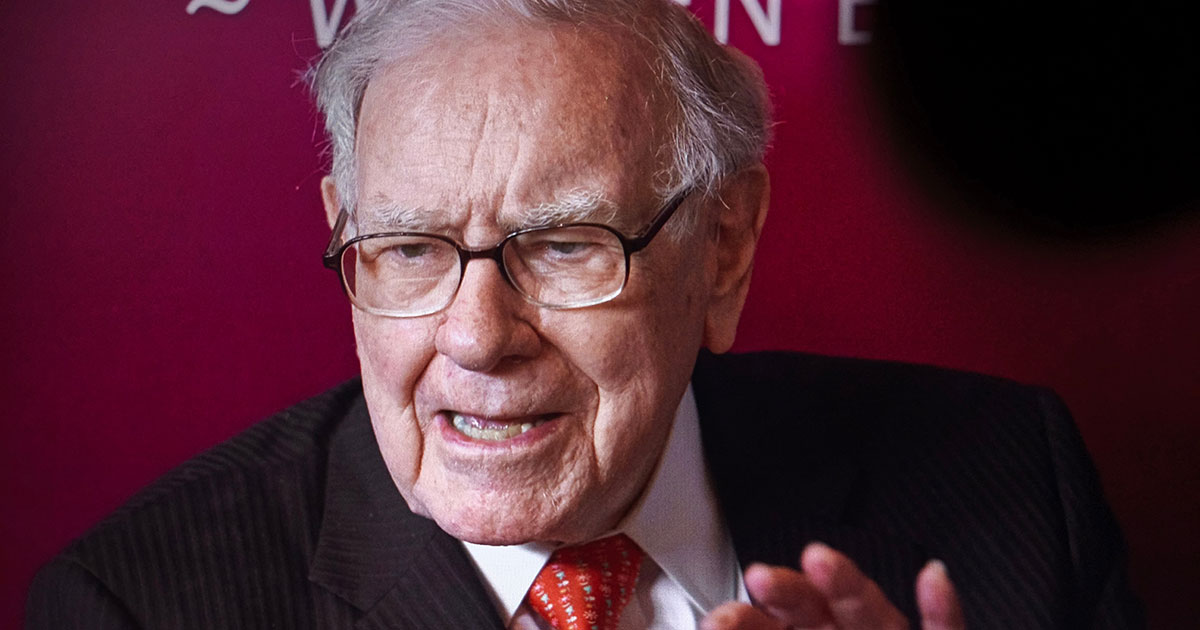
Warren Buffett has been asked a version of that question more times than he could count. He is 94 years old, the product of decades of compounding, not just in the stock market but in the slower, less glamorous work of becoming someone people want to listen to, trust, and follow. And when he is asked what single thing separates the people who reach their potential from the people who don’t, he does not say intelligence. He does not say discipline, vision, or the right connections. He says communication.
Not charisma. Not eloquence. Communication: the ability to take what you know, what you believe, and what you’re asking for, and transfer it cleanly into another person’s understanding. It sounds almost embarrassingly simple until you watch how rarely it actually happens.
The Certificate on His Wall
Buffett has two degrees. One from the University of Nebraska. One from Columbia Business School, where he studied under Benjamin Graham, the father of value investing. Neither of those diplomas hangs in his office. The thing that does hang there is a certificate from a Dale Carnegie public speaking course he completed in 1952.
Notice what he chose to put on the wall, because it was not an accident of interior design. Buffett has said the impact that course had on his life was huge, and that it gave him the most important degree he has, adding: “It’s certainly had the biggest impact in terms of my subsequent success.”
What makes that framing remarkable is who is saying it. This is a man who arguably has the greatest investment mind of the twentieth century. A man who read every book in the Omaha public library about business and finance before he was twelve. And when he is asked to identify the qualification that mattered most, he points not to the curriculum of Columbia Business School but to a room of strangers who were also terrified to speak.
Buffett was genuinely terrified of public speaking in high school and college. He said he arranged his classes specifically so he would not have to speak in front of people. While at Columbia Business School, he even signed up for the Dale Carnegie course for $100, then lost his nerve and canceled payment on the check. He only committed to it when he moved to Omaha and started in the securities business, because he understood that he could not afford to keep avoiding it.
The fear was real. The choice to confront it anyway was the career.
What Buffett Actually Means by Communication
It’s worth being precise here, because the word gets used loosely. Communication is not the same as being articulate, persuasive, or particularly charming. People conflate those things constantly, and the conflation is exactly why they underestimate what Buffett is pointing at.
When Buffett talks about communication, he is talking about the transmission of ideas from one mind to another. The emphasis is on transmission, not performance. When asked about one tip he could give young graduates, Buffett said: “If you can’t communicate, it’s like winking at a girl in the dark – nothing happens. You can have all the brainpower in the world, but you have to be able to transmit it.”
That image is specific enough to stick. You can be sitting on a genuinely good idea, a real solution, a perspective that would move things forward, and if you cannot get it out of your head and into the room in a form that other people can receive, the idea functionally does not exist. The gap between having something to say and saying it in a way people actually hear is, in Buffett’s view, where most potential goes to die.
He extended this to money directly. When a young entrepreneur asked him for a success tip he could pass on to young people graduating from college, Buffett was unequivocal: invest in yourself. The one easy way to become worth 50 percent more than you are now, at least, is to hone your communication skills, both written and verbal. That is not the metaphor of someone who thinks communication is a nice-to-have. That is the math of someone who has watched it determine careers.
The Evidence Behind the Observation
Buffett is not alone in this conclusion. He has simply been saying it more clearly and for longer than most.
A 2024 LinkedIn survey found that nine out of ten global executives agree that soft skills are more important than ever, and communication ranked number one on the 2024 list of overall most in-demand skills for the second consecutive year. That ranking was built from analysis of data across LinkedIn’s one billion global members, which means it reflects what employers are actively hiring for, not just what they say they value in theory.
When the Pew Research Center asked workers in 2024 to rate the importance of nine skills needed to be successful in today’s economy, they rated interpersonal skills as the most important, with 85 percent saying this was extremely or very important. Not technical expertise. Not credentials. The ability to connect with and communicate to other people.
The data on what happens when that skill is absent is equally stark. According to High5test’s workplace communication research, 86 percent of employees and executives link workplace failures to poor communication or collaboration, and this costs businesses between $10,000 and $55,000 per employee each year in wasted time, errors, and missed deadlines.
What that number represents, in human terms, is the meeting where nobody said the thing everyone was thinking. The project that went sideways because the brief was never clearly written. The manager who was technically excellent and completely unable to tell her team what she needed from them. The person who understood the problem but could not explain it to the person with the budget.
Communication failure is not usually dramatic. It tends to be the accumulation of small misfires, across months and years, that leave good people stuck.
Why Schools Get This Wrong
Buffett has made a point of noting that formal education consistently underweights communication. His exact words: “You’ve got to be able to communicate in life, and it’s enormously important. Schools, to some extent, under-emphasize that. If you can’t communicate and talk to other people and get across your ideas, you’re giving up your potential.”
That is a pointed observation from someone who attended elite institutions, not a complaint from someone who never had access to them. He is not saying education doesn’t matter. He is saying that even a world-class education leaves a gap, and most people never fill it.
This resonates for a specific reason. The people who end up in positions of real influence are rarely the ones who only knew the most. The ones with technical mastery but no ability to explain their thinking get passed over again and again, not because they’re wrong, but because they can’t make their rightness legible to anyone else. Without good communication skills, you won’t be able to convince people to follow you, even though you see over the mountain and they don’t.
That observation comes up repeatedly across the research on leadership failure. The leaders who struggle most are rarely the least capable in the room. They are often among the most capable. What they lack is the ability to bring other people into their understanding, to create enough shared clarity that others can act on it.
You can find more on this pattern, and what to do about it, in our inspiration section.
The Specific Skills Buffett Practiced
It matters that Buffett didn’t just believe communication was important and then wait for the skill to arrive. He did something about it, and he has been precise about what.
The first thing was public speaking. Buffett has said it’s important to develop solid communication skills as early as possible. In an interview, he noted that to overcome fear you need to put yourself out there, adding: “You have to do it. And the sooner you do it, the better.” His strategy after completing the Carnegie course was to immediately begin teaching an investing class at night. Not because he needed the income, but because he understood that the skill would atrophy if he didn’t use it continuously under pressure.
The second was written communication. Buffett is well known for his Berkshire Hathaway annual shareholder letters, which are instructive and easy to understand. He has offered a specific piece of advice for any writing: write with a specific person in mind. When writing Berkshire’s annual report, he pretends he is talking to his sisters. His sisters are intelligent but not experts in accounting or finance. If he can explain it to them clearly, he has written it clearly.
That approach strips away the thing most people reach for when they want to sound credible: jargon, abstraction, length. Buffett’s letters are famously readable, and the readability is the point. It is not easier to write simply. It is considerably harder, because simple writing requires that you actually understand what you are saying, well enough to say it without scaffolding.
The third element is listening. The communication most people think about is output, what you say and how you say it. But Buffett’s understanding of the skill encompasses input as well. You cannot respond to what you have not heard. You cannot persuade someone whose objections you don’t understand. The leaders who communicate most effectively are the ones who have built a genuine picture of who they are talking to before they open their mouths.
The Invisible Tax of Not Investing in This
There is a cost to letting communication be a weakness, and it rarely registers on any performance review. It accumulates in slower ways. The promotion that goes to someone less qualified but more fluent. The idea that gets credited to the person who could explain it rather than the person who originated it. The meeting that ends without the thing you needed to say having been said, because you couldn’t find the opening or the words in real time.
Buffett identified communication as an investment with a measurable return, not a soft skill to develop when there’s time. The phrase “when there’s time” is exactly how people never get to it.
What is interesting about his framing is that it is genuinely egalitarian. He was terrified of speaking. He wasn’t good at it naturally.
The Thing That Doesn’t Change
Here is what is true and somewhat uncomfortable: in the age of AI, when tools can write emails and generate presentations and summarize meetings, the premium on genuinely human communication has gone up, not down. The tools handle the mechanical production of words. They cannot handle the version of communication that requires you to read a room, hear what isn’t being said, and know which thing to say next.
As employers experiment with AI, they are also recognizing its limitations. The demand for workers who possess uniquely human skills, communication chief among them, has grown precisely because the technology cannot compensate for what it lacks. The irony is that the more automated the production of language becomes, the more valuable it is to be a person who can actually use it with intention.
Buffett’s observation is not about a moment in time. He has been making the same argument for decades, across different economies, different technologies, and different rooms. The thing he keeps pointing at is the same: your ideas are only as powerful as your ability to move them from your head into someone else’s. That has never not been true. It will not stop being true.
What changes is whether you decide to do something about it, and whether you decide to do it now or during the portion of your life where you assume you’ll eventually get around to it.
He Built It, and So Can You
The Dale Carnegie certificate on Warren Buffett’s wall is not a trophy. It is a record of a decision made at twenty-one by a person who was, by his own account, genuinely afraid. He didn’t wait until the fear passed. He didn’t wait until he felt ready, because that particular feeling has a way of never arriving. He paid $100, walked into a room full of strangers, and started.
That is the part of the story that gets the least attention, and it is the most useful part. Buffett didn’t succeed in spite of his fear of speaking. He succeeded in part because he confronted it early enough that it stopped costing him things. The people who don’t confront it also don’t always notice what it’s costing them, because the losses are invisible, accumulated quietly in opportunities that go to someone else, in rooms where the best idea went unheard because the person who had it couldn’t get it across the table.
You don’t need a Dale Carnegie course specifically, though there are worse places to start. What you need is what Buffett needed: an honest reckoning with whether the gap between what you know and what you can communicate is larger than you’d like to admit, and then the decision, made before you feel like it, to start closing it.
AI Disclaimer: This article was created with the assistance of AI tools and reviewed by a human editor.