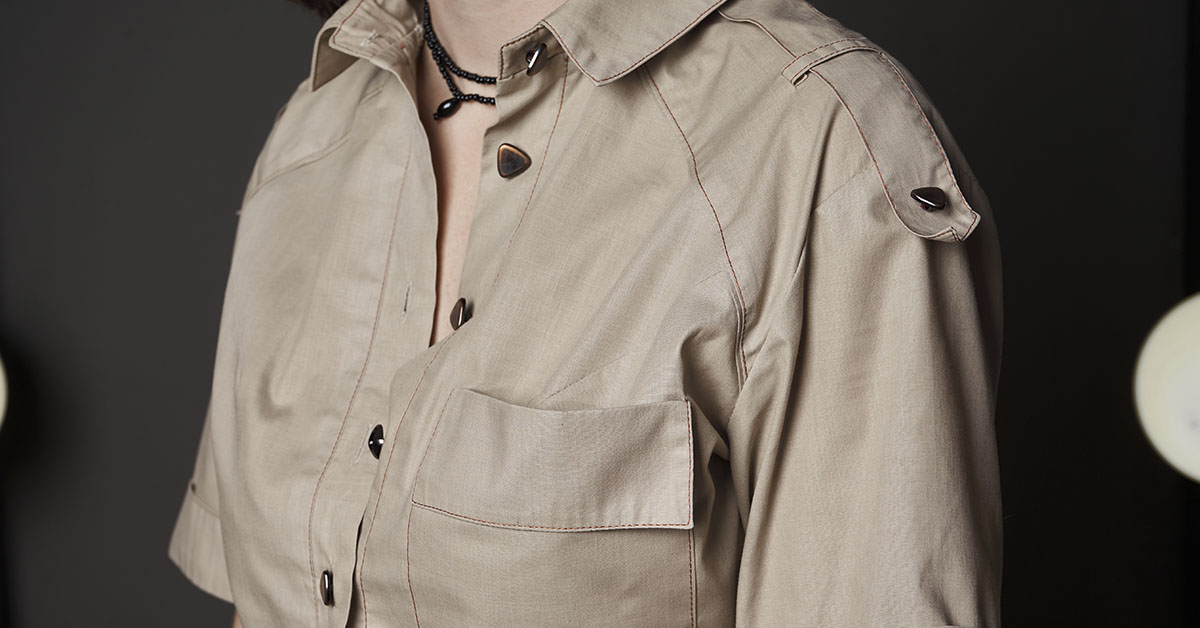

Has it ever occurred to you that the buttons on a woman’s and a man’s shirt are set on opposite sides? Women’s buttons fasten on the left, men’s on the right. Check your own shirt. You might have noticed before, but have you ever wondered why?
Historians have long debated how this divide began. Some point to servants dressing wealthy women, others to soldiers drawing swords, or to customs around sidesaddle riding and nursing.
A few even mention old laws that barred women from wearing men’s clothes. Each theory tells a different story about class, habit, and survival in another time. Whatever the reason, the difference has been sewn into fashion for centuries, a quiet trace of the world that shaped it.
Buttons Started as Luxury Items
Buttons appeared in Europe during the 13th century as a technology that changed how people dressed. Before them, clothes fastened with pins, brooches, laces, or clasps that took time to secure. The buttonhole solved this by creating a reinforced opening that could hold a fastener through repeated use.
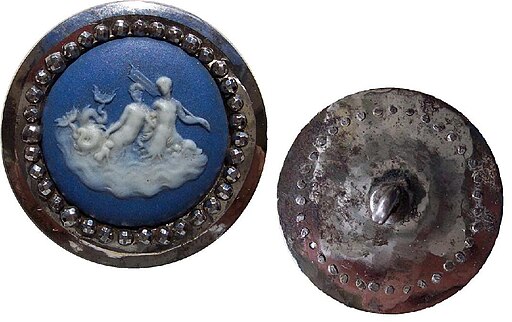
Craftsmen carved early buttons from precious materials and attached them by hand. Only the wealthy could afford them, so buttons became status symbols that announced social rank. Their placement on garments depended entirely on who would be doing the buttoning.
About 90% of medieval people were right-handed, and this near-universal preference shaped how objects were designed. Left-handedness was associated with the devil and witchcraft. The word “sinister” itself comes from the Latin for “left.” This universal right-handedness shaped how tools, door handles, weapons, and clothing were all designed, with everything assuming the user would reach with their right hand.
Servants Determined Women’s Button Placement
Wealthy women never dressed themselves; their lady’s maids did. Melanie M. Moore, founder of women’s blouse brand Elizabeth & Clarke, explains that “since most people were right-handed, this made it easier for someone standing across from you to button your dress.”
The perspective matters because a maid faces her employer, buttons on the left side of a woman’s dress appear on the right from the maid’s view, so her dominant hand lines up naturally with each fastening as she works down the garment.
This small efficiency became standard because wealthy women changed outfits constantly. Morning dress gave way to walking dress, then afternoon dress for visitors, then evening gowns for dinner. Each change involved dozens of buttons from collar to hem. Minutes saved on a task that repeated throughout the day added up.
Some historians propose other explanations. Women rode sidesaddle with their right sides facing forward, shirts buttoning right over left might protect riders from the wind.
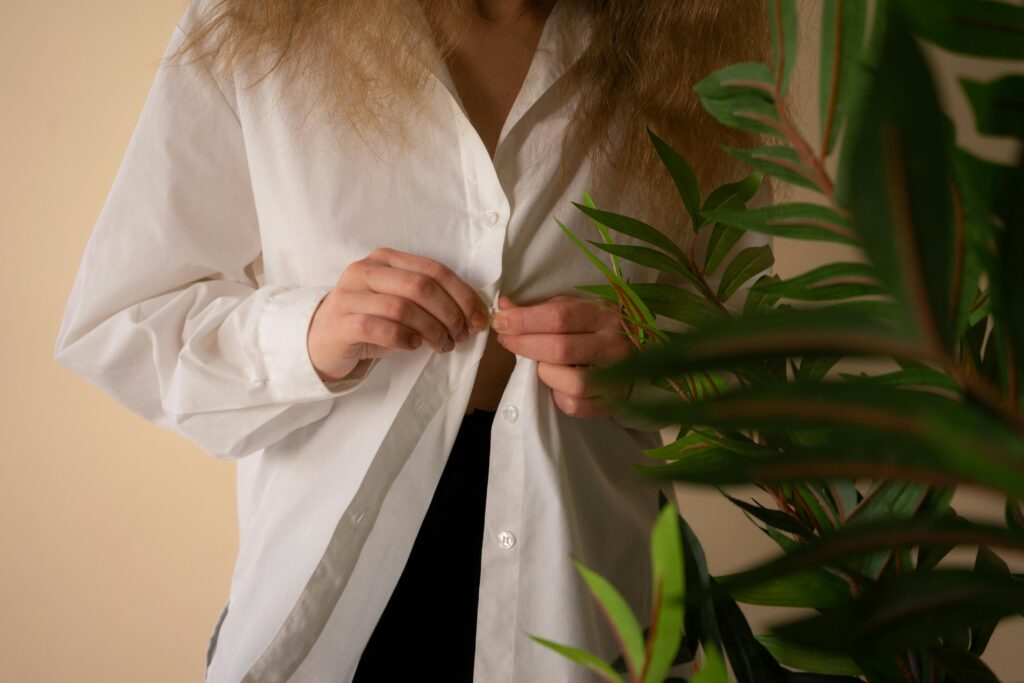
Chloe Chapin, a fashion historian at Harvard University, told Today.com, 1880s laws banned women from dressing like men in public. Button placement served as a legal marker that separated women’s tailored clothing from actual men’s garments. Another theory focuses on nursing mothers who hold babies in their left arms. Buttons on the left create an opening exactly where a mother needs access while cradling a child.
Men’s Buttons Came from Military Needs
Men’s buttons tell a story tied to warfare. Medieval knights wore breastplates made of two metal sheets that overlapped at the chest. The left plate had to sit underneath the right plate because soldiers faced enemies with their left side forward, shields protecting that exposed side. An enemy’s lance striking the armor had to slide off rather than slip between the plates.

The same overlap solved another problem. Every man who could afford a sword wore it on his left hip because he drew it with his right hand. Paul Keers, who writes in A Gentleman’s Wardrobe, told The Guardian that reaching for that sword meant sweeping your right hand across your body toward your left side. The left-under-right overlap positioned the fabric opening exactly where your hand needed to pass through. The hand could slip inside and grab the handle without fighting the jacket. Button the jacket the opposite way and the handle sits trapped behind the fabric edge.
Armorers made fabric tunics with the same overlap they used for metal plates. Civilian jackets copied this military cut. The style spread beyond actual fighters because the design carried meaning about masculinity and power. Wealthy merchants and clerks wore military-cut jackets to claim warrior status, even when they spent their days with account books instead of swords.
Industrial Production Made It Permanent
Both traditions survived because changing them meant retraining muscle memory. Factories in the 1800s built separate production lines for men’s and women’s clothing, and each line had machines positioned for buttons on a specific side and workers trained for that configuration.
Manufacturers calculated what switching would cost against what they would gain. Also, retraining an entire industry to change something nobody complained about made no financial sense.
The garment industry had another reason to maintain the split. It prevented mistakes. Workers could immediately identify whether a shirt belonged in the men’s or women’s line just by checking button placement. This simple sorting system caught errors before they reached stores.
Walk into any clothing store today and you’ll find the same left-right button split that existed hundreds of years ago between men and women. When maids dressed aristocrats and soldiers rode into battle.
Your hands know which side the buttons sit on before you think about it, because it’s been passed down for generations. The next time you button a shirt, remember you’re performing a motion perfected by someone else’s servants. Your fingers follow a path carved by medieval warfare. And somewhere, a left-handed person struggles with a design that was never considered for them at all.
The Original Reasons Died Centuries Ago
The last generation of wealthy women who relied on servants to dress them disappeared over a century ago. Men stopped carrying swords even earlier. Modern manufacturing could easily switch button sides or eliminate the difference entirely. There’s no real reason buttons couldn’t be switched, just that nobody has bothered to change a tradition that few people notice or complain about in the first place.
Children learn which side their buttons belong on before they can question why. By the time anyone thinks to ask, the pattern feels as fixed as which side of the road to drive on. The cost of changing exceeds any benefit from making it logical, so the backward tradition continues. Your buttons preserve a world of servants and swords that vanished before your grandparents were born.
But buttons aren’t the only zombie rule in your closet. Every gendered garment distinction follows the same pattern. Something made sense briefly in the 1700s, then became frozen into every item made since. Here are some of the strangest ones that somehow became permanent.
High Heels Were Men’s Shoes for 600 Years
Stilettos are viewed as feminine today, but men invented heels and wore them exclusively for centuries. Persian cavalry soldiers needed them in the 10th century because heels locked their feet into stirrups while they shot arrows from horseback.
Europeans adopted the style in the 17th century after a Persian delegation visited France and set off fashion mania across the continent.
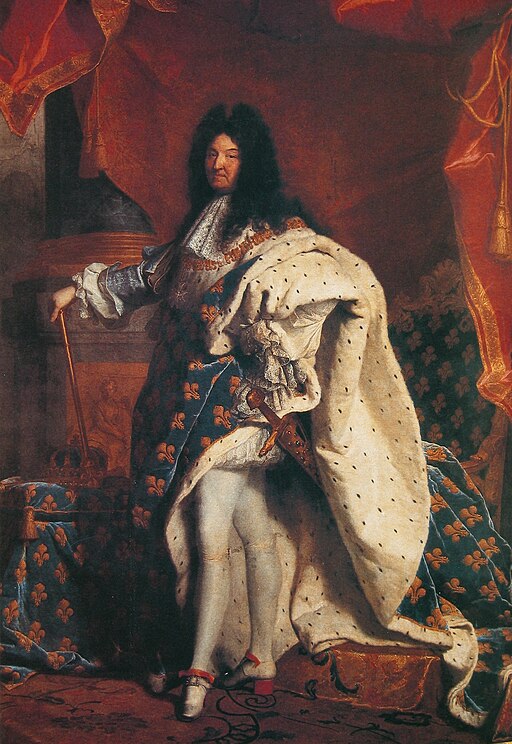
Louis XIV turned heels into a status symbol by wearing them constantly. He stood just over five feet tall but added four inches with his red-heeled shoes. He passed laws reserving high red heels for nobility because the red sole proved you were wealthy enough to avoid dirty streets.
The gender split happened around 1730. Women’s shoes grew narrower with higher heels. Men’s shoes became broader and lower. Men abandoned heels entirely because they saw the style as feminized. The military tool that signaled masculine power for 600 years suddenly meant the opposite.
Today, cowboy boots remain the last socially acceptable heel for men. The design preserves the original riding function that started the tradition.
Pink Was the Boy Color Until Your Grandparents’ Generation
All babies wore white dresses before the mid-19th century, regardless of sex. White cotton could be bleached clean, and dresses made diaper changes easier. Pastels became fashionable later, but stores sold them without gender rules at first.
Retailers eventually assigned colors to create separate markets for boys and girls. The split ran opposite to today’s standard. A 1918 issue of Earnshaw’s Infants’ Department explained that pink was for boys because it was a stronger, more decided color, while blue was for girls because it was more delicate and dainty. Major department stores in Boston, Chicago, and New York followed this guidance through 1927.
The switch happened with the baby boomers in the 1940s. Children started dressing like miniature adults instead of wearing gender-neutral baby clothes. Manufacturers picked blue for boys and pink for girls to match adult fashion trends.
The choice stuck because it simplified inventory and met customer expectations once stores committed to one standard. Two generations of the same arbitrary rule convinced everyone it reflected something real about gender.
Women’s Pockets Disappeared During the French Revolution
Have you ever noticed that women’s clothing lacks pockets, while men’s and babies’ clothing have them? The difference didn’t exist until fashion killed women’s pockets and never brought them back.
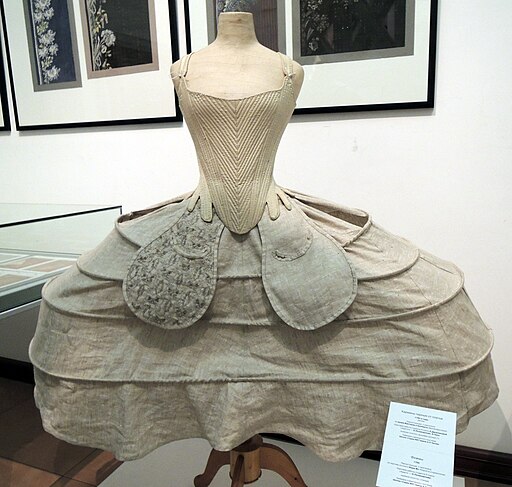
Both men and women carried separate pouches that hung from belts before the late 1600s. Pockets sewn into clothing appeared first in men’s garments. Women kept using tie-on pockets that hung beneath their skirts and could be reached through slits in the fabric. Full skirts hid these separate pockets easily.
The French Revolution changed women’s fashion in ways that eliminated pockets entirely. Women adopted a slim, high-waisted silhouette inspired by ancient Greek dress. These narrow styles couldn’t hide bulky tie-on pockets underneath, so women switched to carrying small bags called reticules instead. Men’s clothing kept its sewn-in pockets through the entire fashion shift because men’s styles stayed loose enough to accommodate them.
Fuller skirts returned in the 1840s. Some dresses included a single pocket in the side seam, but most had none at all. Manufacturers never restored the full, functional tie-on pockets women had used for centuries. They treated pockets as optional decorations in women’s clothing while keeping them standard in men’s garments. The fake pockets sewn onto women’s jeans today continue a tradition that started when narrow silhouettes made functional pockets impossible and manufacturers never bothered to restore them.
Women Were Arrested for Wearing Pants Until Your Parents Were Born
Men and women both wore skirts and dresses for most of human history. Ancient Greeks wore chitons, Romans wore togas over tunics, and medieval Europeans wore long robes. Pants existed only as practical gear for horseback riders and soldiers.
That changed in the 19th century when pants became standard clothing for men. Women kept wearing skirts, and cities decided to make the division permanent through law. Columbus, Ohio, criminalized wearing clothes that didn’t match your sex in 1848. Chicago followed three years later. By 1900, over 40 American cities had made women wearing pants illegal.
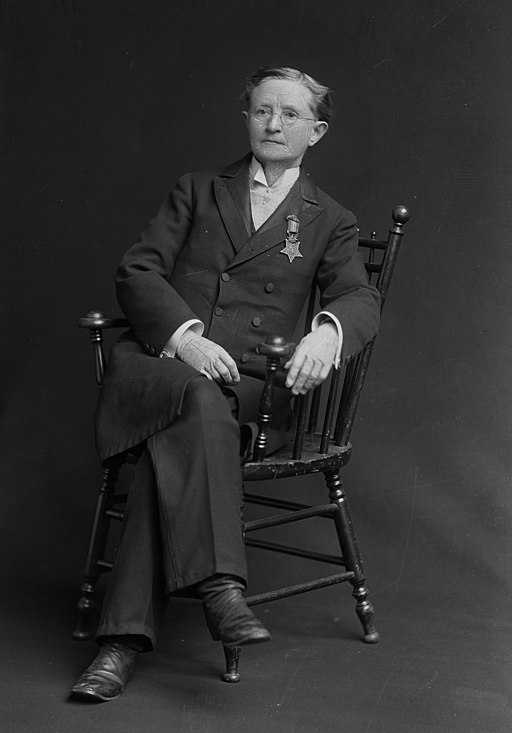
Police used these laws constantly. Dr. Mary Walker, a Civil War surgeon, was arrested repeatedly for wearing trousers. In 1938, Helen Hulick went to jail for refusing a judge’s order to wear a dress in court. Drag performer Rusty Brown told an interviewer she’d been arrested in New York more times than she had fingers and toes just for wearing pants and a shirt.
World War II forced a temporary shift because factory work required pants. Women went back to skirts after the war because employers and society demanded it. The change back to pants took decades. Women couldn’t wear them on the US Senate floor until 1993.
Your grandmother likely remembers when wearing pants to work or school could get her sent home or fired.
Women’s Shoes Prioritized Appearance Over Function
The 18th century created the modern shoe gender split. Women’s shoes became narrow and decorative while men’s shoes became wide and sturdy. The difference reflected what each sex was expected to do. Men walked to work and needed stable shoes. Women stayed home, so their shoes prioritized small-looking feet over comfort or mobility.
Modern dress shoes still follow this logic even though women now walk to work, stand in meetings, and commute just like men do. Women’s versions squeeze feet into pointed toes and throw off balance with high heels. Men’s versions give toes room to spread and keep heels low for stability. Manufacturers still design women’s professional footwear as if mobility doesn’t matter, preserving an assumption from centuries ago that women don’t really need to go anywhere.
Read More: Why Do Some Women’s Underwear Have That Little ‘Pocket’ In The Middle?
Even Gloves and Hats Had Gender Rules
The late 17th century split gloves and hats by gender, just like everything else. Women’s gloves became delicate fashion accessories made from thin silk or white kid leather and decorated with embroidery and ribbons. Men’s gloves used thicker materials built to protect hands during work, hunting, and battle. The difference reflected the same assumption that shaped every other piece of clothing. Men needed protection because they worked and moved through the world. Women needed decoration because they stayed home and looked pretty.
Victorian women couldn’t remove their gloves in public because showing bare hands was considered almost indecent. Women’s hats required pins to stay secured because the elaborate decorations made them top-heavy and unstable. Men’s bowler hats were designed to stay put without assistance so gamekeepers could move through branches without losing them. Every accessory assumed men lived active lives requiring function, while women existed as ornaments requiring ornament.
Why These Zombie Rules Won’t Die
The gender split protects a pricing advantage. Separate categories let manufacturers charge different prices for nearly identical products. Take razors. A pink version and a blue version often come from the same factory with the same blade and handle design, yet the pink one costs more. Most shoppers never notice because the products sit in different aisles.
A 2015 study by the New York City Department of Consumer Affairs looked at nearly 800 products and found that women paid an average of 7% more for similar items. Economists call this the pink tax.
For this pricing structure to hold, the categories need to stay distinct. Manufacturers rely on visible markers to separate men’s and women’s products. Some of these differences serve a purpose. Others remain because changing them would cost more than keeping them. Buttons on the left side of women’s clothing fall into this second group. So do fake pockets that look decorative but hold nothing. These details survive because production habits are hard to break.
That’s beginning to change. Shoppers now cross category lines to buy what actually works. Unisex sections expand every year. Athletic brands have learned that making one good running shoe is cheaper than producing separate versions for men and women. The separation only made sense when it boosted profits. Now it does the opposite.
Read More: People Shocked After Figuring Out That XXL and 2XL Aren’t The Same Size