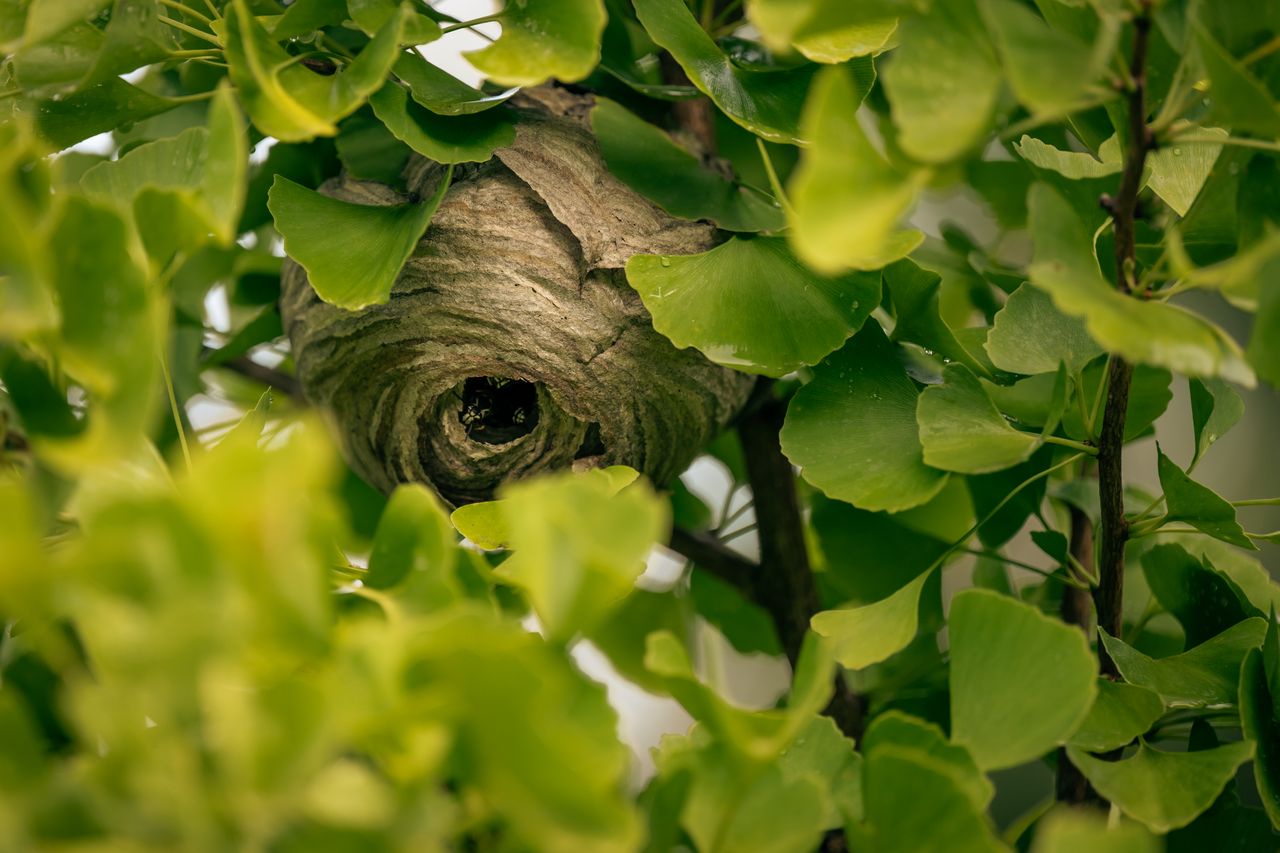

Every summer, at least once, a homeowner rounds the corner of their house, glances up at the eave, and freezes. What looked like a small paper smudge two weeks ago is now a gray, layered structure the size of a grapefruit, pulsing with insects. The instinct to grab something – a broom handle, a can of spray foam, a garden hose – is immediate. It is also, in most cases, exactly wrong.
Wasp nest removal is one of those tasks that homeowners routinely underestimate until the moment they find themselves retreating at a full sprint across the yard. The danger is real, the biology is specific, and the calculus between DIY and professional intervention is more precise than most online advice suggests. Getting it right requires understanding what you are dealing with, how the colony is behaving, and what time of year it is – because all three factors change the risk equation dramatically.
This guide draws on current entomological guidance, university extension research, and pest control expertise to walk through every stage of a wasp nest encounter: identification, risk assessment, removal method selection, timing, and long-term prevention. Whether you spotted a small paper structure under a porch railing in April or discovered a football-sized gray balloon in a wall void in August, the first rule is the same: stop, step back, and observe before you do anything else.
What to Expect

Wasp nest removal is a procedure that ranges from straightforward to genuinely dangerous depending on four variables: species, nest size, location, and time of year. Wasp nests vary significantly in size, location, and danger level depending on the species. Small, early-season paper wasp nests in accessible locations can often be managed by a prepared homeowner. Large yellowjacket or hornet colonies, nests inside wall cavities, and any nest encountered during peak summer activity all carry risks that exceed what protective clothing and a store-bought spray can reliably contain. During 2011 through 2021, a total of 788 deaths from hornet, wasp, and bee stings occurred – an average of 72 deaths per year, according to the CDC’s National Center for Health Statistics. Those 72 annual fatalities are why this is a safety question, not merely a home maintenance one.
The core principle throughout this report is the same one experts return to repeatedly: prioritize safety over cost savings, and understand that a failed DIY attempt does not just leave the nest in place – it leaves the nest in place with an agitated, defensive colony.
Understanding What You’re Dealing With: Species Identification
The Three Common Social Wasps
Not every stinging insect that builds a nest is the same threat. The term “wasp” covers a broad family of insects, and the most important practical distinction for homeowners is between social wasps – which live in colonies and defend their nests collectively – and solitary wasps, which are almost entirely harmless. There are two categories of wasps: solitary and social. Solitary wasps aren’t aggressive and rarely sting. Mud daubers, for instance, build small mud tubes on the sides of buildings and can be removed by hand with virtually no risk.
The three social wasp species responsible for the vast majority of nest-related incidents in the United States are paper wasps, yellowjackets, and hornets. Social wasps differ from solitary wasps by living in a community of a single nest housing dozens or thousands of members. The wasps in these communities work together to build the nest, find food, raise the young, and defend the nest against perceived threats. Understanding which of these three you are facing is the foundational step in any removal decision.
Paper Wasps
Paper wasps are slender insects about 1 inch long, with notably long legs and narrow bodies. Their coloring varies by species, ranging from reddish-orange to dark brown or black, often accented with yellow markings. They’re easy to spot in flight by their distinctive silhouette, since their long legs dangle conspicuously beneath them. Their nests are the most recognizable: queens build nests connected to a structure with a single stalk at the top and continue building downward in an upside-down dome shape, commonly described as looking like an upside-down umbrella. Unlike yellowjacket and hornet nests, paper wasp nests have exposed hexagonal combs.
Colonies are relatively small, generally numbering fewer than 100 wasps, and paper wasps are considered less aggressive than hornets or yellowjackets. This makes them the species most likely to be safely managed by a careful homeowner, provided the nest is small, accessible, and treated at the right time of day.
Yellowjackets
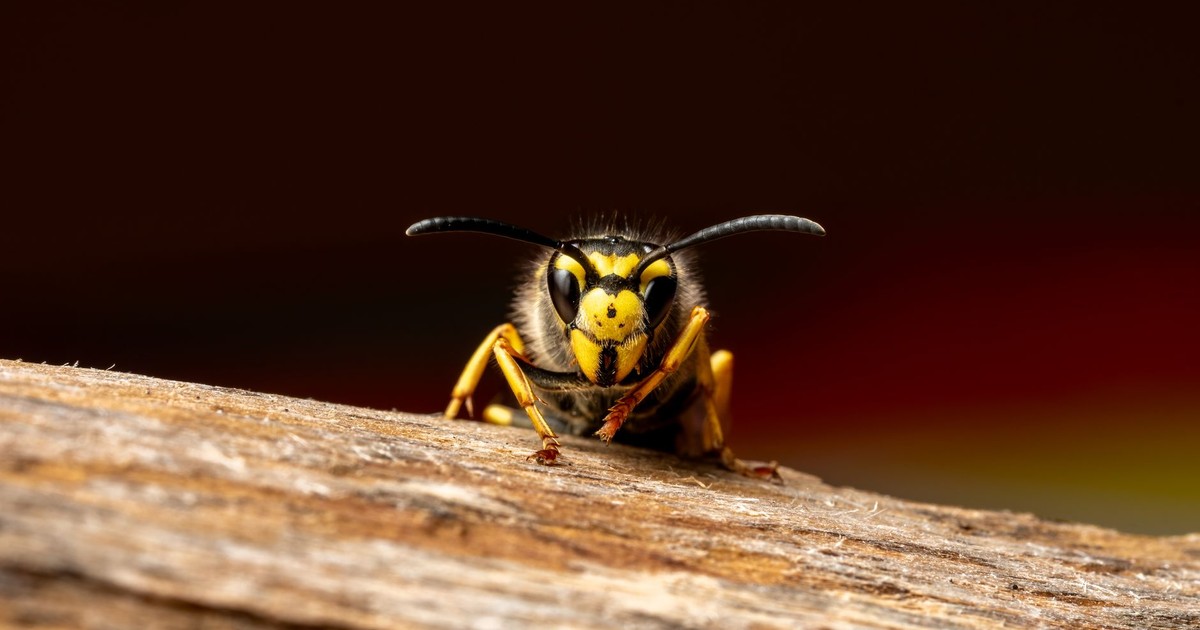
Yellowjackets are the species most frequently responsible for stinging incidents in the United States. Yellowjackets are the smallest of the three stinging insects, measuring about half an inch in length. They’re often mistaken for honey bees due to the bright yellow and black markings on their bodies, though yellowjackets have a smoother, shinier appearance and a more defined waist.
Their nest structure and location are the most variable – and the most hazardous. Like hornets, yellowjackets build fully enclosed nests, but theirs are typically located underground in abandoned rodent burrows or other cavities. Some species also nest inside wall voids, attics, or hollow logs. Yellowjacket colonies can grow quite large, sometimes containing thousands of workers by late summer, and they’re known for being especially aggressive when their nests are disturbed. A mature nest can hold between 1,000 and 5,000 workers by August or September – and those workers respond to vibration, odor, and movement near the nest entrance with coordinated, immediate aggression.
Ground-nesting yellowjackets are often discovered, sometimes painfully, while mowing the lawn or weeding gardens and flower beds. Vibrations from lawn equipment irritate the wasps and stimulate a defensive response. This is one of the most common causes of mass stinging events at residential properties.
Hornets
Often mistaken for oversized wasps, hornets – like the bald-faced hornet, which is technically a type of yellowjacket – are larger, louder, and very territorial. They build enclosed, football-shaped paper nests in trees, bushes, or high on structures and don’t hesitate to defend their turf.
European hornet nests are located in concealed sites, such as hollow trees, barns, outbuildings, wall voids, attics, and abandoned honey bee hives. At peak population, most nests may contain about 200 to 400 workers; larger nests can contain over 1,000 workers, according to the University of Maryland Extension. Hornets are less aggressive than yellowjackets but more defensive than paper wasps. Their size, however, means their sting delivers a higher venom load, and their nests – particularly in high or enclosed locations – are rarely appropriate for DIY removal.
The Four Variables That Determine Risk

Before any removal decision is made, four variables must be assessed honestly. Underestimating any one of them is how people end up in an emergency room.
Species. As the identification section above makes clear, species determines baseline aggression level, colony size potential, and nest accessibility. A paper wasp nest under a porch is a fundamentally different situation from a yellowjacket colony inside a wall. Yellowjackets and hornets are extremely aggressive during nest removal and often require professional intervention. Properties with several nests indicate established wasp populations requiring comprehensive professional treatment.
Nest size. Size is a direct proxy for colony population and the scale of defensive response. Nests housing more than 200 individuals pose significant risks to untrained individuals. Professional exterminators have specialized equipment and experience managing large colonies safely. A nest that started as a golf ball in May can reach basketball size by late July. While nests can start as small as a golf ball, they can quickly expand to the size of a basketball or larger.
Location. Accessible nests in low-traffic areas present one category of challenge; nests in wall voids, attics, underground burrows, near electrical equipment, or at elevation above ten feet present an entirely different one. Wall cavity nests, high roof locations, or underground colonies often require specialized tools and techniques beyond typical homeowner capabilities.
Timing. The same nest that was manageable in May becomes a different proposition in August. Wasps naturally become more aggressive in late summer, and it lasts until the fall. By late summer, wasp colonies have reached their peak size. With more workers in the colony, there’s increased competition for food, making them more aggressive when foraging.
The Medical Consideration
Individuals with known insect allergies should never attempt wasp nest removal personally, regardless of nest size or location. This is non-negotiable. Wasp nests can disrupt outdoor activities, threaten the safety of residents, and make even simple yard work dangerous. Wasps are known for defending their territory aggressively, and their stings can be painful or even medically serious for individuals who are allergic. For anyone with a documented venom allergy – or anyone who has never been stung and therefore cannot know their allergic status – a professional removal is the only appropriate course of action.
DIY Threshold: A Practical Summary
The following conditions, taken together, represent a threshold where careful DIY removal is reasonable. If any one of these conditions is not met, professional intervention is the appropriate call.
The nest is a paper wasp species with exposed combs and fewer than 75 to 100 visible insects. The nest is accessible from the ground or from a stable, fixed surface without the need for a ladder. It is spring or early summer, before colony population peaks. The homeowner has no known venom sensitivity and no history of severe allergic reactions. There is a clear retreat path away from the nest. No one else – children, pets, or visitors – is within the treatment area.
Timing: The Single Biggest Variable in Safe Removal

The Seasonal Arc of a Wasp Colony
Early spring, from March through May, is the ideal timing for preventive measures and small nest elimination. Queens are establishing colonies, making intervention most effective. A queen wasp founding a new colony in March or April is doing so alone; the nest at this stage may contain fewer than a dozen cells. This is the moment to act.
Summer months from June through August represent the peak colony activity period and require extreme caution. Professional removal is recommended during this high-activity season. By midsummer, worker populations are in the hundreds for paper wasps and potentially in the thousands for yellowjackets. Every worker will defend the nest.
Late summer, from August through September, is when colonies reach maximum size but begin preparing for winter. Worker aggression may increase as food sources become scarce. The University of Minnesota Extension notes that yellowjackets and other social wasps are found in large numbers in late summer and fall, as the colony competition for food intensifies.
Fall, from September through November, is when natural colony decline begins as temperatures drop. Many nests become abandoned, allowing safer removal of empty structures. Winter months from December through February are when most nests are fully abandoned and can be safely removed without chemical treatment.
Wasps vacate their nest in the fall and don’t reuse the same nest the next year, according to Michigan State University Extension. This has an important implication: a nest you discover in October in a location that does not pose an immediate hazard may require no treatment at all. Waiting until after the first hard frost and then removing the empty structure – wearing gloves as a precaution – is a perfectly sound strategy for aerial nests in low-traffic areas.
The Daily Window for Treatment
Within any given day, timing also matters significantly. Conduct wasp nest removal when wasps are least active. Early morning before 7 a.m. or evening after 7 p.m. are ideal times. At these hours, the majority of foraging workers have returned to the nest and metabolic activity is lower. Nighttime treatment has the additional advantage that wasps are attracted to light and a flashlight used to illuminate the work area can draw workers away from the nest entrance rather than toward the operator. Cool, cloudy days also reduce wasp activity. Avoid hot, sunny conditions that increase aggressive behavior.
—
DIY Removal Methods: What Works, What Doesn’t, and What Makes Things Worse

Aerosol Insecticide Sprays
For accessible above-ground nests – a paper wasp structure under an eave or a small hornet nest on a tree branch – commercial wasp and hornet aerosol sprays are the most practical DIY tool. These products contain active ingredients such as tetramethrin or prallethrin and can be applied directly to the nest structure or into the nest entrance. For yellowjackets, spray directly into the opening of the nest where they fly back and forth. For paper wasps, spray so all of the combs receive some pesticide.
The key operational consideration is distance. Maintain 10 to 15 feet from the nest during initial treatment using extension tools or long-range sprays. Many aerosol products are specifically engineered to project a pressurized stream at this range. Apply once, then retreat immediately – multiple applications increase sting risk.
One significant limitation of aerosol sprays deserves attention. Many sprays only kill the wasps on the surface, leaving the queen and the rest of the colony intact, resulting in nest rebuilding. If the queen survives, she will restart colony activity. This is why application method and timing matter as much as product choice: treating at night when all workers are in the nest, and directing the spray into the comb cells rather than simply coating the exterior, produces substantially better outcomes.
For a broader look at household pest control, less chemically intensive options are available for indoor pests that don’t carry the same sting risk.
Insecticidal Dust for Ground Nests
Ground-nesting yellowjackets require a different approach. Aerosol sprays are poorly suited to underground nests because the pressurized stream cannot adequately penetrate the tunnel network. Ground nests are most effectively controlled with a single application of an insecticidal dust directed at the nest opening. Insecticidal dusts work well because the wasps pick up the dust as they enter the nest and carry it to the core of the colony. This insecticide contaminates the entire nest, and all the wasps will typically die within one or two days.
The application requires speed and distance. Apply an insecticidal dust with a disposable paper cup or bulb duster, dump it directly into the nest opening, and move away from the nest immediately. If done correctly, white dust-covered wasps will quickly issue from the opening and fly off. This is not a method for hesitant operators, and it is not appropriate for anyone without a confirmed clear retreat path.
Methods That Reliably Fail
Several DIY approaches circulate widely online and are consistently counterproductive. Pouring boiling water into a ground nest agitates the colony immediately without delivering lethal treatment to the queen, who sits deeper in the burrow. Knocking a nest down with a broom or pole breaks it open and releases the entire defensive response of the colony at close range. Wasp sprays are almost all knockdown insecticides that kill wasps in the current nest but do little for prevention. If the nest is large enough, some wasps can be protected from the spray.
The worst single outcome of a failed DIY attempt is not the immediate stings – it is the aftermath. DIY attempts usually involve household sprays or makeshift tools not designed for effective nest removal. These methods rarely eliminate the entire colony and often leave surviving wasps angry and aggressive. A partially treated nest with surviving workers is more dangerous than an untreated one, because the colony is now in a state of active alarm.
Professional Removal: When to Call, What to Expect
Definitive Indicators for Professional Intervention
Certain scenarios remove the DIY calculus entirely. Any of the following conditions should prompt a call to a licensed pest control professional without attempting any prior treatment.
Active yellowjacket or hornet nests are too aggressive for safe DIY. Nests in wall voids require specialized equipment and techniques. Multiple nests on a property indicate established territory requiring complex removal. Nests located above ten feet or requiring ladder work present fall risk in addition to sting risk. Nests near electrical equipment – power lines, junction boxes, HVAC units – introduce additional hazards.
If initial DIY efforts have already failed, professional intervention prevents further agitation of the colony and reduces overall risk. Previous failed attempts are among the highest-risk scenarios professionals encounter, because the colony is already in a defensive state.
What Professional Removal Actually Involves
Professional wasp nest removal is not simply the same process a homeowner would attempt but with better gear. The approach is species-specific, uses products not available to consumers, and includes post-treatment steps that prevent reinfestation. Wasps release alarm pheromones when threatened that can attract nearby wasps to attack. This is why professional-grade treatments often include pheromone neutralizers that aren’t available to consumers.
For ground nests, professionals apply dust insecticides directly to nest entrances. The dust is carried throughout the colony, ensuring complete elimination. For wall cavity nests, removal requires drilling access holes and injecting professional-grade insecticides, which prevents wasps from relocating within the structure. For high-elevation nests, professional equipment allows safe access to nests in trees or on tall structures.
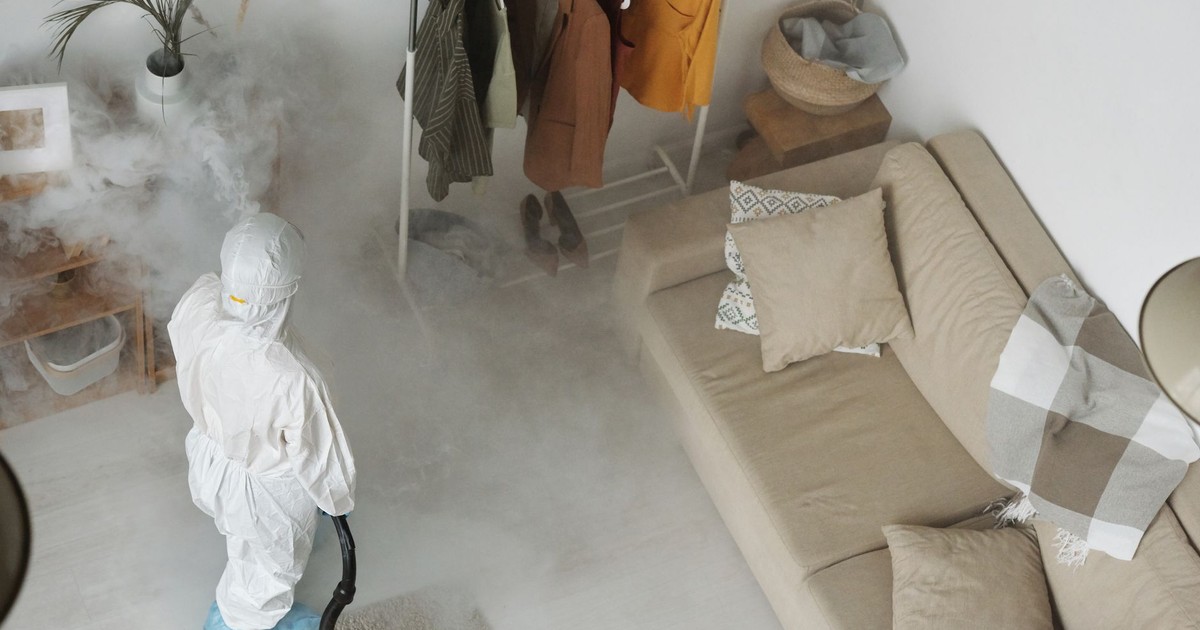
Licensed pest control professionals offer significant advantages over DIY approaches. Specialists utilize protective suits, extended-reach applicators, and commercial-grade insecticides not available to consumers. Experienced technicians can identify wasp species accurately and apply appropriate elimination strategies based on specific behavioral patterns.
A complete professional service typically includes a post-removal inspection to confirm colony elimination, structural advice on sealing the entry points that allowed the nest to establish, and follow-up guidance to prevent recurrence. Disabling the nest structure so it cannot be reused by other wasps is part of the process, as is offering guidance on sealing entry points, minimizing food sources, and adjusting landscaping to reduce nesting opportunities.
Safety Protocols During and After Treatment

Personal Protective Equipment
Whether treating a small paper wasp nest independently or observing a professional at work near your home, protective equipment standards are not optional. Wear thick, light-colored clothing covering all skin. Avoid dark colors and floral patterns, which can trigger wasp aggression. Wear closed-toe shoes or boots, tuck pants into socks to prevent wasps from entering leg openings, and use safety glasses or goggles to protect eyes from spray drift and aggressive wasps.
Always have a clear path to safety before beginning wasp nest removal. Know where you will go if wasps become aggressive. This sounds obvious; it is also the step most commonly skipped by homeowners who treat a nest impulsively. A retreat path that passes through a doorway, over a fence, or down a ladder is not a retreat path – it is a trap.
Immediate Response to an Attack
If you discover an active nest unexpectedly, do not approach the nest or try to block wasp flight paths. Restrict access and keep pets, children, and visitors away from the area. Avoid vibrations – power tools, lawn mowers, and even loud noises can agitate wasps. If stung, move quickly and calmly away from the area. Unlike bees, wasps do not leave a stinger behind, so there is no need to scrape the skin; the priority is distance and monitoring for signs of allergic reaction.
Long-Term Prevention: Reducing the Probability of Future Nests

Structural Exclusion
Inspect doors, windows, vents, and roof gaps thoroughly. Even a small one-quarter-inch opening can allow wasps to enter and build nests. Use caulk, mesh screens, or weather stripping to seal openings effectively. The queen does not need a large gap to begin a colony inside a wall void or attic; she needs only a crack wide enough to squeeze through in early spring. A thorough exterior inspection in late winter – before queens emerge – is the most cost-effective wasp prevention measure available.
Conducting routine inspections in early spring to catch new nests before they expand, and sealing cracks, gaps, and other structural openings, are the two most reliable reinfestation prevention steps.
Environmental Management
Keeping outdoor garbage sealed, trimming vegetation regularly, and inspecting hidden spaces such as attic vents or shed rafters are all effective deterrents. Wasps are drawn to properties that offer two things: sheltered nesting sites and reliable food sources. Wasps need water to build their nests; ponds, fountains, and even leaky hose pipes are places where they congregate. Use caution in those areas or remove the water source.
Keep shrubs, hedges, and trees trimmed to reduce hiding spots for wasps. Remove fallen or rotting fruits and vegetables promptly, as their sweet smell attracts insects. Cover compost bins securely and clean up spills to prevent wasps from lingering in outdoor spaces.
Understanding the Ecological Role
Not every wasp nest demands removal. Many species of wasps provide beneficial ecosystem services such as feeding on garden pests. Wasp nests that don’t pose an immediate hazard can be left alone. If you are concerned about a risk of stings and a nest cannot be avoided until a killing frost in late autumn, when the nest will cease to be threatening, you may need to have it removed. The operative phrase is “cannot be avoided.” A nest in an eave above a rarely used side gate may warrant nothing more than temporary avoidance; a nest above the back door you use forty times a day is a different matter entirely.
What to Do With What You Now Know

The most important thing to understand about wasp nest removal is that the first thirty seconds after you spot a nest are the most consequential. The temptation to act immediately – to knock it down, spray it with whatever is under the sink, or seal it behind a piece of tape – is where most bad outcomes begin. Every piece of guidance from university extension entomologists, professional pest control specialists, and the mortality data on sting fatalities points toward the same initial instruction: pause, observe, and assess before touching anything.
Species determines aggression. Size determines colony response scale. Location determines whether DIY tools can even reach the problem. And timing determines whether you are dealing with a colony of 30 founding workers or 3,000 peak-season defenders with nothing to lose. The larger nests of yellowjackets and bald-faced hornets that are protected by a paper-like envelope are more challenging and best left to pest control professionals. That is not a liability disclaimer – it is an accurate description of what those nests can do to an unprotected person standing two feet away from them.
For the nests that do fall within a reasonable DIY range – a small paper wasp structure on a fence post in May, treated at dusk with a long-range aerosol and full protective clothing – the risk is manageable with preparation. But “manageable” is not the same as “trivial.” Effective wasp nest removal requires careful planning, proper timing, and appropriate safety measures. While smaller nests and less aggressive species can often be handled by homeowners, larger colonies and dangerous situations require professional intervention. If anything in your assessment gives you pause – the nest is bigger than expected, the wasps are faster to react than you anticipated, the location requires a ladder – the cost of a professional service is almost always less than a trip to urgent care.
AI Disclaimer: This article was created with the assistance of AI tools and reviewed by a human editor.