

Most people who sit beside a dying loved one are focused on the physical: the breathing, the hands, the monitors. What they don’t expect is that the person in the bed may be somewhere else entirely – laughing with someone who died fifteen years ago, walking toward a door that no one else can see, or packing a bag for a trip they seem genuinely excited to take.
These experiences have a name in palliative research – end of life dreams and visions, often shortened to ELDVs – and they are far more common than most families realize. They are not symptoms of confusion or medication side effects, though that is often the first assumption. They happen in people who are lucid, and the people having them will almost always tell you, if asked, that they feel completely real. Not like ordinary dreams. Something else.
What researchers have found after years of studying these experiences is that they are not random. Certain images and themes come back again and again, across different countries, different cultures, different religions, and different ways of dying. Three of them come up so consistently that clinicians who work in end-of-life care have come to recognize them almost as a language – one that the dying seem to speak, and the living are only beginning to learn how to hear.
1. Reunion With Someone Who Died Before Them
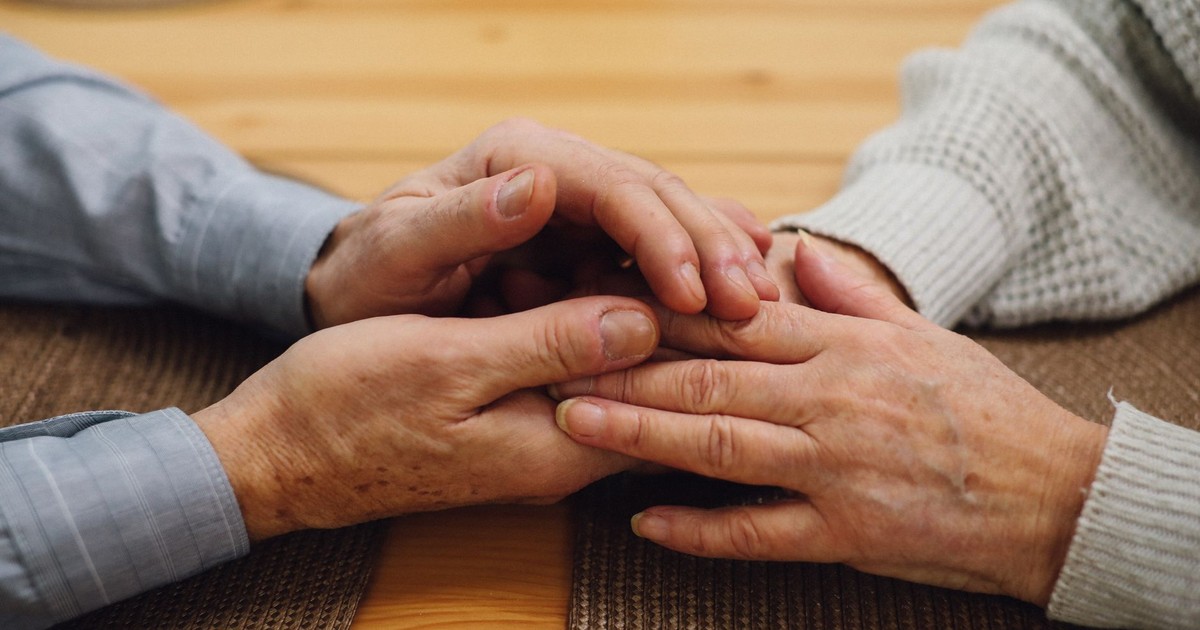
Of all the recurring themes in end of life dreams, this one is the most consistent and, for most families, the most quietly astonishing. The person in the bed – a parent, a spouse, a grandparent – begins describing visits from people who died years or decades earlier. A mother who passed in 1987. A brother lost in a war. Sometimes a child who never made it past infancy.
A 2024 systematic review found that somewhere between 50 and 60 percent of hospice patients report a “visitation” by someone who is not there while they dream or are awake. These aren’t vague feelings of a presence. They are specific encounters with specific people, and the dying person can usually describe them in detail. Some patients described encounters with pets they had loved – including one woman who had frequent, comforting dreams of playing with her childhood dog – and when patients dreamed of deceased loved ones, those people typically appeared younger and healthier than they had been at death, “beautiful and very healthy” in the words of one patient.
Dr. Christopher Kerr, whose research at Hospice Buffalo in New York has documented the prevalence of these experiences among the terminally ill, has noted a striking pattern in who tends to appear. “What’s really interesting is it’s not random who comes to you – it’s always those people who loved and secured you,” Kerr observed. The people who come back are, almost without exception, the people who mattered most. Not acquaintances, not colleagues – the ones who were home.
Kerr recounted the case of a 70-year-old woman, a mother of four, who cradled her arms as if holding an infant during her final visions – she was holding her first child, who had been stillborn. The enduring grief from that loss had been difficult to discuss for decades, but the return of that child in her final days brought her profound comfort. For families watching from the outside, these moments can be destabilizing – is she confused? is he hallucinating? – but the research suggests something worth considering. End of life dreams and visions in cognitively intact dying patients are vividly recalled, often feature deceased loved ones, and appear to offer meaning, comfort, and acceptance.
2. Symbolic Images: Light, Doorways, and Thresholds

The second recurring theme is harder to put into words, because it speaks in symbols rather than faces. Patients describe light – not ambient light, not the light in the room, but a specific, described light that seems to come from somewhere and mean something. They describe doors, stairways, gates, and thresholds. They describe standing at the edge of something and looking through.
Other patients described dreams featuring symbolic imagery such as doors, stairways, or light. One individual recounted a dream of walking barefoot toward an open door bathed in white light. Such imagery, the study authors suggest, might represent a coping mechanism, allowing individuals to process and comprehend their impending transition. The word “coping” can sound clinical when applied to dying, but what it means in practice is that the mind may be doing something generous for the people inside it – finding images that make the incomprehensible feel approachable, even inviting.
A 2026 Death Studies investigation found that end of life dreams and visions are frequently described as symbolically rich narratives involving deceased loved ones or imagery related to transition. The study characterized ELDVs as coherent and emotionally meaningful experiences reported by lucid patients approaching death. The fact that these experiences are coherent matters. They are not the fragmented, nonsensical quality of fever dreams or the confusion of delirium. Patients can describe them afterward. They make a kind of internal sense.
What strikes many palliative care workers about this category of experience is how cross-cultural it is. The specific imagery varies – a garden gate for one person, a long lit hallway for another, a wide open field with a figure waiting in the distance – but the structural idea repeats: a boundary, and something good on the other side of it. Despite some frightening situations, most patients reported that these end of life dreams and visions reassured them, making them feel connected to what they encountered.
3. Travel: Packing, Journeys, and Getting Ready to Go

The third theme is perhaps the most unexpectedly specific. Patients begin talking about needing to pack. About catching a train, or a bus, or a plane. About having somewhere to be. They might grow anxious that no one is helping them get ready. They might ask where their bags are, or whether the car is coming. From the outside, it can look like agitation or confusion. Inside, something else seems to be happening.
Research from Hospice Buffalo found that as patients approached end of life, there was often an increase in the frequency of comforting dreams, and that dreams commonly featured deceased loved ones, travel and preparing to go somewhere, and past meaningful experiences. The travel theme is consistent enough that experienced hospice nurses have learned not to redirect patients away from it, but to follow them into it. One hospice nurse recalled a patient who repeatedly stated that he “could hear the train coming” and feared missing it. The family, guided by the nurse, told him the train had arrived and he could get on. He died peacefully shortly after.
A 2025 study of hospice nurses found that the travel theme appears consistently across previous research on dying people, and that nurses articulated a belief that death is not an ending but a passage. It comes up in studies conducted in the United States, Sweden, Italy, and India – which is part of what makes it hard to dismiss as cultural conditioning or wishful thinking.
Patients frequently describe dreams involving packing or boarding a bus. What families often describe, after the fact, is that their loved one seemed purposeful in these moments rather than frightened – focused, even. Like someone who knows where they are going and is making sure they don’t miss the departure. Whether you read that as the mind’s protective metaphor or as something more, the practical reality is the same: the person having it is, almost always, not in distress.
Read More: These 5 symptoms show up unexpectedly right before death
What Families Deserve to Know

If you have watched someone you love describe a visitor no one else could see, or insist they needed to pack for a trip they couldn’t name, or reach toward a light in the corner of the room – you may have spent a long time wondering what it meant. Whether they were suffering. Whether they were afraid. Whether you should have said something different or called someone or done something other than sit there, unsure.
The 2026 Italian study, which surveyed 239 palliative care professionals, found that end of life dreams and visions are typically disclosed spontaneously by patients – which means patients brought these experiences forward themselves, on their own terms. They were not pulled out by leading questions. They surfaced because the experience was real enough, meaningful enough, that the person needed to say it out loud. And yet, research confirms that hospice patients often avoid reporting these experiences out of fear of ridicule. Many go to their deaths without ever telling anyone what they were seeing, because they worried they would not be believed.
That is the part worth carrying forward. If someone near the end of their life tells you about a visitor, or a door, or a train they’re sure is coming – they are not asking you to explain it. They are asking you to stay in the room with them while they describe it. The research on end of life dreams doesn’t resolve the question of what these experiences are, or what, if anything, they mean about what comes after. But it does establish this: they are common, they are almost always described as comforting, and the people having them are not confused. They are somewhere. And for most of them, it seems to be somewhere they want to go.
Disclaimer: This information is not intended to be a substitute for professional medical advice, diagnosis, or treatment and is for information only. Always seek the advice of your physician or another qualified health provider with any questions about your medical condition and/or current medication. Do not disregard professional medical advice or delay seeking advice or treatment because of something you have read here.
AI Disclaimer: This article was created with the assistance of AI tools and reviewed by a human editor.